In our preview of earnings this week, Nvidia takes centre stage as the planet’s largest company offers its next quarterly update.
But there’s more to watch beyond the chip giant. This week is packed with industry bellwethers, with the aforementioned Nvidia offering a pulse check of the AI boom, Walmart letting us zoom in on US retail, and Deere offering insight into US agriculture.
So, stick your finger in the air and feel which way the wind is blowing.
Baidu - Earnings review
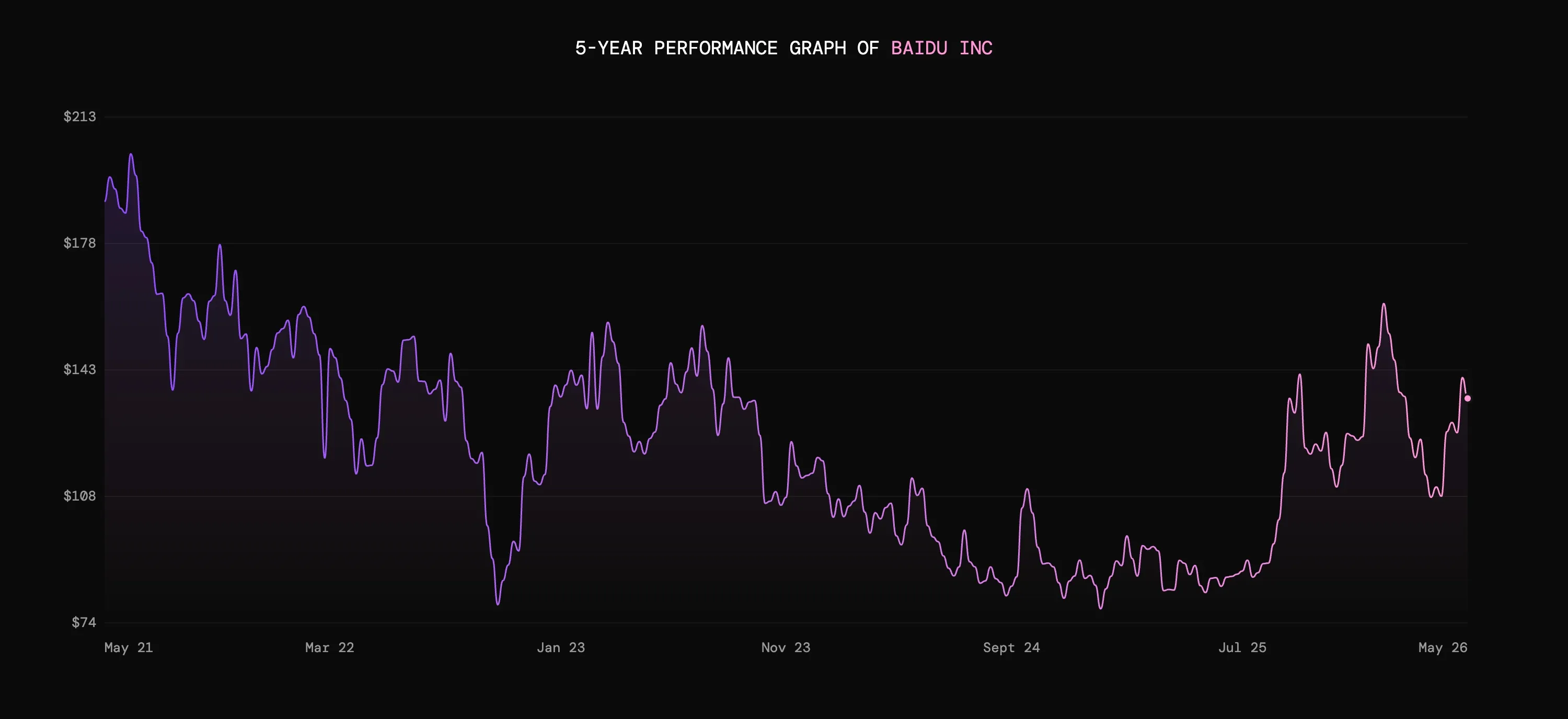
Baidu kicks off this week’s roundup, having reported its Q1 2026 earnings before market open on Monday.
The business is sometimes referred to as China’s Google, as it operates the most popular search engine in the country and a wide range of tech and internet services. These include self-driving robotaxis, AI cloud infrastructure, and AI-powered software.
The company recorded revenue of RMB32.1bn in Q1, down 2% QoQ. With cost of revenue up by 12% YoY to RMB19.6bn, net income attributable to Baidu dropped by over half YoY to RMB3.4bn.
The higher cost base was primarily linked to AI Cloud, though this also provided the standout growth story. Core AI revenues have increased by 49% YoY, driven by 79% YoY growth for the company’s Cloud Infra revenues.
This part of Baidu’s business sells cloud tools that help companies run AI, such as infrastructure subscriptions, giving enterprises the computing power and software needed to build and use AI models.
Growth like this appears to be why Baidu is doubling down on AI and making the technology the core of its business going forward.
AI might be its future, but right now, the struggle is Baidu’s legacy business and flagging marketing revenues. Legacy business revenues fell by 29% YoY, and online marketing services revenues dipped by 22% YoY.
With AI now accounting for 52% of Baidu’s general business revenue, these more traditional segments are no longer the headline story. However, the pace of their drop-off may be concerning for some investors.
For Baidu, the earnings story is a race between its fast-growing AI business and the apparently fading strength of its online marketing machine.
Home Depot - Earnings review
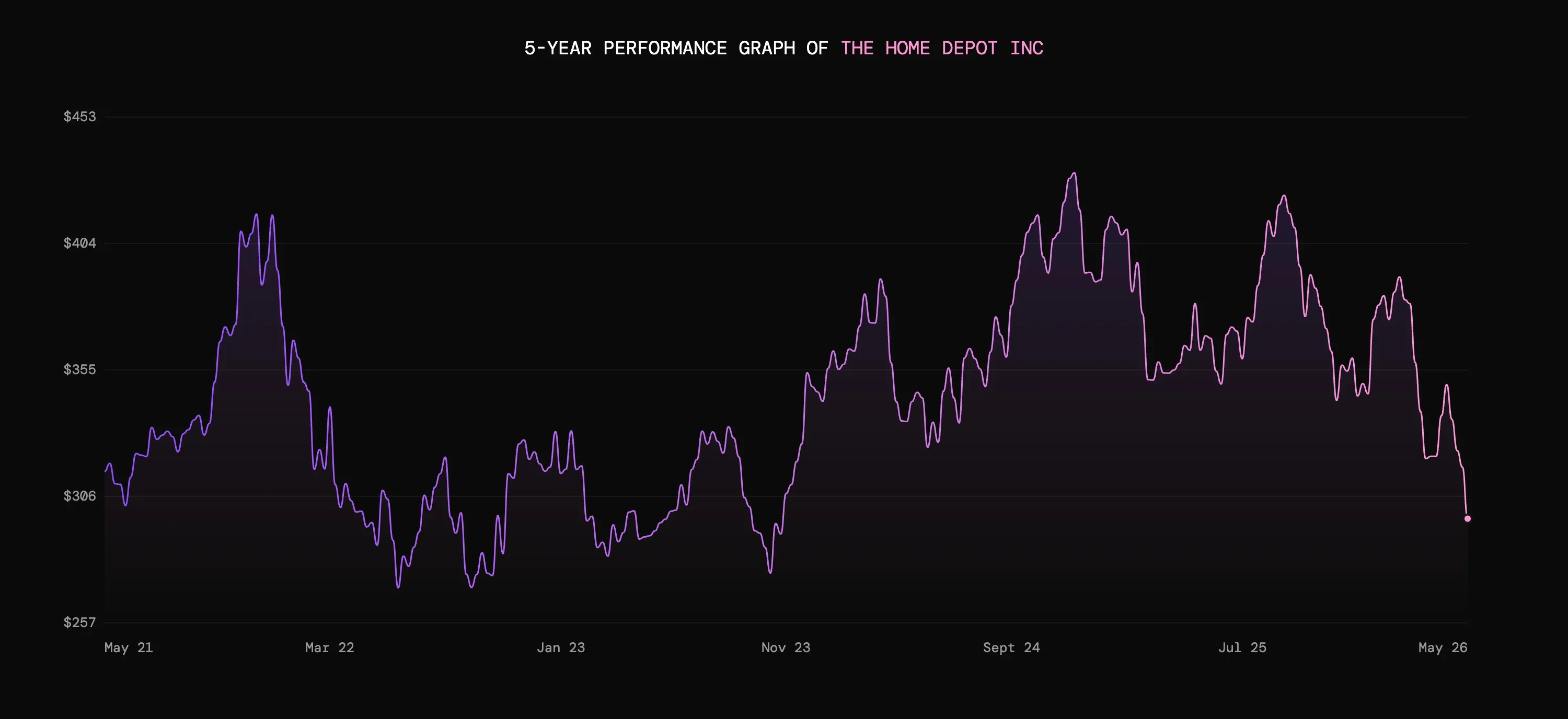
Home Depot updated investors with its Q1 2026 earnings before the market opened on Tuesday.
Consensus estimates had the home improvement retailer’s Q1 revenue pegged at $41.5bn and EPS at $3.41. Home Depot nailed those expectations, achieving revenues of $41.8bn, up by 4.8% YoY, and EPS of $3.43.
The spring season is a crucial period for garden, outdoor, and home-improvement spending, so an earnings beat is a positive sign.
However, margin pressure is a takeaway investors may focus on. Operating margin narrowed to 11.9%, down 100 bps compared to the same period last year and lagging behind FY 2026 guidance.
But, as with many retailers right now, consumer confidence is a key issue. When people have disposable income, home renovations and garden glow-ups may be on the cards. But as people tighten their purse strings, they are less likely to take on big projects and big spending.
High mortgage rates may be keeping homeowners locked into properties they might otherwise move from, or might stymie potential new homeowners who want to spruce up their new living space.
Despite margin pressure and this consumer uncertainty, Home Depot reaffirmed FY 2026 guidance.
Home Depot has delivered top-line results ahead of expectations. But, if consumer confidence continues to flag, could its already under-pressure margins be in for a hammering?
Nvidia - Earnings preview
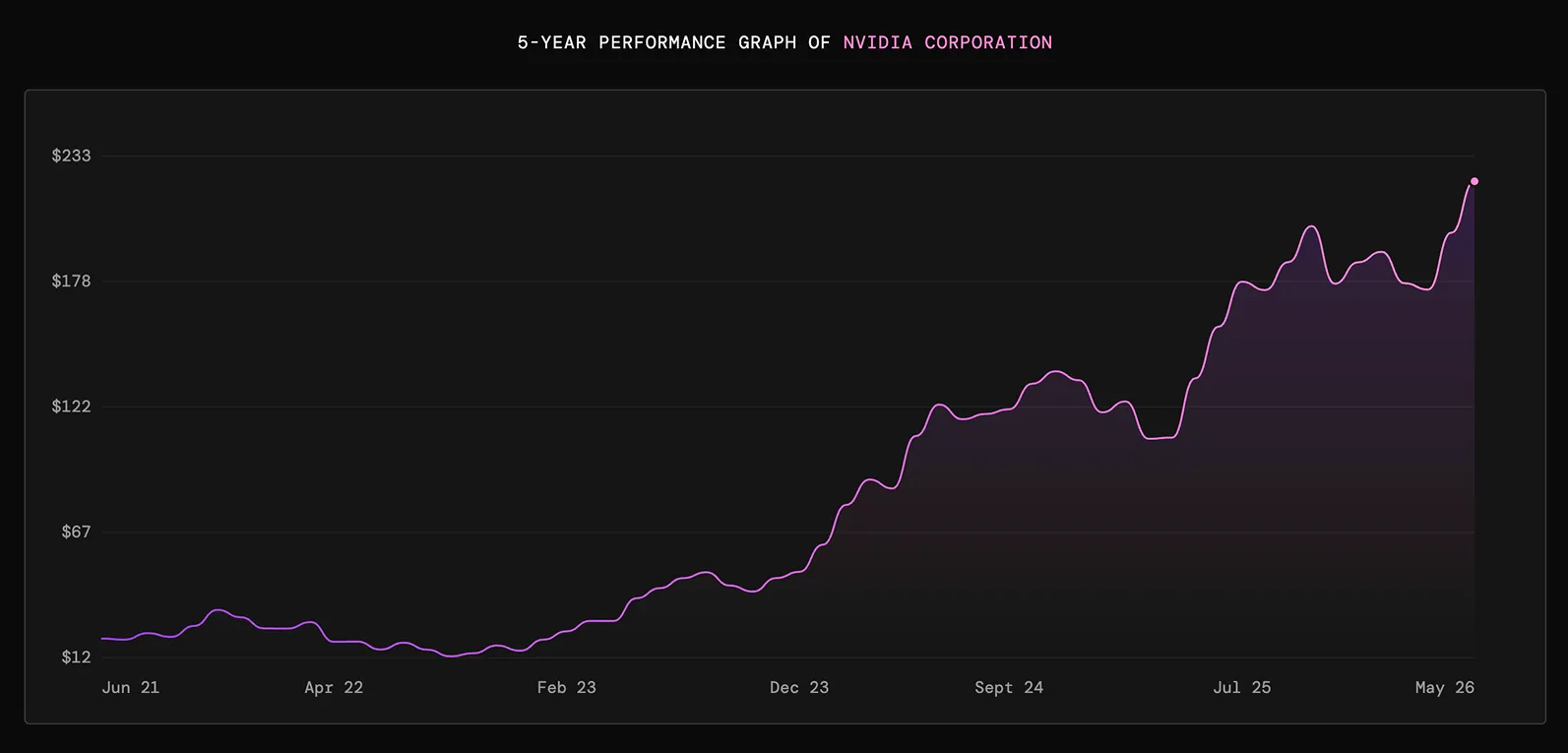
Nvidia’s hotly-anticipated Q1 2027 earnings land after the market closes on Wednesday.
As the planet’s first $5trn company by market cap, Nvidia’s staggering size and relevance mean the business has the heft to move markets and sentiment beyond its operating segment. It’s a pulse check on the AI infrastructure boom.
So, is the semiconductor story still one to watch?
Consensus expectations are for Nvidia to achieve revenue of $79.2bn and EPS of $1.78.
Last time out, revenue was up by 73% YoY at $68.1bn, and non-GAAP diluted EPS at $1.76. Nvidia might have made its name in the gaming business, but consumer GPUs are not the company’s meal ticket any more. In Q4 2026, Data Center revenue climbed by 75% YoY to $62.3bn, comprising over 91% of total revenues.
With tech hyperscalers continuing to pour capex into AI infrastructure, it seems possible Nvidia’s rapid growth will be sustained. After all, Nvidia is THE dominant supplier of AI compute infrastructure.
One of the key ingredients in Nvidia’s secret sauce is its margin quality. The chipmaker achieved a very healthy 75% gross margin in Q4, having shown steady improvements.
But could the memory squeeze scupper these high-end margins? DRAM and conventional memory supply has been problematic, and highlighted how component supply chains can impact chipmakers’ fortunes.
For Nvidia, the key is High Bandwidth Memory (HBM), which is increasingly crucial as it produces more and more platforms to deal with increasingly demanding AI models. Any signs of limited HBM availability, or shortages of other key components, could become major bottlenecks for ramping Blackwell deployment.
Finally, there’s the China question. Nvidia CEO Jensen Huang has been at President Trump’s side during the recent visit to Beijing. Nvidia’s most sophisticated products are heavily restricted in China, but any sign of US export controls loosening could offer a huge upside opportunity for the business.
Whatever Nvidia brings to the table this week, it will be headline news. For Nvidia, the bar is not just beating expectations. It is proving the AI infrastructure cycle still has room to run.
Walmart - Earnings preview
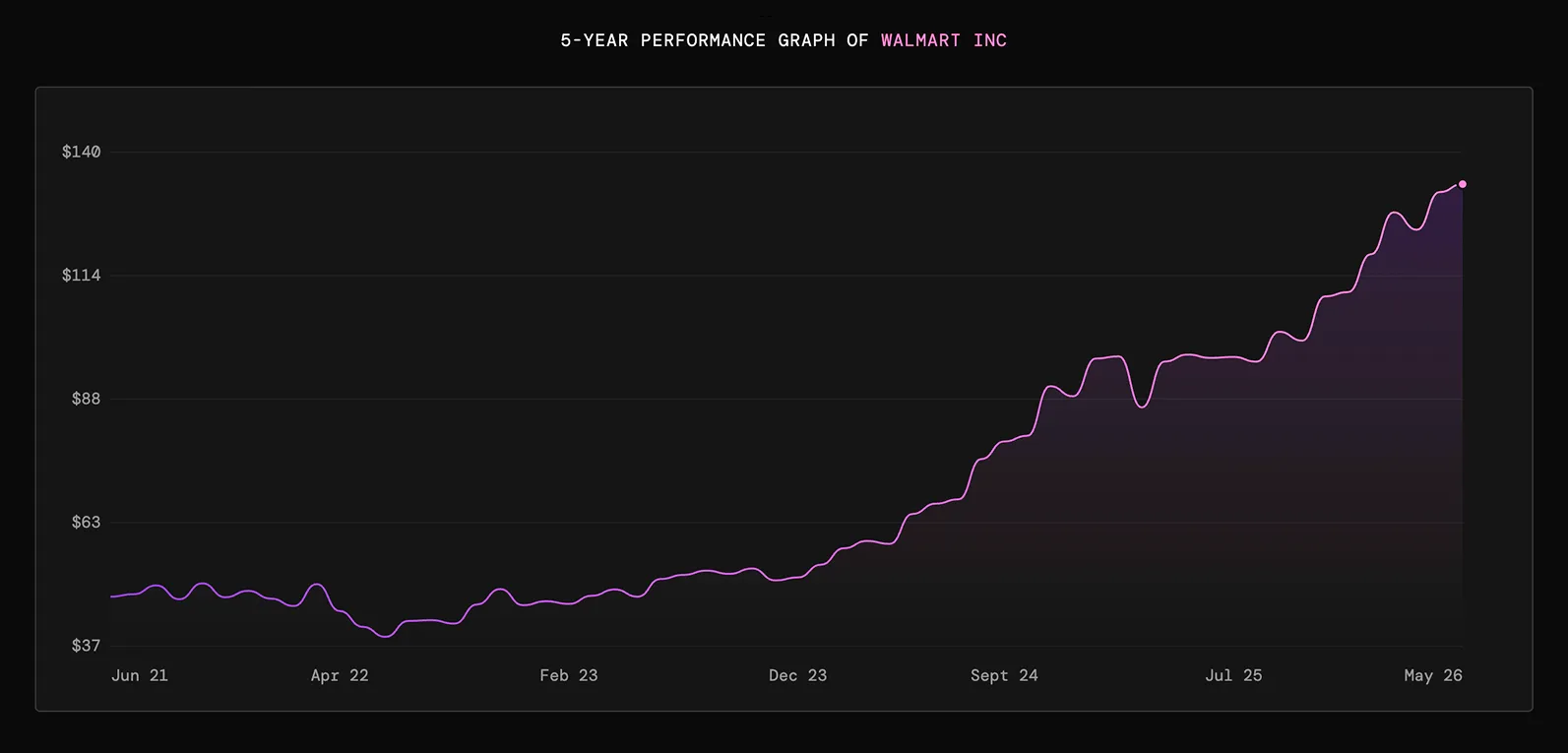
Walmart, the planet’s largest retailer by revenue, reports its Q1 2027 earnings before the market opens on Thursday. The business offers a useful read on US retail and household spending, so well worth watching for market insights.
Consensus expectations are for revenue of $174.8bn, and EPS of $0.66.
There are reasons to be cautious ahead of earnings. Last week, Walmart announced cuts or relocations for 1,000 white-collar jobs in an apparent streamlining effort.
In addition, US consumers are down in the dumps according to the University of Michigan Sentiment Index. With the conflict in the Middle East elevating gas prices and threatening to translate into broader inflation, people are feeling the squeeze.
Back in April, Walmart CFO John David Rainey insisted that American consumers were “very resilient”. The company’s earnings will offer insight into whether the numbers agree.
In recent periods, Walmart’s figures seem to have been on his side.
Revenue climbed by 5.6% to $190.7bn in Q4, while adjusted EPS was $0.74. Margin improvements in the US business, healthier inventory management and improving ecommerce economics helped operating income grow faster than sales.
Indeed, ecommerce is a shining light of Walmart’s momentum, with 24% sales growth in Q4. Store-fulfilled orders in the US business are a particularly strong driver, increasing by more than 50% during the period.
However, on the downside, Walmart’s FY2027 guidance indicated a deceleration in net sales growth from 4.7% to between 3.5% and 4.5%. While the business acknowledged that this guidance is rooted in conservatism, given a backdrop of instability, it did state its goal was to outperform guidance.
Can the business demonstrate sustained ecommerce growth and raise or outperform guidance as it navigates a challenging consumer environment?
Deere - Earnings preview
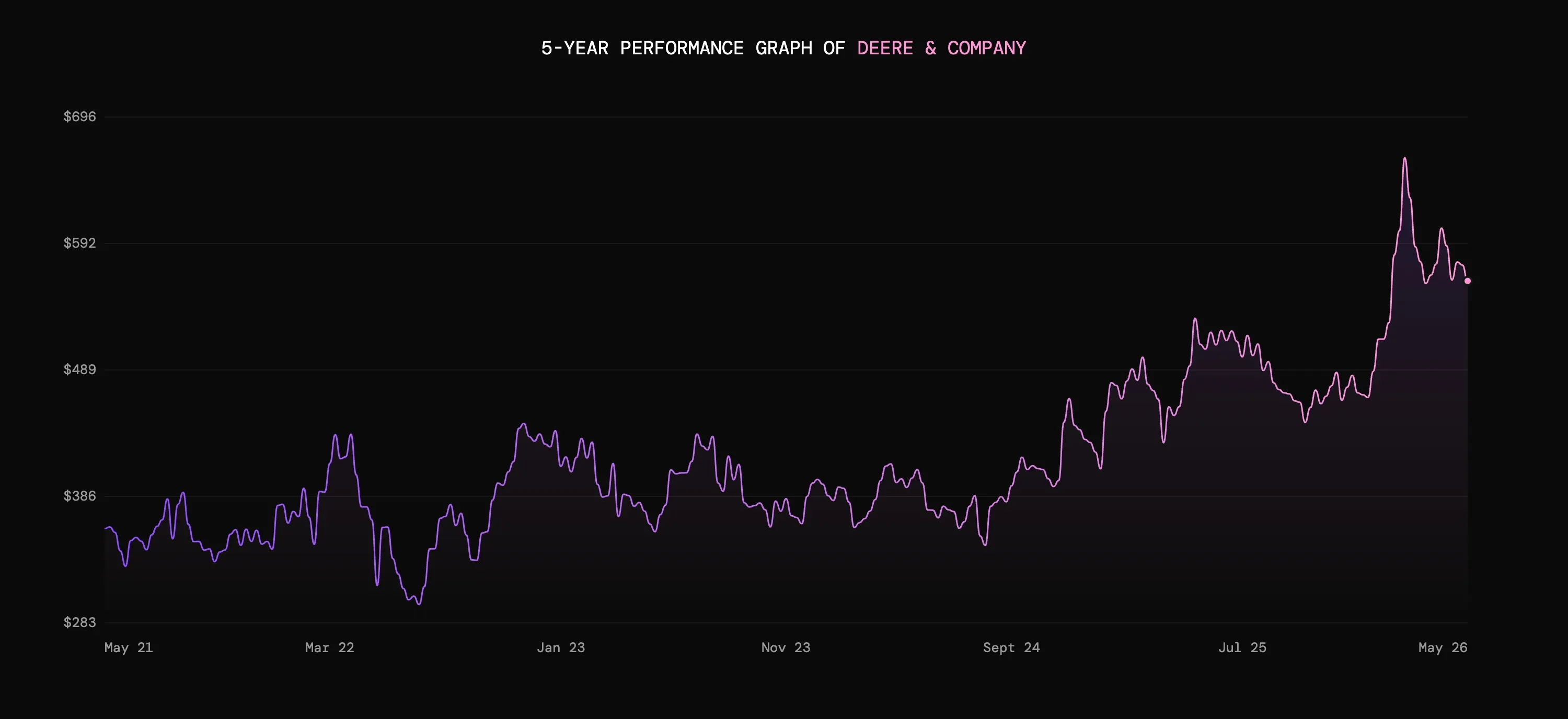
Deere reports its Q2 2026 earnings before the market opens on Thursday.
The business manufactures agricultural and construction machinery like tractors, excavators, mowers, and more. It serves as a proxy for farmer confidence, and its forward guidance will be keenly watched.
For Q2, consensus expectations are for revenue of $11.5bn and EPS of $5.74.
Last time out, net sales and revenues were up by 13% YoY, thanks largely to 34% growth from Construction & Forestry and 24% growth in Small Agriculture & Turf.
The problem lies in Deere’s largest business unit by sales: the Production & Precision Agriculture segment. Here, net sales edged 3% higher to $3.2bn, but operating profits tumbled by 59% as operating margins declined to just 4.4%.
The business blamed high tariffs, warranty expenses, and an unfavourable sales mix, but over the longer term, the primary concern is poor sentiment in the agricultural market. Large agriculture demand is stubbornly weak as farmers facing higher costs are less inclined to shell out for the kind of big-ticket machinery Deere specialises in.
Back in Q1, Deere flagged that US and Canadian large agriculture demand was likely to drop by between 15% and 20% across its 2026 fiscal year, while rivals AGCO and CNH have also pointed to a demanding and uneven market.
Can stronger construction and small agriculture demand offset continued pressure in Deere’s largest business segment, and will Deere’s guidance show any signs of pressure letting up?
Take Two - Earnings preview
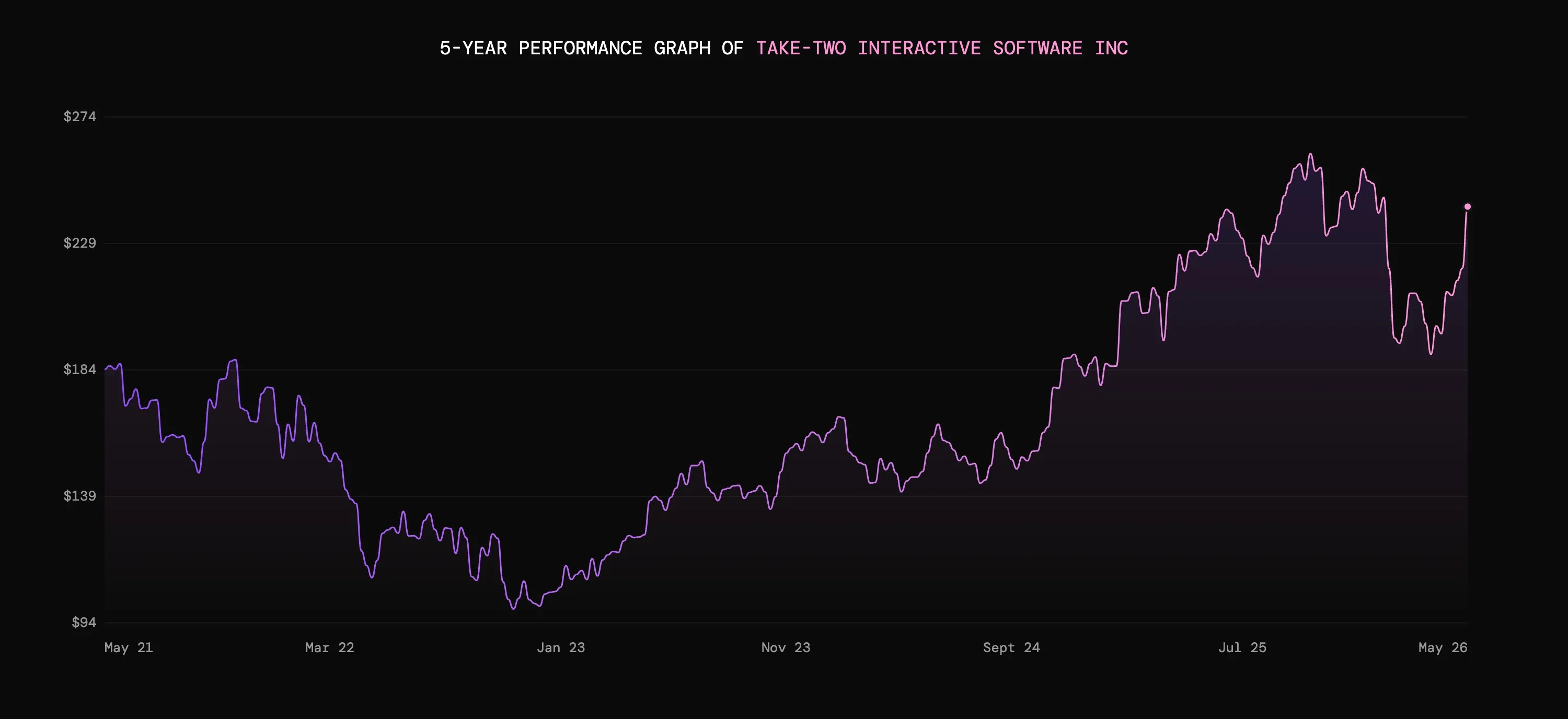
Take Two unveils its Q4 earnings on Thursday evening, after the market closes.
The video games publisher produced next-level earnings back in Q3. Net bookings came in at $1.76bn, ahead of guidance for $1.55bn-$1.6bn, as the business achieved recurring consumer spending growth of 23%. That means more gamers sticking with Take Two’s titles after their initial purchase and continuing to spend money in-game.
For clarity, the net bookings metric covers all products and services sold digitally or physically during the period, and includes licensing fees, merchandise, in-game advertising, strategy guides and publisher incentives.
Revenue, on the other hand, simply measures sales recognised during the period from an accounting standpoint.
Away from the numbers, the elephant in the room for Take Two is Grand Theft Auto VI. The next instalment in the company’s series of sandbox carjacking extravaganzas releases on 19 November 2026.
As of last quarter, the prior release had sold 225 million copies and continues to generate significant revenue through both sales and online microtransactions. It was released 13 years ago and has remained consistently popular and relevant.
With the new edition in sight, Take Two has already projected record net bookings in 2027, along with improved profitability and a stronger balance sheet. Reports suggest the company has spent between $1bn and $1.5bn on the game’s development.
CEO Strauss Zelnick has even described the level of expectation as “terrifying”.
Putting it mildly, A LOT hangs on a successful launch.
News about GTA VI will likely prove crucial to investor sentiment. Delays or caution will be red flags, while more net bookings bullishness may inspire confidence.
In short, Take Two’s update may not be judged just on performance, but on whether management can keep confidence high ahead of the most anticipated games launch in years.
Capital at risk. The value of your investments can go down as well as up and you may get back less than you invest.
Fluctuations in foreign exchange rates may affect investments denominated in currencies other than GBP and the amount you receive back.
Past performance is not a reliable indicator of future returns.
Freetrade does not give investment advice and you are responsible for making your own investment decisions. If you are unsure about what is right for you, you should seek professional advice.
Always do your own research.
.webp)
.webp)
.webp)

.avif)


.avif)