.webp)
Another week of US earnings brings another batch of previews, led by the always interesting GameStop.
AeroVironment, Adobe and Oracle all report too, leaving investors to ponder defence contracts, AI monetisation, and the staggering cost of trying to stay on top of the data centre boom.
Note: All estimates are based on data provided by Refinitiv.
GameStop - Odd fish
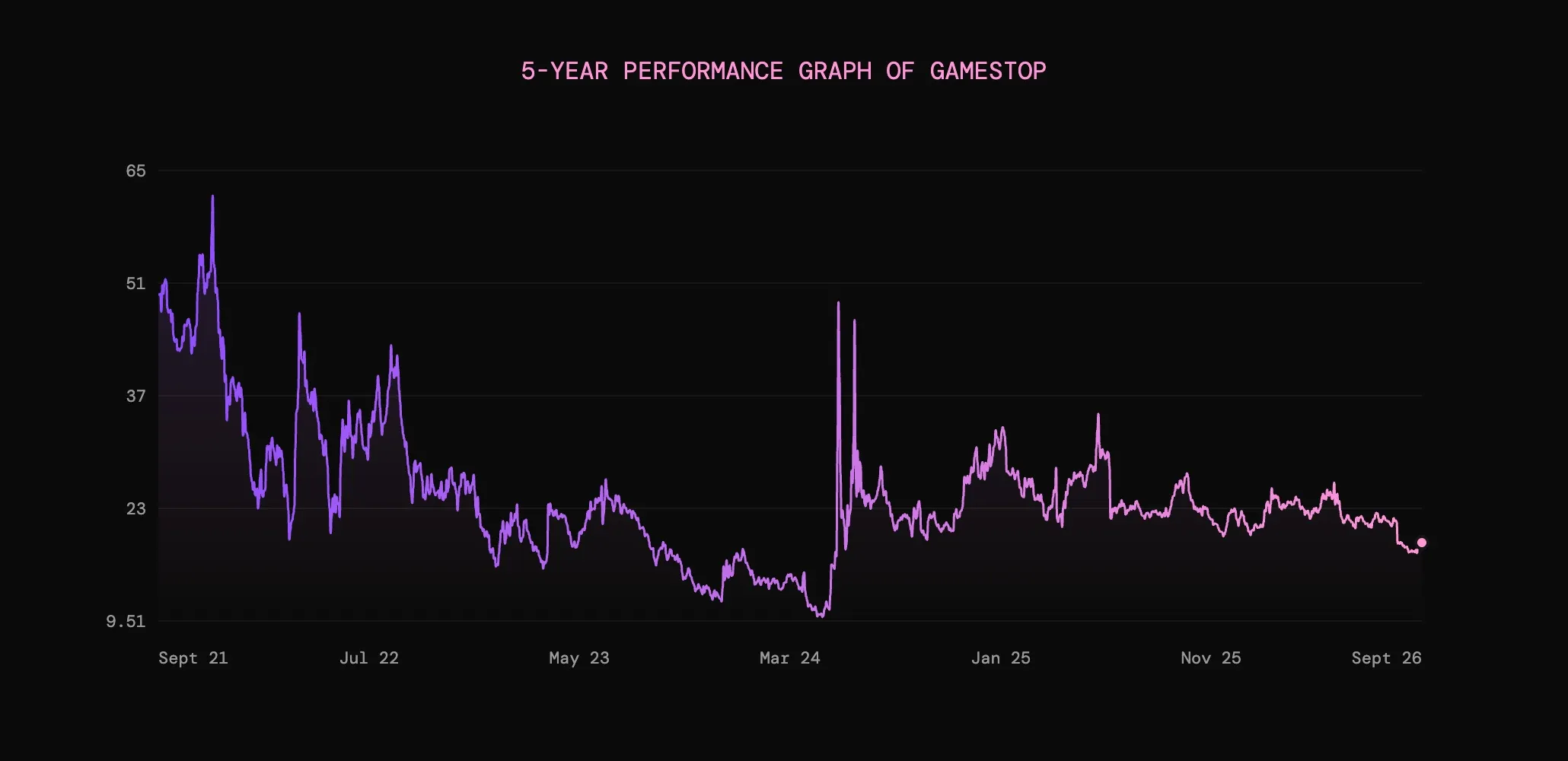
Let’s not beat around the bush: GameStop is weird.
Case in point are the company’s already-released preliminary Q2 numbers. Net sales are slated to come in between $780m and $800m, significantly lower than the $972.2m achieved in the same period one year prior.
But GameStop is managing to keep its hands on a far larger portion of the sales it brings in. Operating income is expected to more than double year-on-year (YoY), rising to between $150m and $170m from $66.4m, while net income will rise to between $290m and $310m from a comparative $168.6m.
That headline net income figure needs a pretty big asterisk though. Around $238m of gains are related to GameStop’s eBay investment (more on that later) helping to swell the bottom line. But even so, the business is doing more with less.
Then, there’s what the business is actually selling.
GameStop is less about the games these days, and more about the merch. As of Q1, revenue from collectibles comprised 41.8% of total sales, having grown by 65.0% YoY. The business’s more traditional hardware and software categories saw respective declines of 3.4% and 13.0%.
Gone are the days when your common or garden gamer queued up all night to buy themselves a hard copy of Halo, Call of Duty, or whatever, as part of a midnight release. Physical copies are dying, with console giants and publishers killing the market through digital releases.
For brick-and-mortar stores, it’s a case of adapting to survive. GameStop looks to have found a means of replenishing its health bar by hawking Funko Pops, Gundam statues, Pokemon cards, and more assorted nerdy paraphernalia than you can shake a Lightsaber at.
Finally, there’s the eBay story. In May, GameStop offered to purchase eBay for $125 per share, a proposal that the online marketplace batted away with no small measure of contempt, calling the offer “neither credible nor attractive”.
But GameStop has built a sizeable stake, reportedly owning around 43.4m eBay shares worth $4.95bn, or just under 10% of the business.
Investors will no doubt be keen to hear whether CEO Ryan Cohen has more in the way of acquisition plans.
GameStop is becoming increasingly eccentric, an odd fish if you will, but the question for investors is whether the various threads coalesce into a viable long term strategy. Is the reduction in footprint smart thinking? Does its foray into collectibles have legs? Does the eBay saga represent a realistic avenue to expansion?
AeroVironment - Modern warfare
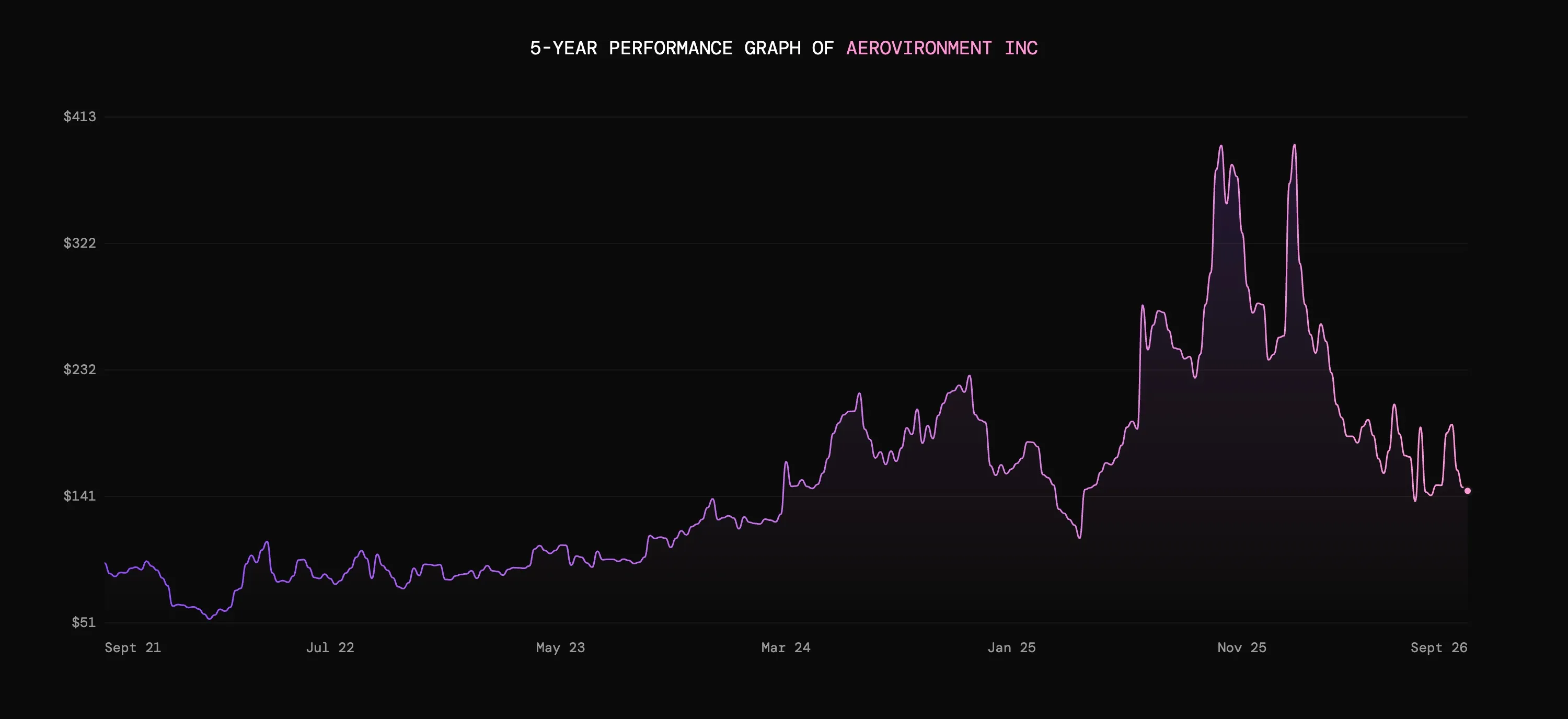
Earnings release: Wednesday 9 September, after market close
Revenue estimate: $456.2m
EPS estimate: $0.25
AeroVironment is a key player in battlefield drones, but has diversified its business to offer a whole gamut of high-tech modern warfare materiel. Its product range includes kit for toxic gas detection, satellite comms antennae, and autonomous defence against enemy unmanned drone units.
In Q4, AeroVironment’s revenue hit $641.6m, a YoY increase of 133%, as product sales more than doubled to $499.0m and contract services leapt from $32.8m to $142.7m.
But massive headline revenue growth was heavily fuelled by the acquisition of BlueHalo, completed on 1 May 2025. Q1 gives us a great chance to gauge how this has actually impacted profitability and organic growth, given it’s the first full YoY comparison incorporating BlueHalo.
While we know it’s made AeroVironment bigger, the key question is whether it has made it more efficient and more profitable.
At first glance, profitability might look a little thin, with the business guiding for net income of between $8m and $24m across FY2027. But the underlying business looks healthier than this would suggest. After all, headline numbers in FY2026 were compressed by acquisition-related expenses and a $240.7m goodwill impairment.
With so much muddying the water, perhaps the key figure to focus on in Q1 is adjusted EBITDA. This stood at $56.6m in the comparable period last year, and AeroVironment has guided to a range of between $305m and $325m across the FY.
Margins are worth a look too, having dipped last year as BlueHalo brought lower-margin services revenue into the business.
Narrative is important too, and wins such as the $465m LOCUST laser weapons system contract announced at the beginning of this month will do more to bolster investor confidence that the new-look business is stronger.
It’s also worth looking at the wider environment, where some factors are helping the business fly right.
We often talk about tariff headwinds, but they can provide tailwinds too. Washington’s levies appear to be blowing in the right direction for AeroVironment, with new US tariffs of up to 100% on certain imported heavy-duty drones and drone equipment, as well as 25% tariffs on lighter unmanned craft, taking effect on 3 September.
The Trump administration is explicitly aiming to encourage domestic UAS production, stating that the measures aim to “strengthen the ability of the defense industrial base to domestically produce key systems and products”.
With AeroVironment scaling its production significantly, it could be well placed to benefit. It just announced a $100m investment in a new Southern California campus, bringing together five different sites and expanding its manufacturing capabilities.
But tariffs are not a golden handshake, as the business has plenty of domestic competitors, including huge US defence contractors like Lockheed Martin and Boeing.
The tariffs are a nice sweetener, and investors will be keen to hear how the business is taking advantage, but the real question is whether the newly enlarged business can grow under its own steam.
Adobe - Friend or foe?
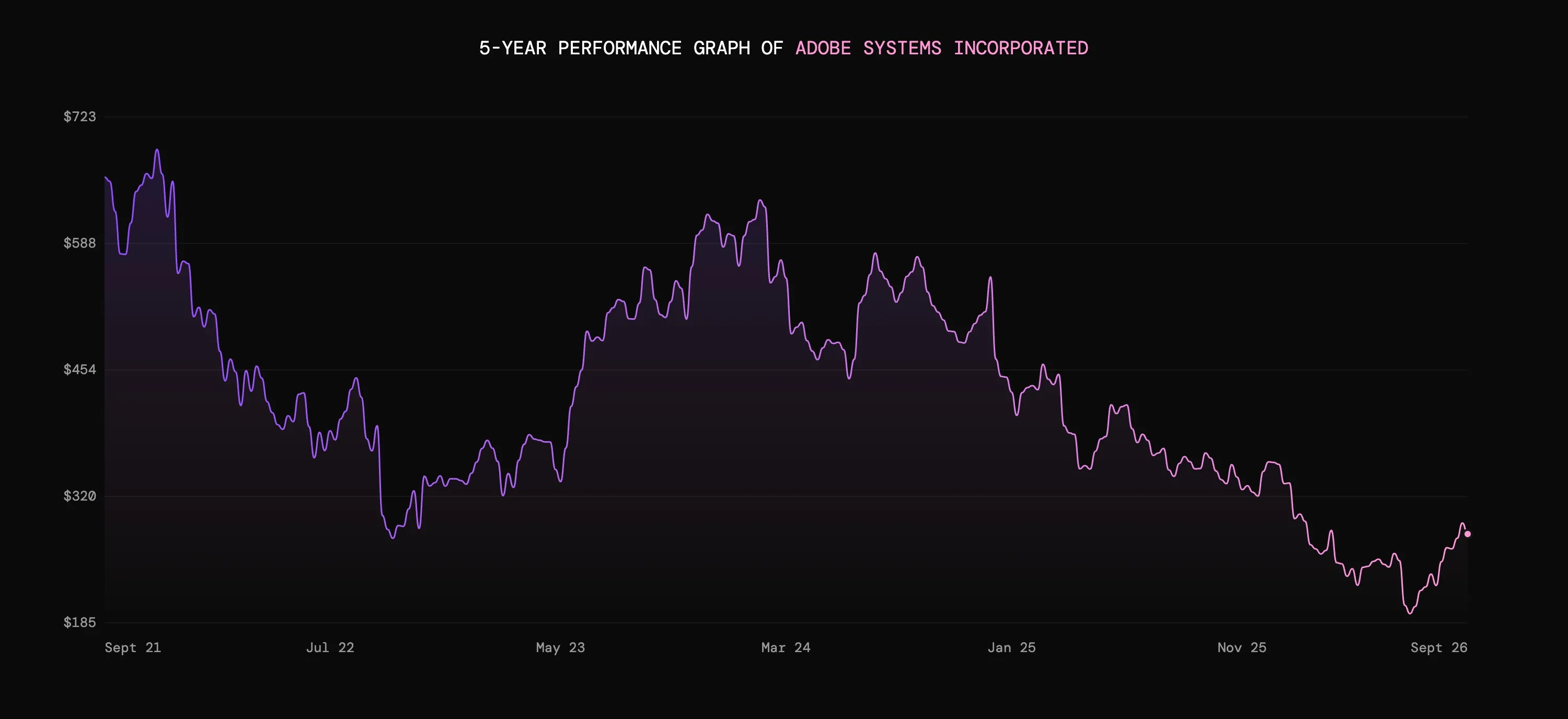
Earnings release: Thursday 10 September, after market close
Revenue estimate: $6.69bn
EPS estimate: $6.09
Adobe is a pretty obvious potential casualty from the AI boom, as tools under its Creative Cloud offering suddenly have to compete with AI-generated content that requires little in the way of skill or know-how to produce.
For example, LLMs let users generate or alter images rapidly with just a single prompt. How can Photoshop compete with the likes of that? Well, Adobe continues to insist AI is friend, not foe.
And there are numbers to support this. While last time out saw revenue rise by 13% YoY to a record $6.62bn, Adobe’s AI-first annualised recurring revenue (ARR) more than tripled to over $500m. The company’s Firefly suite of generative AI tools saw ARR of nearly $300m by the end of Q2.
Hand-in-hand with AI adoption is the company’s emphasis on using a freemium model as jet fuel for user acquisition. No-cost creative tools are certainly attracting interest, with 90m monthly active users in Q2 compared to just 50m a year earlier. The apparent cost of this prioritisation of the freemium funnel is delays to Creative Cloud optimisations.
This lays bare the gamble Adobe is taking, and may create pressure for the business to demonstrate that the funnel really is a funnel. That is to say whether users attracted by free access are converting to paid plan subscribers.
All this comes amid a CEO switcheroo, as Adobe announced last week that its Customer Experience Orchestration president, Anil Chakravarthy, will step in to replace long-serving CEO Shantanu Narayen on 1 December.
Even with the change in leadership, Adobe’s key challenge of changing AI from a threat to a feature remains the same. With its Q3 earnings, can the business prove to investors that its strategy is picture-perfect?
Oracle - Chew it
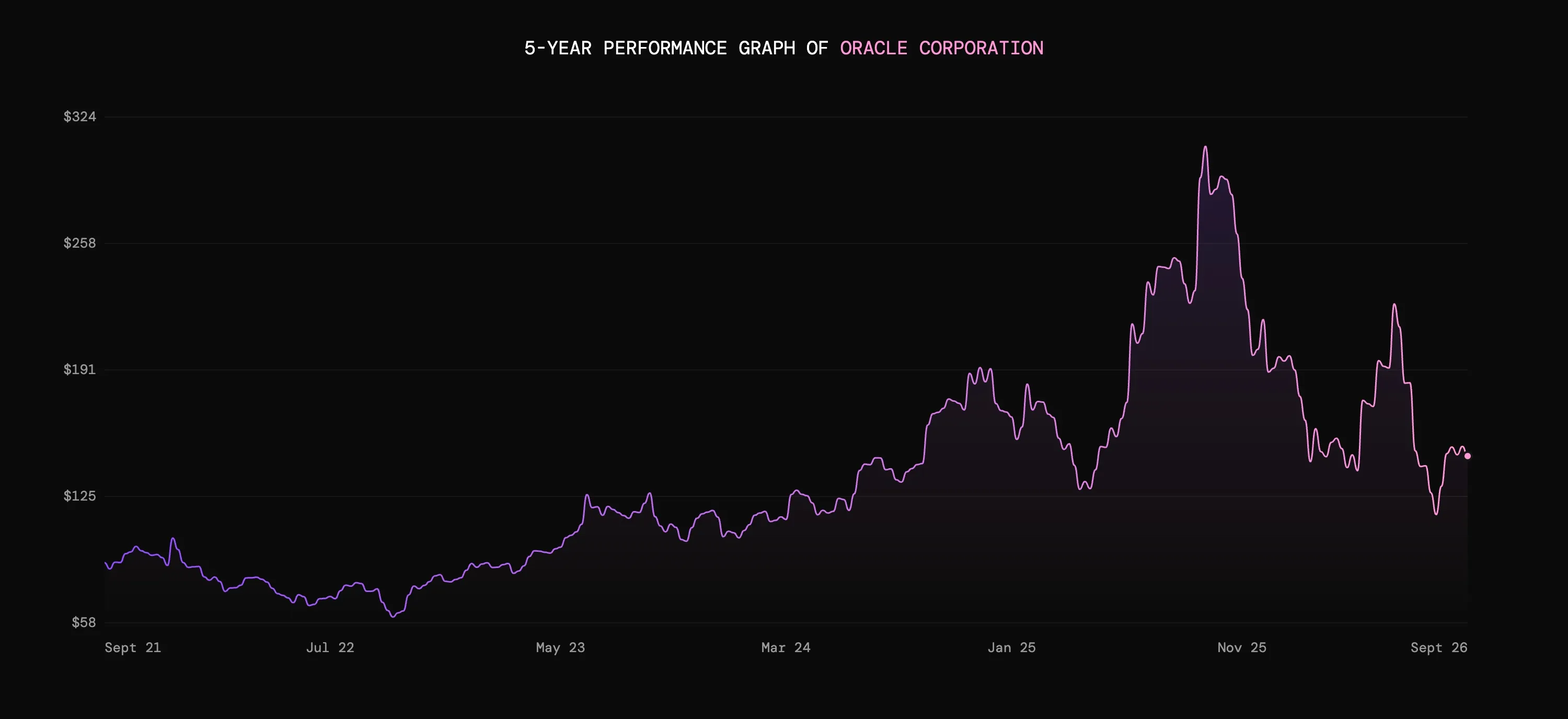
Earnings release: Thursday 10 September, after market close
Revenue estimate: $19.14bn
EPS estimate: $1.74
While Oracle might be traditionally known for its enterprise software and cloud computing chops, the business is one of the most aggressive players in the AI infrastructure scene. Increasingly, the business is focusing on supply of compute and datacentre resources to massive AI customers like OpenAI.
That’s why the company’s Oracle Cloud Infrastructure (OCI) platform is key to watch here. Revenue from OCI rocketed by 93% YoY to $5.8bn last time out, aiding the 21% jump in total revenue to $19.2bn.
Management has its eye on another step up this time around, having guided for total revenue growth of between 27% and 29% with cloud growth of between 58% and 64%.
Further contracted revenue is huge, with remaining performance obligations sitting at $638bn by the end of Q4. That’s a mahoosive 363% increase YoY. But as we all know, lining up deals is one thing and executing them is quite another.
Constructing sufficient data centres to satisfy its existing customer agreements is costing the business an arm and a leg. There have been signs of balance sheet strain, as free cash flow sank to negative $23.7bn in FY2026, and the business says it will raise $40bn through a mix of debt and equity financing in FY2027.
Amid this scramble to afford its own buildout, S&P downgraded Oracle’s credit rating to BBB- in July, citing the enormous upfront costs involved in the company’s business model and its vulnerability to rising component costs.
The business seems to be attempting to reduce its capital burden, stating in Q4 that $75bn-worth of hardware tied to AI contracts had either been prepaid by customers or supplied directly by them.
For Oracle to really get in investors’ good books, it doesn’t just need to show growth and demand for OCI. Instead, it needs to show it can pay for and deliver the AI infrastructure it has promised to its customers. In essence, can it chew what it has already bitten off?
Capital at risk. The value of your investments can go down as well as up and you may get back less than you invest.
Fluctuations in foreign exchange rates may affect investments denominated in currencies other than GBP and the amount you receive back.
Past performance is not a reliable indicator of future returns.
Freetrade does not give investment advice and you are responsible for making your own investment decisions. If you are unsure about what is right for you, you should seek professional advice.
.webp)
.webp)