.webp)
This week’s earnings preview is heading a little off the beaten track, as we poke our noses into the books of a few businesses UK investors might not have heard of.
Forgent Power is our fresh-faced growth stock, though a bit of post-IPO chop might be clouding the company’s eye-popping numbers. Trip.com might have enjoyed strong growth, but the business is also reeling from a massive fine from Chinese regulators.
Finally, housebuilding giant Lennar has a massive day on Wednesday as it offers its Q3 update just as the Fed drops a rate decision that could have a major impact on US mortgage rates.
Note: All estimates are based on data provided by Refinitiv.
Forgent Power - Common stock
Earnings release: Tuesday 15 September, before market open
Revenue estimate: $429.9m
EPS estimate: $0.24
You could be forgiven for not having heard of Forgent Power. It manufactures many of the components and equipment needed for electricity supply, including transformers, switchboards, and power distribution units.
What’s exciting about the business right now is, you guessed it, its considerable exposure to the AI data centre buildout. After all, these warehouses full of hard-working megachips are very power-hungry, consuming at least three to five times as much electricity per square foot as traditional facilities.
This opportunity has really helped to supercharge the company’s growth. Back in Q3, Forgent’s revenue rose by 103% year-on-year (YoY) to $378.7m, while adjusted net income had leapt by 132% to $55.3m.
The business attributed considerable order book gains, including 308% YoY bookings growth, to customers aiming to secure production capacity far in advance. Backlog reached $1.98bn by the end of Q3, and rapidly swelled further to around $2.4bn by the end of May.
Such rapid growth raises the inevitable question of whether Forgent actually has the capacity to deal with this influx of demand.
The business is making a lot of the right noises. It has already beefed up its footprint, and Forgent says further ongoing manufacturing expansion should leave it able to support annual revenues of up to $5bn. For reference, current guidance, which was raised last time out, is for FY revenue of between $1.35bn and $1.39bn.
If all goes to plan, in theory capacity should be comfortably in hand.
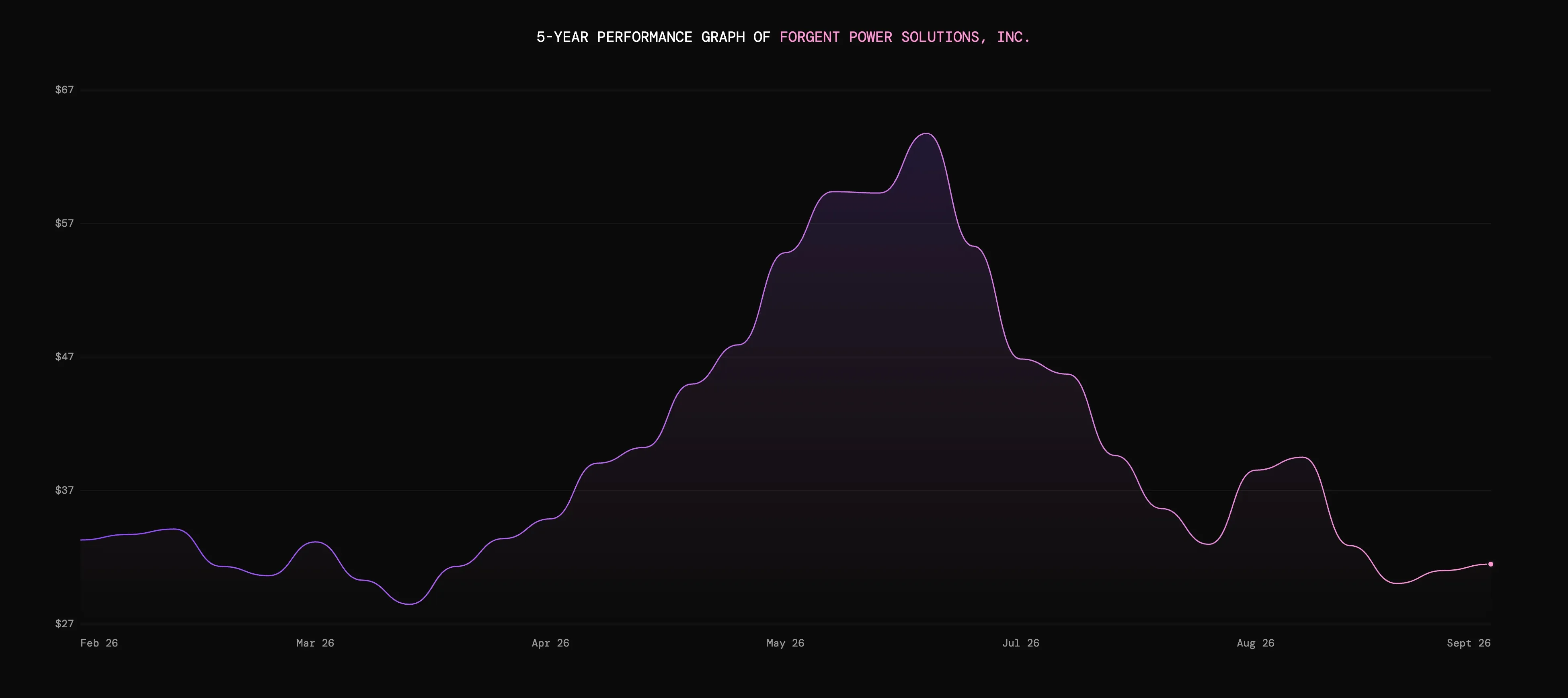
With this in mind, you might be wondering if you are missing something, given the share price’s downward slide since June.
Well, context is key. Forgent is still pretty junior on the public market, having only IPO’ed back in February. We might be seeing a certain amount of post-IPO choppiness, not least because a considerable amount of additional stock has found its way onto the market.
Further batches of common stock were sold for $29.50, $47, and $49 a pop, respectively, in March, May, and July by Forgent itself and shareholders linked to its private equity backer, Neos Partners.
This doesn’t mean the company has run out of steam, but it does mean there are rather a lot of Forgent shares knocking about. Common stock, if you will.
There’s nothing small about the growth in Forgent’s headline numbers, but the company’s share price has retreated significantly over recent months. Will Tuesday’s update be enough to pump some voltage back into the price?
Trip.com - Hammer time
Earnings release: Tuesday 15 September, after market close
Revenue estimate: $2.32bn
EPS estimate: $0.90
As the name suggests, Trip.com is an online travel business that is essentially China’s answer to the likes of Expedia and Booking.com. It’s global, too, with an additional Ctrip brand for domestic users in China.
At the moment, the business is packing some serious growth in its suitcase.
Bookings through its international platform leapt by 65% YoY in Q1, while inbound bookings were 90% higher. This helped to lead revenue 17% higher YoY, up to US$2.4bn.
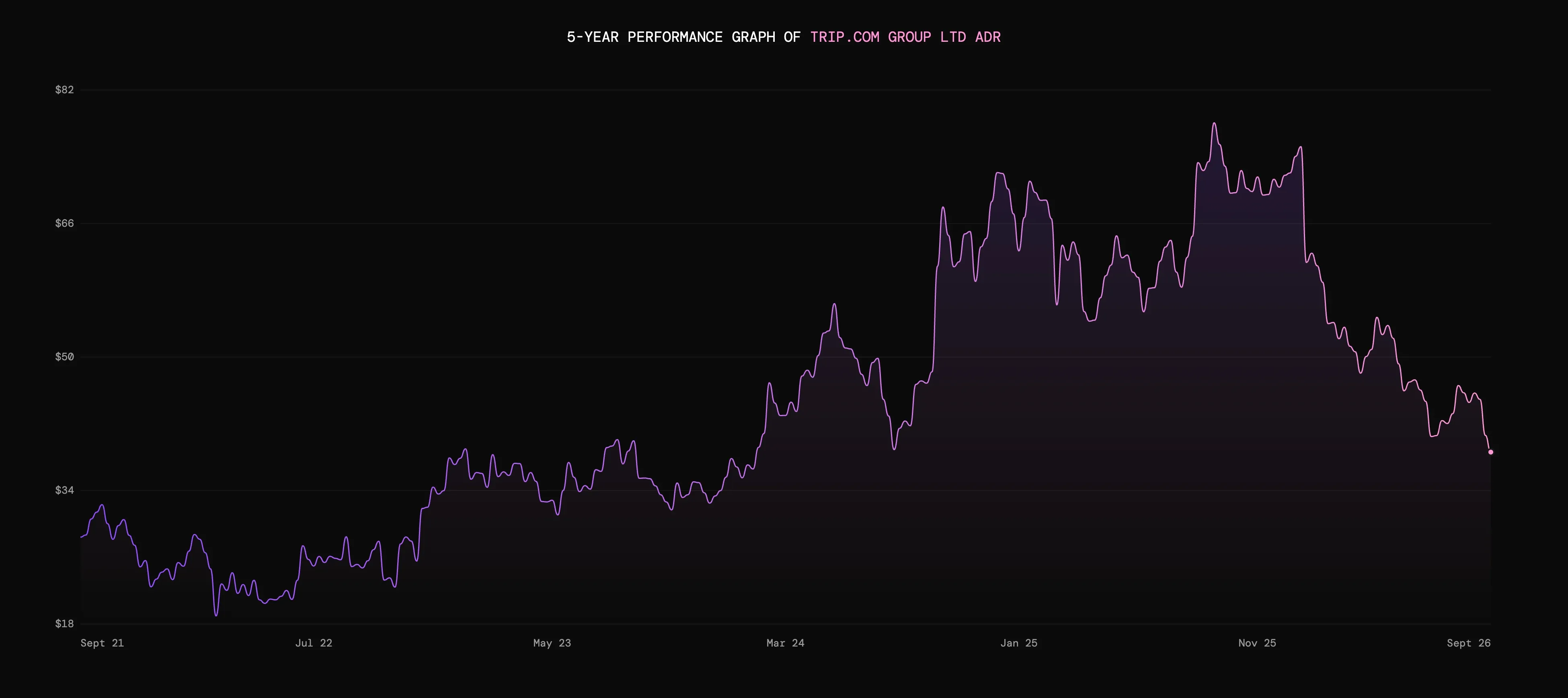
While this sounds great, the company’s share price dipped by north of 10% to hit a 52-week low.
Why? Well, Trip.com’s guidance spoiled the party. Q2 revenue growth was guided at 3-8%, as the business cited higher airfares, geopolitical uncertainty, and “operational adjustments the Company implemented to align with evolving industry standards and compliance frameworks”.
That rather mealy final point might well relate to Trip.com’s recent regulatory nightmare.
It has been in hot water with China’s State Administration for Market Regulation for breaches of anti-monopoly rules due to its imposition of exclusivity deals and price conditions on hotels.
The resultant RMB5.2bn ($770m) penalty landed in July, making it the steepest Chinese antitrust fine since Alibaba took an enormous RMB18.3bn hit in 2021. However, this is after the Q2 period with which this week’s report is concerned.
But while the fine itself might not impact this week’s numbers, investors will be on high alert for any impact on the success of Trip.com’s online hotel-booking business now that the business has endured a regulatory hammering.
So, can Trip.com’s international growth continue to impress as its domestic business goes through something of a reboot? And will the business be able to brush off its regulatory challenges, or find the path forward more treacherous than anticipated?
Lennar - Volume
Earnings release: Wednesday 16 September, after market close
Revenue estimate: $8.31bn
EPS estimate: $1.30
Next, we’ve got a housebuilder, the second largest in the United States, in fact. The timing of this update is a little awkward for Lennar given that the Fed’s next rate decision lands on the same day, which could significantly steer housebuilding sentiment and the achievability of Lennar’s guidance, one way or the other.
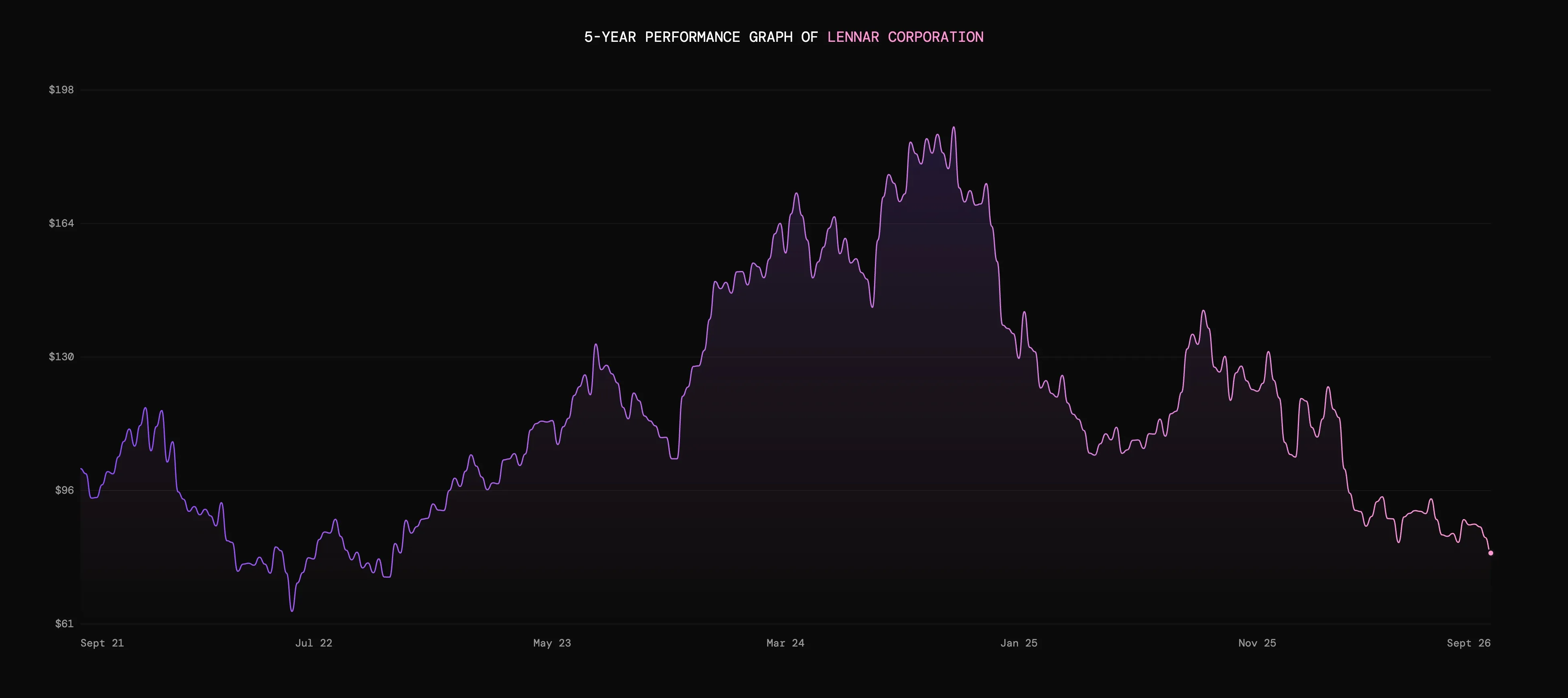
US mortgage rates have crept higher over the past year as inflation remains stubbornly high amid continued gas price elevation. The average 30-year fixed rate stands at 6.76% as of 10 September, compared with 6.35% on the same date in 2025.
Pricier mortgages tend to make buyers more reluctant and times tough for housebuilders. Mortgage rates were a little lower in Lennar’s Q3 period than they are right now, but the business has still been playing a difficult hand.
In simple terms, Lennar’s primary gambit had been to keep revenues and earnings afloat by prioritising volumes and accepting lower margins.
To a certain extent, this has worked.
Back in Q2, revenues of $7.9bn represented a 5.2% YoY decline, while net earnings attributable to Lennar dipped by 36.1% to $304.8m. These might look like steep declines, but Lennar remained comfortably in the black as deliveries climbed by 2% to 20,519 in the period.
However, the cost of pulling this off has been a fair old dip in average sales prices. These came in at $371,000 in Q2, down from $389,000 12 months prior and $426,000 two years previously.
But keeping volumes high might prove challenging as the business also noted a 4% drop in new orders to 21,749 homes. Q2 saw full-year new homes delivery guidance trimmed from 85,000 to between 82,000 and 83,000.
So, the volume is being turned down, and Lennar’s strategy seems to be starting to change.
Margins actually improved sequentially in Q2, rising from 15.2% to 15.6%, with the aid of a retreating incentive rate. This was still well down against Q2 2025’s 17.8%, but it may represent the gathering pace of some kind of bounceback. Indeed, management noted that the dip in incentives from 14.1% in Q1 to 12.9% is “starting to look like a trend”.
For Q3, Lennar has said it expects to deliver 20,500 to 21,500 homes and 21,000 to 22,000 new orders as average sale prices edge higher to between $375,000 and $380,000. In addition, gross margin is seen as increasing to 16%. This was all given with the caveat that market conditions were likely to remain tough, and they certainly have.
So, are the foundations firm, or are the winds of inflation blowing the roof off? For investors, a business doggedly weathering bad times is a lot more attractive than one fully at the whims of market conditions. With guidance cut once this year already, Lennar’s numbers need to hold.
Capital at risk. The value of your investments can go down as well as up and you may get back less than you invest.
Fluctuations in foreign exchange rates may affect investments denominated in currencies other than GBP and the amount you receive back.
Past performance is not a reliable indicator of future returns.
Freetrade does not give investment advice and you are responsible for making your own investment decisions. If you are unsure about what is right for you, you should seek professional advice.
.png)

.webp)
.webp)



.webp)