
UK gilt yields are hovering around multi-decade highs as rate hikes and energy-led inflation concerns ratchet up the pressure on government borrowing.
At the time of writing, the 10-year gilt yield is around 5.34%, while the 30-year sits at around 5.77%. So, we’re going to tackle three questions. Why are gilt yields so high? What are gilts? And what kind of opportunity do they offer for investors?
A yield in England
The answer to the yield question lies in inflation and interest rates, both of which look to be on the way up.
Starting with the former, annual CPI inflation rose to 3.5% in September as fuel and transport costs bit. The Bank of England (BoE) says it expects inflation to climb considerably higher, up to 5% by the mid-point of 2027.
Consequently, the start of November saw the BoE’s Monetary Policy Committee vote to hike interest rates to 4% as they seek to keep inflation under control.
The knock-on for gilt yields is two-fold. Higher inflation means investors demand greater yields to compensate for the deterioration of value in real terms. Meanwhile, rising interest rates put pressure on yields to be competitive against investors’ other options, like cash deposits and other bonds.
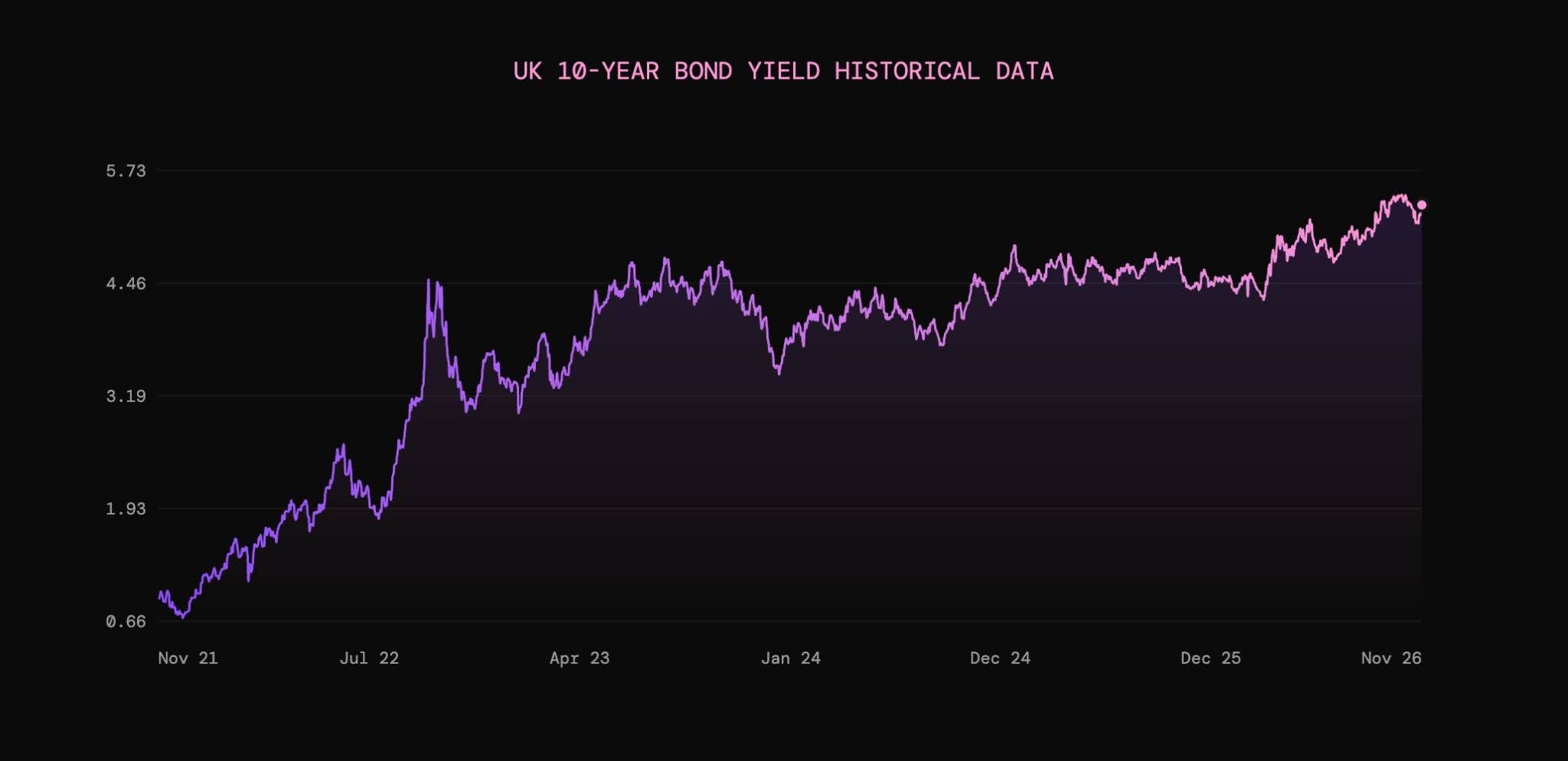
Beyond our shores, there’s also the issue of rising yields in the US and Europe as rising energy costs fuel inflation concerns across the West. This heaps additional pressure on government debt to offer returns that investors consider attractive.
Gilt yields essentially reflect government borrowing costs. But while Westminster might face the unpleasant reality of paying more to service its new debts, higher yields can create opportunity for investors.

A gilt guide
For the uninitiated, here’s a whistlestop gilt explainer.
When you buy a conventional gilt at issue, you are loaning money to the government. You get paid back the face value, usually £100, when the gilt reaches maturity. They often cost £100 at issue, but may be higher or lower based on market sentiment. Once you own a gilt, you receive coupon payments, usually semi-annually, which are quoted as a percentage of face value.
So, a 5% coupon means £5 per year split across two coupon payments. A 10-year gilt matures in 10 years.
If you buy a £100 face value conventional gilt with this rate at issue for £100 and keep it to maturity, you get your initial £100 back plus £50 in interest before taxes and costs.
Note that the coupon is not the same as the yield. The coupon rate tells you how much interest the gilt pays. Yield to maturity takes account of the price you pay, the remaining interest payments, and the amount repaid at maturity.
While gilts can be bought at issue, they can also be bought and sold on the secondary market. Here, gilt prices and yields move in opposite directions. Higher yields put downward pressure on existing gilt prices, while lower yields will tend to support them.
How do you plead?
This might have you wondering whether gilts are right for your portfolio.
For investors, gilts offer predictable cash flows and a low risk of default. You can also tailor which gilts you use to your investment time horizons. Any gains are exempt from capital gains tax too, though coupons may be subject to income tax if held outside a tax-efficient account like an ISA or SIPP.
But no investment comes without risks.
For example, if you need to sell before maturity and rates have increased since you took ownership of the gilt, you could receive less than you paid, because the price of the gilt is likely to have fallen over your holding period. Longer-dated gilts tend to be more sensitive to rate changes, and so see larger price swings.
High inflation can also erase much of the value of your future returns.
Of course, there is also the extremely slim risk of the government failing to pay you back. However, in over three centuries of issuing them, the UK government has never missed a scheduled payment on a gilt.
Capital at risk. The value of your investments can go down as well as up and you may get back less than you invest.
Freetrade does not give investment advice and you are responsible for making your own investment decisions. If you are unsure about what is right for you, you should seek professional advice.