This week brings such a raft of tech earnings intrigue from the likes of Apple, Palantir, and AMD that we’ve had to stack them like sardines in a can.
In a jam-packed week, things kick off with Apple and its fantastic folding fone. But we’ll also explore how chip stocks AMD and Arm might negotiate the downturn in investors’ AI infrastructure enthusiasm, how Palantir and Applovin can keep ambitious investors happy, and how Uber’s future could hinge on robot piloted taxis. Let’s get cracking.
Note: All estimates are based on data provided by Refinitiv.
Apple - Cracks appearing?

Earnings release: Monday 2 November, after market close
Revenue estimate: $113.36bn
EPS estimate: $1.99
Kicking our door down on Monday is Apple, which ensures we start the week with a blockbuster.
Of the Magnificent 7, Apple is perhaps the least exposed of these tech giants to the momentum (or lack of it) in the AI trade. The company deals more in the tangible, in physical products, and its magnum opus is the iPhone. After last week got a bit gory with all the downward-pointing red arrows, perhaps that's something that might appeal to investors.
Back in Q3, a 22% year-on-year (YoY) rise in iPhone revenue to $54.3bn was largely responsible for the 16.4% increase in total net sales to $109.4bn. This momentum, and the fact that it brings in around half of all sales, mean iPhone news is investors’ first port of call.
We already know iPhone sales growth is unlikely to be so high in Q4 as Apple has guided for a figure in the mid-teens due to FX headwinds and supply constraints limiting sales.
But there’s also iPhone news to dig into beyond these numbers. Following their 18 September release, we’re now on the eighteenth series of iPhone iterations. One might be forgiven for wondering how the company can prevent things from getting a bit stale, so early sales momentum would be a strong signal here.
Then there’s Apple’s newest innovation. The iPhone Duo, a folding smartphone, was released on 23 October. Of course, this is too late for sales to count towards the reported quarter, but any sentiment about the product’s performance will be keenly seized upon.
Indeed, investors may be seeking reassurance amid reports that the supposedly foldable screen may have an unfortunate habit of cracking. It’s important to state that clickbaity headlines could be amplifying the problem, and we don’t know the actual rate of failure yet. Even so, it could prove to be a very expensive defect, especially if Apple finds itself having to replace thousands of faulty $2,000 smartphones.
I’ve stressed that Apple is a hardware-first business, but we also need to take a look at Services. Sales might be growing a bit slower than the company’s flagship iPhones, climbing by 12.1% in Q3, but it offers much higher margins. Gross margin was 75.6%, compared with just 40.1% from the Product side.
This means Services revenues have a pretty outsize impact on profits, and so will be closely watched. Consensus estimates are for sales of $31.6bn, but keep an eye out for commentary on whether changes prompted by the EU’s Digital Markets Act and a bust-up with South Korean regulators could have an impact on the segment’s economics.
There are other pressures on profitability too, as Apple says group gross margin is likely to be between 47% and 48%, down from 50.1% in Q3, as higher memory costs bite.
Apple has produced strong momentum this year, but slower going for its flagship product, memory costs, concerns about flawed tech, and challenges for its high-margin Services business mean cracks could be appearing.
Palantir - Spooks
Earnings release: Monday 2 November, after market close
Revenue estimate: $2.18bn
EPS estimate: $0.41
Halloween might have just passed, but we can bookend the spooky season with a visit from big data boogeyman Palantir.
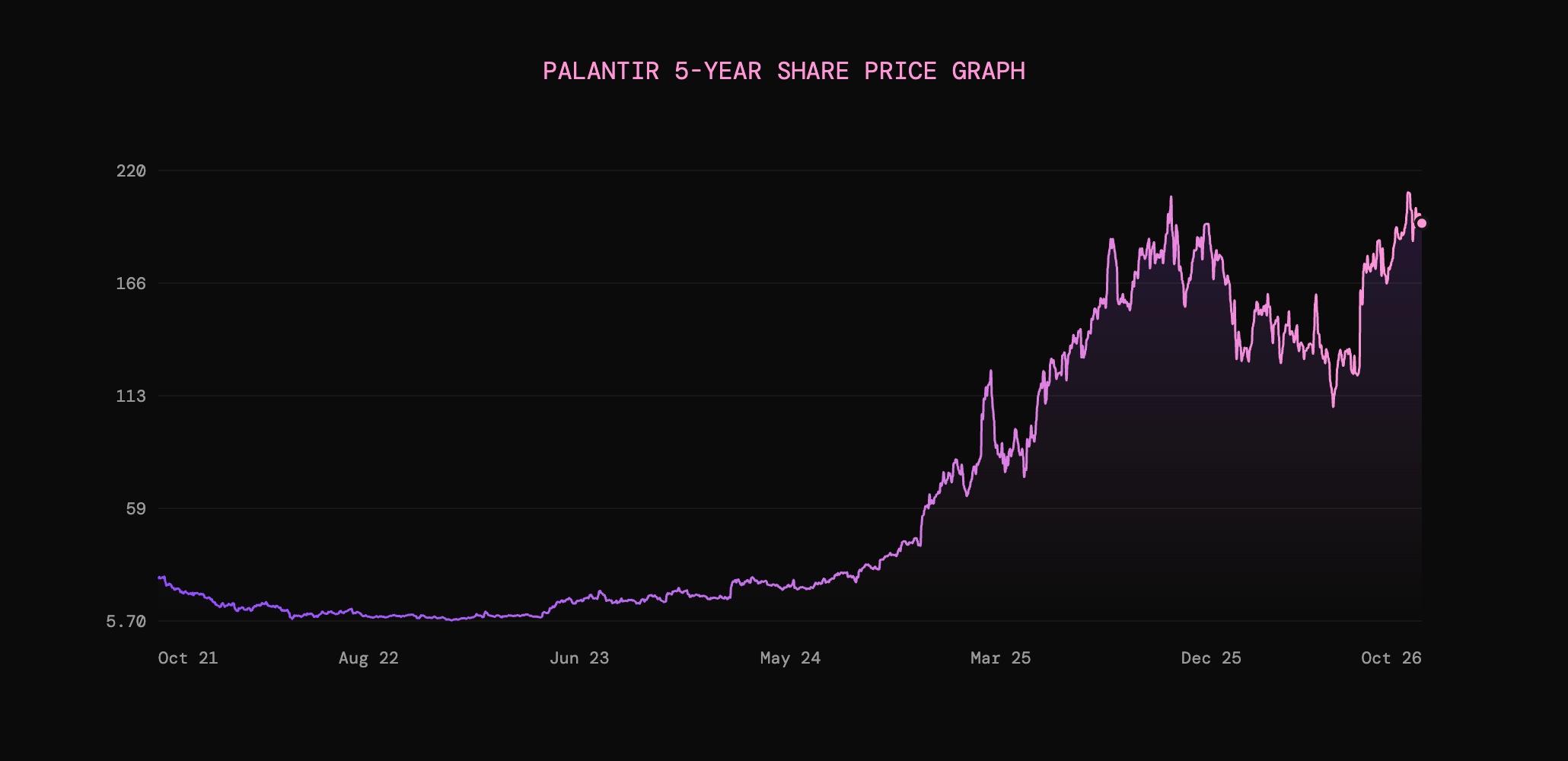
Some might find the firm positively sinister, but there’s no denying it has achieved massive growth. Back in Q2, total revenue leapt by 93% YoY to $1.94bn as US Commercial revenue stormed 149% higher to $764m.
What makes Palantir’s growth more remarkable is that it comes hand-in-hand with improving profitability, as adjusted operating margin expanded to 62%. This is expected to pull back to around 60% in Q3, as the company has flagged the impact of new hire starts and seasonal product and marketing initiatives.
Even so, with the business having boosted FY revenue outlook on the back of US Commercial gains, expectations will be high.
The flipside of all this is Palantir’s demanding valuation, with the stock trading at over 150x earnings. Yowza. Clearly, the market thinks Palantir has a pretty extensive runway for growth. After all, the business is netting pretty huge deals, with contracts worth $3.37bn total signed in Q2, representing a 49% YoY increase.
But signatures on dotted lines are not the same as delivering projects or banking revenue, especially as unexercised customer options are included in total contract value. Palantir’s sky-high valuation means that, as well as maintaining revenue and margin momentum, Palantir needs to continue commercial activity.
Keeping investors sweet can be tricky, particularly when expectations are through the roof. A report from the Financial Times last week noted an increasing proportion of messages on the company’s shareholder message board are posing questions about dividends, buybacks, and stock splits.
Palantir’s rapidly growing revenues and profitability have given it a lot of capital to play with, and its balance sheet boasts $9.2bn in cash, cash equivalents, and short-term US Treasury securities. It would be a surprise for the company to distribute this war chest to investors, but Palantir is nothing if not unique.
AMD - Warning light

Earnings release: Tuesday 3 November, after market close
Revenue estimate: $13.09bn
EPS estimate: $1.95
AMD has made hay with the AI infrastructure boom, and last time out revenues jumped by 50% to $11.54bn. Data centre revenue now comprises 58% of total revenue, having rocketed by 107% YoY to $6.72bn in Q2.
Given the makeup of its growth engine, it’s well worth asking what the recent cooling of investors’ interest in AI means for chipmakers like AMD.
First up, the stock has already dropped back in advance of earnings. But even after sliding 10.9% on Friday, the stock is up by over 120% across the YTD.
Investors are becoming increasingly anxious about how sustainable the AI infrastructure spending funding the growth of chip stocks like AMD really is.
While investor tolerance looks stretched, there’s no actual sign of a slowdown in hyperscaler spending. Amazon and Meta have recently outlined enormous capital expenditure plans.
But that doesn’t mean chip stocks are insulated from market volatility.
Just look at the reaction to Intel’s earnings last Friday. It plummeted by nearly 30% even as earnings topped expectations on the back of strong data centre sales. Why? Well, the company’s outlook pointed to a decline in margins and revenue in Q4.
It also warned of weak PC demand, a potential warning light on the dashboard for AMD’s lower growth but still sizeable Client and Gaming segment.
Admittedly, Intel might be an extreme example, as it is dealing with its own set of problems, including disruption from an explosion at an Israeli semiconductor manufacturing facility. But investors clearly have itchy trigger fingers right now, and are quite willing to mete out punishment when they are served up a disappointment.
Amid this fraught environment, AMD pushes ahead with developing its new Helios AI computing systems. Production is expected to ramp up significantly in Q4 and then again in Q1 2027, playing an important role in the chipmaker's plans to double data centre revenue next year. Meta is already testing the technology ahead of wider planned deployment.
For AMD then, the key is to deliver earnings that meet and likely surpass Wall Street expectations for revenue of $13.09bn and EPS at $1.95. But perhaps more important is to reassure investors that the future order pipeline is resilient.
Anything less, and the market is in the kind of mood that it may start to pick at any loose threads it can find.
Uber - Look ma, no driver!
Earnings release: Wednesday 4 November, before market open
Revenue estimate: $14.70bn
EPS estimate: $0.96
First, before we get onto the exciting futuristic stuff, let’s wade through Uber’s numbers.
Back in Q2, Uber showed steady growth as revenue rose by 12% YoY to $14.19bn on the back of a 24% jump in gross bookings to $58.02bn. The number of trips completed increased by 18% to 3.87bn. Management expects some of this momentum to continue into Q3, with gross bookings of between $58.25bn and $60.25bn.
As promised, it’s now time to zoom ahead to contemplate the autonomous vehicle, or robotaxi, if you will. This sounds spacey, but it's already a very real innovation that really kicked into gear in Uber’s Q3.
Uber got driverless vehicles from Baidu onto the streets of Dubai back in August, while its collab with British developer Wayve launched supervised robotaxi services in London in September. The business has ambitions to get autonomous operations up and running in 15 cities before the end of 2026.
While admittedly rather dystopian, the economics of removing human drivers from the equation could be massive. Driver payments make up a hefty chunk of traditional ride-hailing, and while autonomous vehicles will still need maintenance, insurance, and potentially pricey tech, having a robot at the helm could deliver better margins.
After all, there is a massive disparity between Uber’s gross bookings figure, which represents the total dollar value of trips and orders and was $58.02bn in Q2, and its revenue, which came in at $14.19bn. Now, gross bookings includes a whole host of costs like mobility, delivery, freight activity and more, so it's not like autonomous vehicles will allow Uber to convert the whole thing into revenue.
But it does stand to reason that Uber will look to lessen the gulf between the two figures. That’s why more insight into the financial viability of large-scale projects would be welcomed.
The other problem is competition. Autonomous vehicle developers could go direct to customers with their own ride-hailing service, or someone else might nip into the queue ahead of Uber. The company has the power of its brand, an existing international network of operations, and significant financial resources on its side, but investors will want to be reassured that this opportunity is an opportunity for Uber, and not for somebody else.
There are other key building blocks for the future, too.
Uber’s $14.8bn takeover of Delivery Hero is nearing a key deadline. The German food-ordering company’s shareholders have until 5 November to accept the offer, so we won’t know if it has overcome that hurdle until after earnings are already out.
The acquisition, along with a $2.3bn all-cash deal for US catering platform ezCater, appears crucial to Uber’s strategy of expanding reach, so investors will be on the lookout for bumps in the road or a lack of confidence.
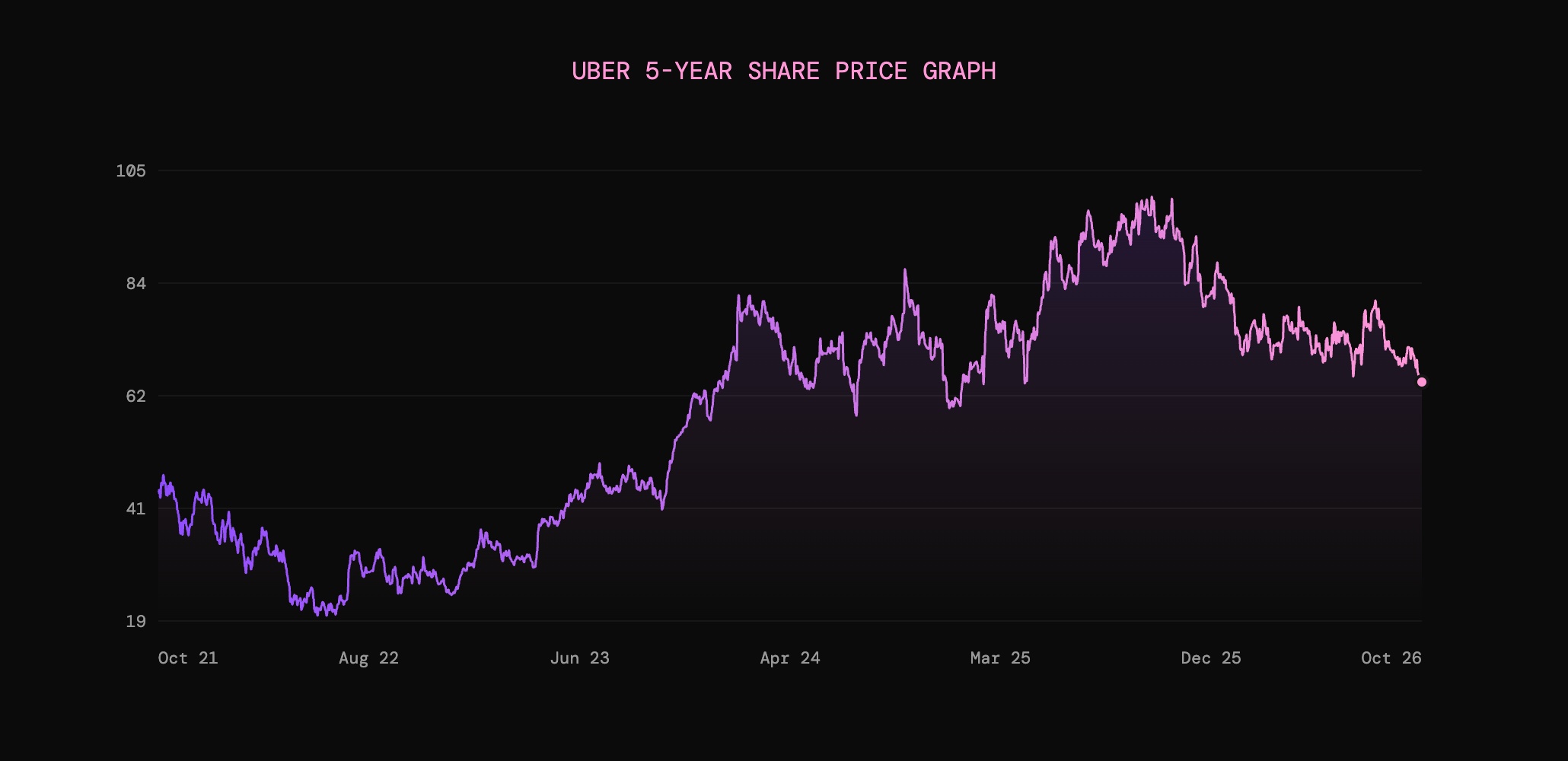
For Uber, the critical element to this earnings update will be whether autonomous vehicles can realistically become a profitable part of Uber’s business. Of course, the headline numbers will still be keenly watched, but investors would be forgiven for having one eye on the horizon.
Arm Holdings - New tricks
Earnings release: Wednesday 4 November, after market close
Revenue estimate: $1.38bn
EPS estimate: $0.47
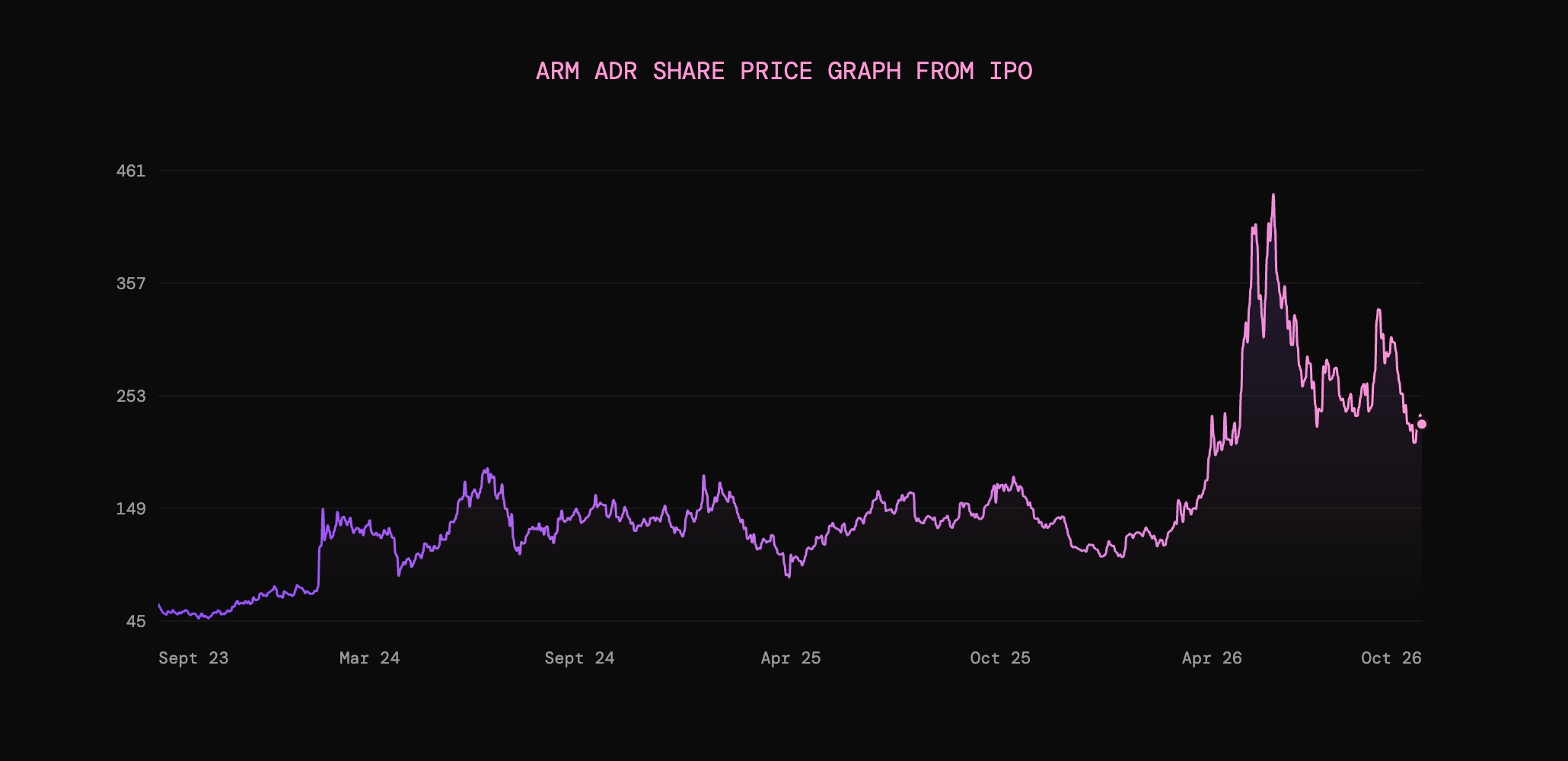
British semiconductor firm Arm Holdings might be a bit of a minnow compared to some of the rest of the big fish in this week’s preview, but its massive exposure to the AI infrastructure trade has made the business hot property.
The company’s fiscal Q1 results showed a 22% YoY increase in revenue to $1.29bn, as Licensing and Royalty revenues climbed by 23% and 22% respectively.
Data centre demand has played a major part in this growth, with royalties more than doubling YoY. Having previously been a smartphone-focused operation, elbowing in on this space has paid off considerably. Investors will want to know whether its growth can remain in triple digits and whether Neoverse processor shipments continue to accelerate.
There’s something new with Arm this year. The business might be a chip stock, but its business model has historically dealt in intellectual property. Customers like Apple, Nvidia, and Qualcomm would license Arm designs and incorporate them into their tech.
But back in March, the company changed course with plans to produce its own chips for the first time. Churning out hard silicon in the form of the Arm AGI CPU, a chip designed specifically for AI data centres, is a major expansion beyond the traditional licensing model.
The business claims customer demand is “beyond initial expectations”, reaching $2bn across fiscal 2027 and fiscal 2028, greater than the $1bn manufacturing capacity the business had managed to secure at the time of its last update.
Arm was making a lot of confident noises last time out, and stated it had made progress in securing additional supply. But investors will want some more tangible information this time around, or they may start to feel the company has bitten off more than it can chew.
Of course, the processes, costs, logistics, and materials required to manufacture chips are very different from those needed for licensing designs, so the shift in business plan will inevitably have a major knock-on effect on Arm’s margins.
Arm’s CEO rather vaguely flagged AGI CPU gross margins as likely to be in “the high-30% range, maybe low-40s for the first generation”, before improving toward 50% over subsequent years.
That's well below the margins Arm enjoys from its existing business, though additional sales will still generate substantial profits if the company can manage production costs and maintain demand.
The good news is that the business has promised a more detailed update for both the revenue and margin profile of the plan at the end of fiscal Q3. The bad news is that Wednesday brings Arm’s fiscal Q2 release. We have to wait until February for the Q3 gossip.
However, we may still gain insight into how the new masterplan will work, and whether it will compromise the business’s existing profitability.
AppLovin - Open doors
Earnings release: Wednesday 4 November, after market close
Revenue estimate: $2.08bn
EPS estimate: $4.04
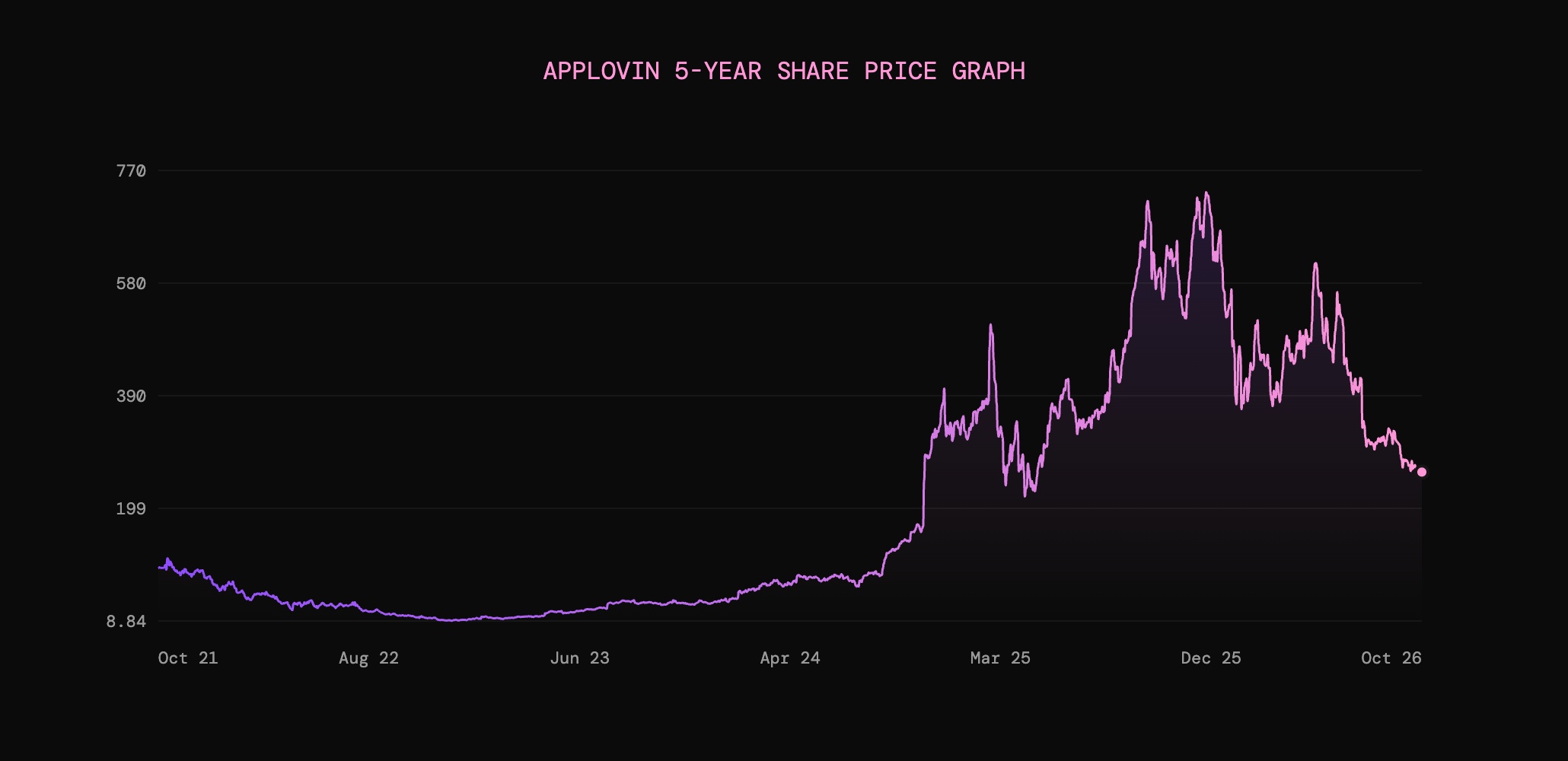
Mobile advertising management platform AppLovin is the last preview on our list. This business is an interesting two-sided coin, with its momentum moving in one direction and its share price in another. Let’s dig into why.
Revenue has picked up a head of steam, climbing by 53% last time out to reach $1.92bn and propelling net income 55% higher to $1.27bn. What’s more, its adjusted EBITDA margin expanded by 300 basis points to 84%.
Out of context, these headline numbers look like healthy growth and an enviably high margin.
But Q2 earnings saw the business strike a candid mood after missing analyst expectations rather than exceeding them, as revenue sat below the midpoint of guidance. Investors were not too impressed either, with the share price down by over 60% across the YTD.
Investors will anticipate improvement after CEO Adam Foroughi stated: “Q3 is off to a strong start, and the business is back on the trajectory we expect.”
The main issue last time out appears to have been Axon’s performance. Axon is AppLovin’s AI-powered ad placement technology, which determines when and where to deploy ads based on advertiser profiles and goals.
Foroughi said improvements in the model were “lighter than normal” during Q2, but stressed substantial changes were implemented in early Q3. In addition, he noted that advertiser demand remained strong.
And it's with demand that a potential game-changer comes into play. In June, AppLovin opened its self-service ad platform to ALL businesses, having previously been invite or referral only. Q3 is the first full quarter since the public launch.
This could be transformational for the business as it transitions beyond its roots in mobile gaming to capture more clients from ecommerce and broader consumer markets. Though AppLovin does not report specific gaming and ecommerce revenue, we should still be able to gain some insight.
Figures and commentary about consumer advertiser spending, new advertisers, and creative tool improvements will help us gauge the success of execution. Another crucial question amid the change is whether spending on AI tech could put pressure on AppLovin’s high margins? Guidance indicates a slight slip is expected, with adjusted EBITDA margin projected at 83% for Q3, but anything deeper could be cause for concern.
AppLovin has made AI-powered mobile advertising immensely profitable in the mobile gaming space. For investors to start giving the share price some love, they need reassurance it can replicate this success in the wider market while returning to headline overperformance.
Capital at risk. The value of your investments can go down as well as up and you may get back less than you invest.
Fluctuations in foreign exchange rates may affect investments denominated in currencies other than GBP and the amount you receive back.
Past performance is not a reliable indicator of future returns.
Freetrade does not give investment advice and you are responsible for making your own investment decisions. If you are unsure about what is right for you, you should seek professional advice.