In this week’s earnings preview, we’re straddling two sides of cutting-edge tech as we examine the hype surrounding the release of Take Two’s GTA VI and dig into key names in the AI buildout.
We may have seen a ‘bluenami’ in the US midterms last week, but it has turned the AI trade a distinctive shade of red. But that doesn’t mean the AI trade is ‘Wasted’.
We’ll examine the state of play for three of the biggest ‘picks and shovels’ plays in AI infrastructure, what they might need to do to impress investors, and why they might appeal as investors become more selective about who they think the buildout’s winners and losers will be.
Note: All estimates are based on data provided by Refinitiv.
Take Two - Five-star wanted level

Earnings release: Monday 9 November, after market close
Revenue estimate: $1.58bn
EPS estimate: $0.94
Video game publishing giant Take Two is top of our list to check out on Monday, largely because the company is edging closer to releasing what may well be the game of the decade.
Last time, the company’s net bookings slipped by 3% year-on-year (YoY) to $1.39bn, even as revenue edged 2% higher to $1.53bn. Guidance is for Q2 net bookings of between $1.62bn and $1.67bn, with a full-year forecast of $8bn to $8.2bn.
The business uses net bookings prominently as it provides a more immediate picture of how much customers are spending on its games versus revenue.
But there’s something bigger hanging over all of this.
That’s because it’s hard to overstate how crucial the imminent launch of GTA VI is to Take Two’s fortunes. For context, its predecessor, GTA V, sold more than 230 million copies worldwide as of August 2026, making it the third best-selling game of all time.
Take Two has squeezed every buck it can from the megahit, which has had remarkable longevity thanks largely to regular injections of new content. Just last quarter, recurrent consumer spending on the series was up 3% in Q1 as developer Rockstar continued to support it with new content even 13 years after release.
To that last point, it’s also worth noting the gap between so-called ‘Triple A’ video game releases seems to have lengthened significantly, from three or four years to over a decade, making releases like this even more seismic. Thousands of people, possibly even millions, are likely to book time off work or even pull a few sickies to enjoy the mayhem.
Indeed, there are even arguments over whether mass absenteeism will have a measurable impact on the economy.
But this makes the stakes huge for Take Two. The expectation is that the title will be both an instant smash hit and a long-term money-spinner like its predecessor. Any colour from TakeTwo on just how many copies it expects to ship, or how much it expects to make, will be the biggest steer of share price.
We might not get much of a clear answer though. When asked for unit sales guesstimations during the Q1 earnings call, Chairman and CEO Strauss Zelnick’s response was positive, if rather vague:
“The answer is, I don't know. I'm not going to tell you. I can say that the level of pre-orders is unprecedented and astonishing, and we're very grateful for that. They are so unprecedented that we just don't know how it'll translate into sales.”
Hopefully Zelnick is in more of a mind to share on Monday, and we’ll get some idea of what Take Two expects. Guidance might be the thing to watch. Remember that FY forecast we mentioned earlier? Well, the strength of this is largely due to the performance of its NBA 2K and the Grand Theft Auto franchises.
If that figure changes, we might find out just how badly gamers want to get their hands on GTA VI.
CoreWeave - Blue Ruin?

Earnings release: Tuesday 10 November, after market close
Revenue estimate: $3.55bn
EPS estimate: -$1.16
It’s a good time to look at CoreWeave as, in some ways, the company is a microcosm of the AI buildout.
CoreWeave specialises in providing processing power needed to develop and run artificial intelligence, renting out computing infrastructure in its data centres to major tech companies.
This strategy has delivered some pretty major growth.
Back in Q2, revenue more than doubled YoY to $2.58bn and the company’s revenue backlog had swollen to an enormous $104bn by the end of the quarter. In addition, the business said it had already locked in $25bn in additional customer commitments during the first weeks of Q3, painting a rosy picture of demand.
The other side of the coin is that the business was unable to convert this revenue into profitability, with losses more than doubling to $626m as operating expenses grew faster than revenue. Interest expenses are really becoming a drag, leaping by 139.7% YoY to $640m in Q2.
That’s a sign of a real issue. The company has said it expects capital expenditure to land between $35bn and $39bn this year as the business continues to spend, spend, spend, even as the cost of servicing its debt pile keeps climbing.
At the time, investors seemed impressed rather than concerned. The next session saw CoreWeave's shares rocket by more than 19%, with attitudes apparently buoyed by better-than-anticipated revenue and orders.
But the price has since deteriorated significantly amid cooling enthusiasm for the AI trade and particularly relevant worries about overspending.
The US midterms last week are a fresh wrinkle. The share price shed around 10% on both Wednesday and Thursday before a slight recovery on Friday, as investors weigh how a Democrat controlled legislature, as well as new Democrat governors in key states, could rein in the pace of the AI buildout.
For example, new Texas Governor-elect Gina Hinojosa has called for an immediate moratorium on data centres. CoreWeave owns and operates several facilities in Texas, and has reportedly reached out to Hinojosa for collaboration on the issue.
Facing financing headaches and potentially hostile political conditions, CoreWeave might be feeling the heat. The business has blown investors’ socks off with its red-hot revenue and dealmaking, but can it serve up something special once again?
Cisco - Super cycle
Earnings release: Thursday 12 November, after market close
Revenue estimate: $18.12bn
EPS estimate: $1.32
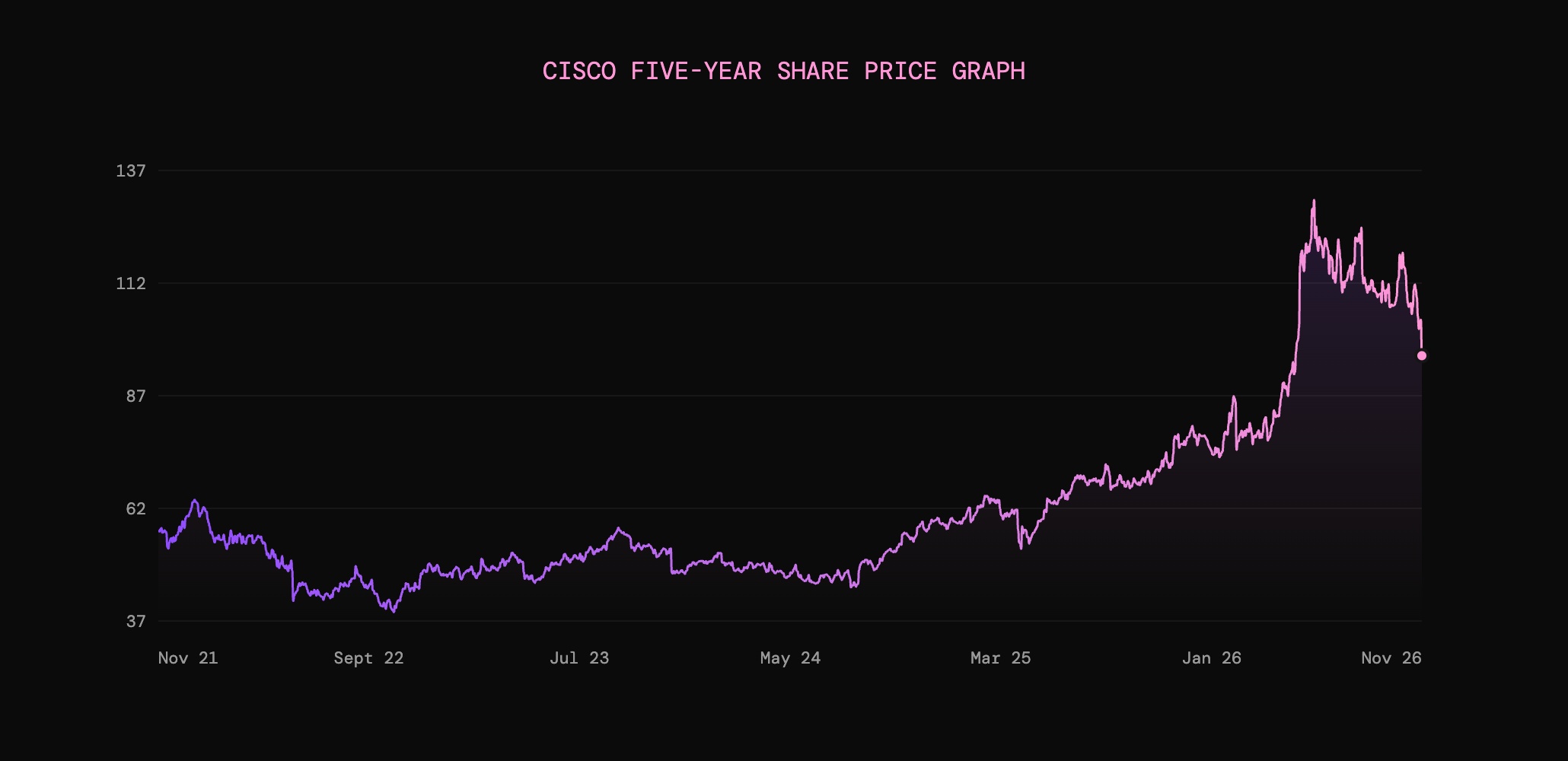
Cisco makes a lot of the networking equipment for offices, data centres, and other facilities to transfer information quickly and reliably. You might have seen its name on conference call software and hardware at work, but it also provides major computing and AI infrastructure.
While the business is exposed to the AI trade, the breadth of its operations means it is far from a pure play. That could offer some insulation from the ups and downs of AI spending and market moves, particularly as the business seems to benefit from other emerging tech trends.
Last quarter, revenue was 18% higher YoY at $17.3bn, driven by 28% growth in Networking revenue. Unlike CoreWeave, the business has seen its profitability improve, as adjusted earnings per share jumped 23% to $1.22.
AI plays an increasingly important part in Cisco’s story. It secured $4bn in AI infrastructure orders from hyperscalers in Q4 alone, taking the full-year total to $9.3bn.
Sounds great, but the rather significant snag is that AI hardware sales to hyperscalers typically offer lower margins to Cisco’s traditional business. This means the shift toward hardware sales, alongside persistent memory cost issues, helped send overall adjusted gross margin down from 68.4% to 66.3% YoY.
If AI infrastructure becomes an increasingly dominant part of the business, margin maintenance may become a challenge. For Q1, the business has guided to an adjusted gross margin of between 65% and 66%.
The bright side is improvements are by no means isolated to AI, as product orders rose 25% year-on-year in Q4 even with hyperscalers excluded. Cisco explained that while customers were investing in new networking tech due to adoption of agentic AI, broader upgrades to out-of-date tech are also driving business.
CEO Chuck Robbins commented:
“We believe we're in the early stages of a networking super cycle, presenting a massive opportunity for our business, and we are committed to helping our customers modernise and secure their infrastructure to unlock the full potential and value of their AI investments.”
Will fresh earnings this week present more evidence for the gathering pace of its super cycle, and will margins continue to face pressure from Cisco’s increasing reliance on AI-led business?
Applied Materials - Firm footing
Earnings release: Thursday 12 November, after market close
Revenue estimate: $10.30bn
EPS estimate: $4.05
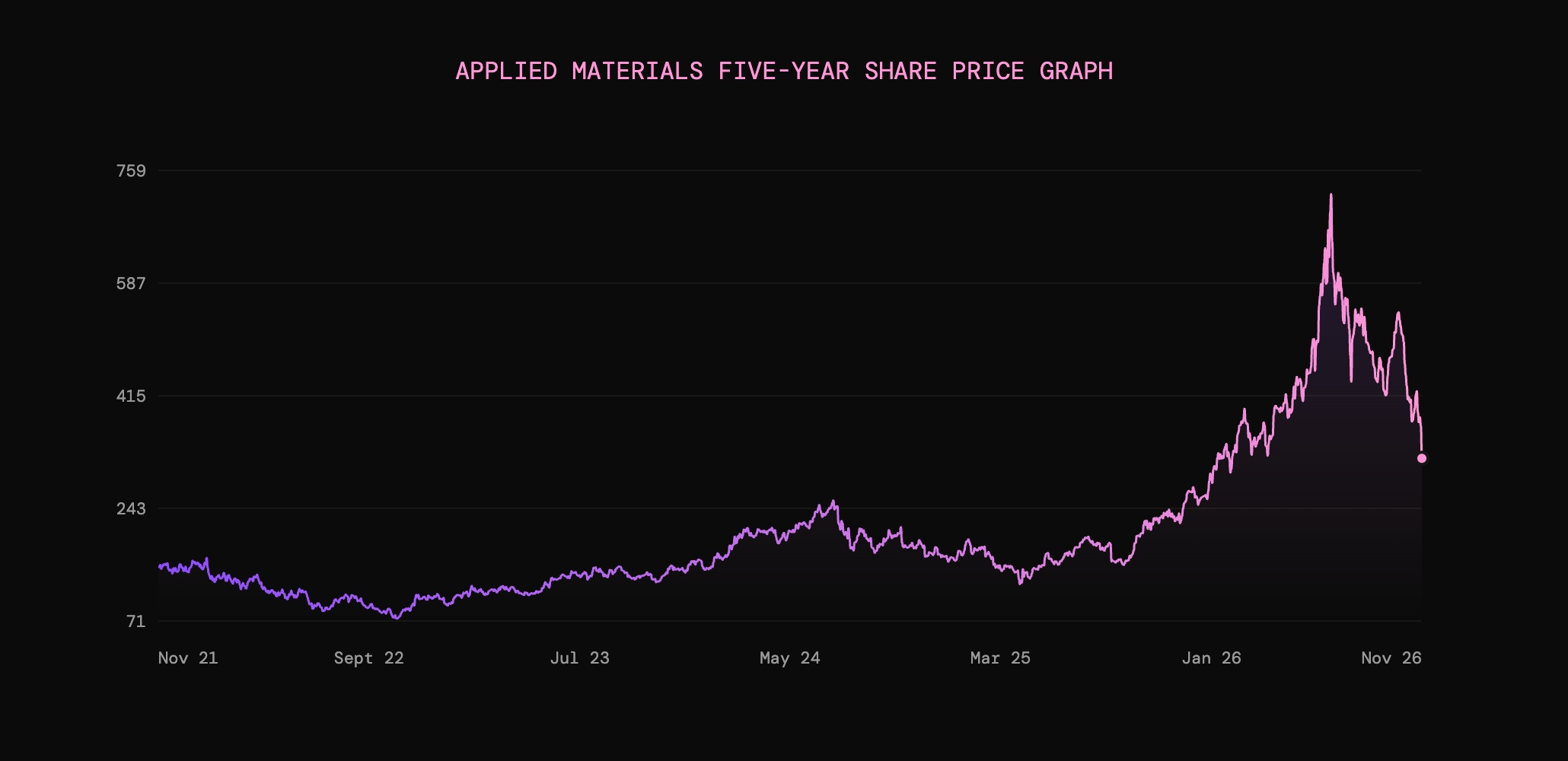
The third and final stop on our big AI infrastructure tour is Applied Materials, which manufactures the technology semiconductor makers need to do their thing. There are picks and shovels, and then there are the machines that make the picks and shovels.
With AI workloads growing increasingly onerous, demands on chips and computing infrastructure have increased. This translates to more and more sophisticated designs and, consequently, ever more complex manufacturing processes.
This is where Applied Materials comes in. As a key player in the AI buildout, its headline figures tell a familiar story of solid momentum and sales growth. Last quarter, revenue climbed 25% YoY to a record $9.12bn, and net income leapt by 43% to $2.54bn.
The impact of sales growth was accompanied by better profitability, with operating margin improving by 310 basis points to 33.7%. Cost improvements and pricing changes have left the business confident of more improvements going forward.
Furthermore, management expects sales growth to accelerate into Q4 as it guided for revenue of approximately $10.25bn, representing a 51% YoY increase.
Market sentiment might have moved against the AI boom over recent weeks, but the bull case for Applied Materials is that the business is utilising current growth to position itself for a long-term change in the tech landscape.
The business says it has achieved a position of market leadership in catering to leading-edge logic, DRAM, and advanced packaging, which it says will account for around 75% of growth in global wafer-fabrication equipment spending between 2025 and 2030.
The company has certainly put its money where its mouth is.
A new $5bn chip research centre in Silicon Valley. An agreement to increase AMAT’s stake in fellow semiconductor equipment manufacturer BE Semiconductor Industries from 9% to 20%. Plans to double R&D laboratory and manufacturing capacity by 2030.
This kind of investment, or perceived over-investment, is the very thing investors have been worrying about. What could also pose a problem is the historically cyclical nature of semiconductor manufacturing, where periods of heavy investment are often followed by supply finally catching demand.
Context is important though. Applied Materials is a highly profitable and cash-generative business, rather than being leveraged up the wazoo like some other players in the AI game. Even if its long-term bet on the future of the industry is wrong, it may be better placed to weather a downturn than more indebted contemporaries.
Applied Materials needs to at once deliver the kind of growth and outlook that will leave investors convinced of its firm footing, while convincing that its ambitious expansion plans make good business sense and won't leave it overexposed to future sector downturns.
Capital at risk. The value of your investments can go down as well as up and you may get back less than you invest.
Fluctuations in foreign exchange rates may affect investments denominated in currencies other than GBP and the amount you receive back.
Past performance is not a reliable indicator of future returns.
Freetrade does not give investment advice and you are responsible for making your own investment decisions. If you are unsure about what is right for you, you should seek professional advice.