
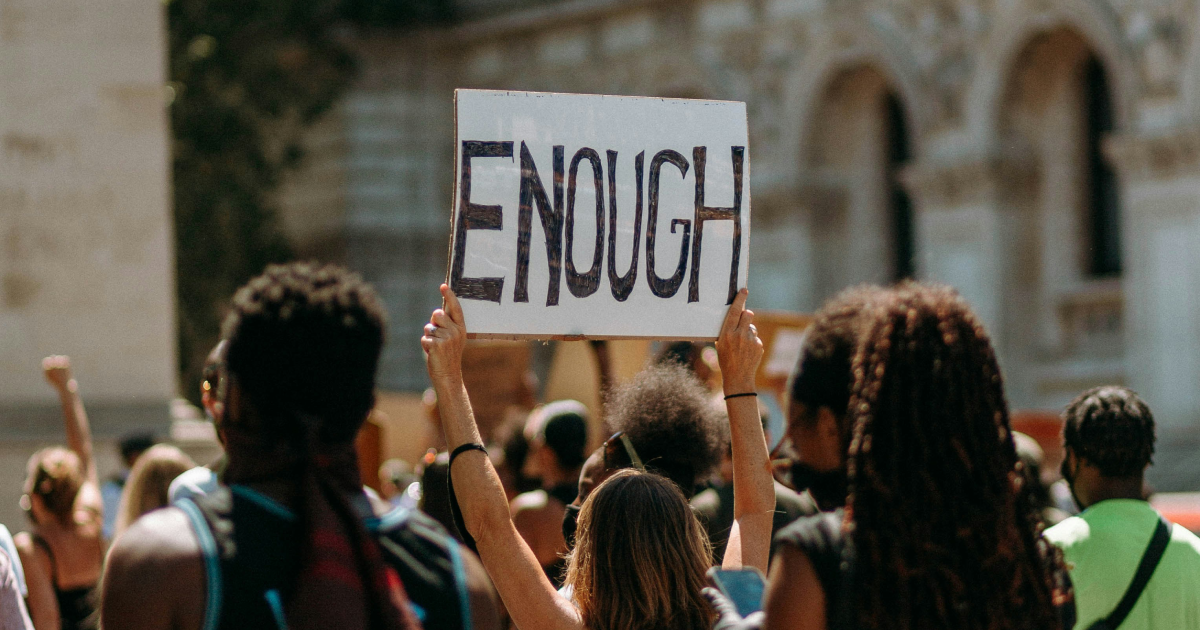
In September 2025, as Nepal’s parliament burned, Gen Z protesters hung a pirate flag from a Japanese manga on the gates of the government’s headquarters. Within hours, the prime minister had resigned.
From Dhaka to Rabat to Antananarivo, young people have taken to the streets in numbers not seen in years. For most of the 20th century, each generation could expect to live better than the one before it. Many feel that promise no longer holds.
Generation game
The German sociologist Karl Mannheim argued in a 1928 essay, The Problem of Generations, that people are shaped by the big events of their youth. But the demographic labels we use today are more recent neologisms, invented by journalists, novelists, and marketers, not scientists.
Using the US dates, we have the Silent Generation (born 1928–1945), which got its name from a 1951 Time magazine article about young people who kept their heads down and got on with it. Baby boomers (1946–1964) are named for the spike in births after the war. Gen X (1965–1980) was popularised by Douglas Coupland’s 1991 novel, and ‘millennials’ (1981–1996) was coined by William Strauss and Neil Howe in their 1991 book Generations. Gen Z (1997–2012) is just the next letter. Gen Alpha (roughly 2010–2024) was named by Australian researcher Mark McCrindle.
Boomers gonna boom
The baby boomers were born into what might be the best economic run in modern history. In the US, from the end of the war to the early 1970s, the economy grew by more than 3% a year and median family income almost doubled. And you could walk into any business with a CV and get a job on the spot.
The US GI Bill paid for 7.8 million veterans to go to college or training by 1956. About 2.4 million used it to get cheap home loans. Suburbs suburbed, because a single wage could support a family and a mortgage. The babies kept coming. The US recorded more than 4 million births a year from 1954 to 1964, a level it wouldn’t reach again until 1989. Much of the rest of the industrial world had been bombed flat, so American factories faced little competition. These conditions, that made it all possible, were a one-off.
Unlucky sandwich
The sociologist Elwood Carlson called the Silent Gen ‘the Lucky Few’: too young to fight in the Second World War, and just old enough to start work as the boom times began. Many retired with company pensions before the 2008 crash.
But poor Gen X, the neglected middle child, is squeezed between two huge generations, boomers and millennials. Gen Xers started work just as final salary pensions were being retired, then endured the dot-com crash and the 2008 financial crisis in their prime earning years. Now many are the ‘sandwich generation’, supporting ageing parents and their own children at the same time.
Locked out
In the US, about 90% of people born in 1940 ended up earning more than their parents. For those born in the 1980s, it was 50%. So what happened? The Stanford-led study behind those numbers suggested growth went mostly to the top.
In Britain, a 2017 Resolution Foundation study found 63% of boomers owned their home by 30, compared with about 60% of Gen X and 42% of millennials. The average first-time buyer in England is now 34, up from 31 two decades ago. People are also living a lot longer, while birth rates keep falling. That’s a headache for the state pension, which is paid for by today’s workers through National Insurance. Since 2011, the triple lock has pushed the state pension up 89%. It now costs about £154 billion a year, despite original Treasury estimates that the cost would be negligible. In 2019, OK boomer captured the intergenerational resentment.
But the gap within each generation is bigger than the gap between them. Plenty of boomers rent, have no savings, and depend on their state pension in a world where the cost of living is spiralling out of control, while some millennials stand to inherit a great deal. A whole generation shouldn’t have to carry the blame. That said, politics does tilt towards the old. Older people vote more, and in ageing countries there are simply more of them.
Nappy ending
The demographic transition first sees death rates fall as health and food improve, while birth rates stay high, which means the population gets younger and grows fast. Later, birth rates fall too, and the population ages. Europe, North America, and East Asia went through this in the 20th century, and their post-war baby booms were the last big surge.
Japan shows where that road leads. In 1960, its median age was about 26. Today it’s about 50, among the oldest in the world. Since 2011, Japan’s biggest nappy maker has sold more adult nappies than baby ones, and in 2024 one of its rivals stopped making baby nappies in Japan altogether. The population peaked around 2008 and is now shrinking by roughly 650,000 people a year, about the size of Glasgow.
Battle of the bulge
Much of Africa, South Asia, and the Middle East is still in the middle of it. Africa’s median age is about 19, while Europe’s is about 43. In Bangladesh, nearly 40% of voters at the 2026 election were aged 18 to 37. While rich countries fret over too few young workers, poorer ones have too few jobs for the young people they do have. Countries with this ‘youth bulge’ face a higher risk of political violence. Especially when those young people cannot find work.
And the jobs aren’t there. The ILO reported in August 2026 that global youth unemployment rose to 12.4% in 2025, or 67 million people aged 15 to 24, and that one in five young people, 257 million, were not in work, education or training. Young people are now more than three times as likely as adults to be unemployed.
The revolution will be livestreamed
Since 2022, youth-led protests have helped bring down governments in Sri Lanka, Bangladesh, Nepal, Madagascar, Peru, and Bulgaria, and won concessions in many more. By one count, major anti-government protests broke out in more than seventy countries in 2025 alone.
Nepal’s protests were sparked by a ban on social media, but the real ire was about corruption and nepotism. In March 2026, the Rastriya Swatantra Party, only four years old, won 182 of 275 seats, and 35-year-old former rapper and Kathmandu mayor Balendra Shah became prime minister after beating K.P. Sharma Oli in his own constituency. Remarkable stuff.
Across the globe, the main drivers of the protests are corruption, lack of jobs, poor public services, and out-of-touch leaders. These movements are mostly leaderless and run online. In Morocco, the GenZ 212 Discord server reportedly grew from about 3,000 members to more than 130,000 in roughly a week. More than half of Morocco’s population is under 35.
Les Misérables
Just across the Channel, French students have been blockading their lycées since September over teacher shortages and crumbling classrooms. On 17 October, across France, half a million people hit the streets. Students were joined by unions and gilets jaunes angry about the cost of living. Some 1,200 people were arrested. The government, which had already shelved a rise in the pension age last year after years of protest, now seeks €54 billion in cuts and tax rises to balance the books.
France is old, it’s rich, and it has one of the most generous welfare states in the world. Its young people are ringing the same bell as those in Kathmandu and Rabat.
Generation next
For most of history, society hardly changed from one generation to the next. Around 1800, there were about a billion people on Earth. Life expectancy was under 30 almost everywhere. A child grew up in much the same world as their grandparents.
Industrialisation changed that, and fast. In roughly two centuries, the world’s population has grown to more than 8 billion, and life expectancy has more than doubled. No generations have ever had to share a world that changes this quickly, or this unevenly.
The world that Gen Alpha are coming of age in is older than any before it, with fewer workers per retiree, more expensive housing and, in many countries, shrinking populations. The war of the demos may just be getting started.
The value of your investments can go down as well as up and you may get back less than you invest.
Freetrade does not give investment advice and you are responsible for making your own investment decisions. If you are unsure about what is right for you, you should seek professional advice.