There’s a distinctly futuristic feel to this week’s earnings preview, with space travel and artificial intelligence dominating proceedings.
The week starts with Rocket Lab and AST, who will want to show their lofty ambitions remain on course despite the risks associated with firing rockets into orbit and beyond.
As the week continues, attention will shift back to Earth as a cascade of AI infrastructure companies report. But these are not one homogeneous blob. CoreWeave, Cisco, Applied Materials, and Cerebras stand at different points on the AI supply chain, providing everything from the components in data centres to the equipment needed to manufacture chips.
The key question for these businesses is whether the rampant demand for their products and services can be converted into sustainable growth and attractive profits. Let’s dig in to find out.
Note: All estimates are based on data provided by Refinitiv.
Rocket Lab - Mission control
Earnings release: Monday 10th August, after market close
Revenue estimate: $231.35m
EPS estimate: -$0.08
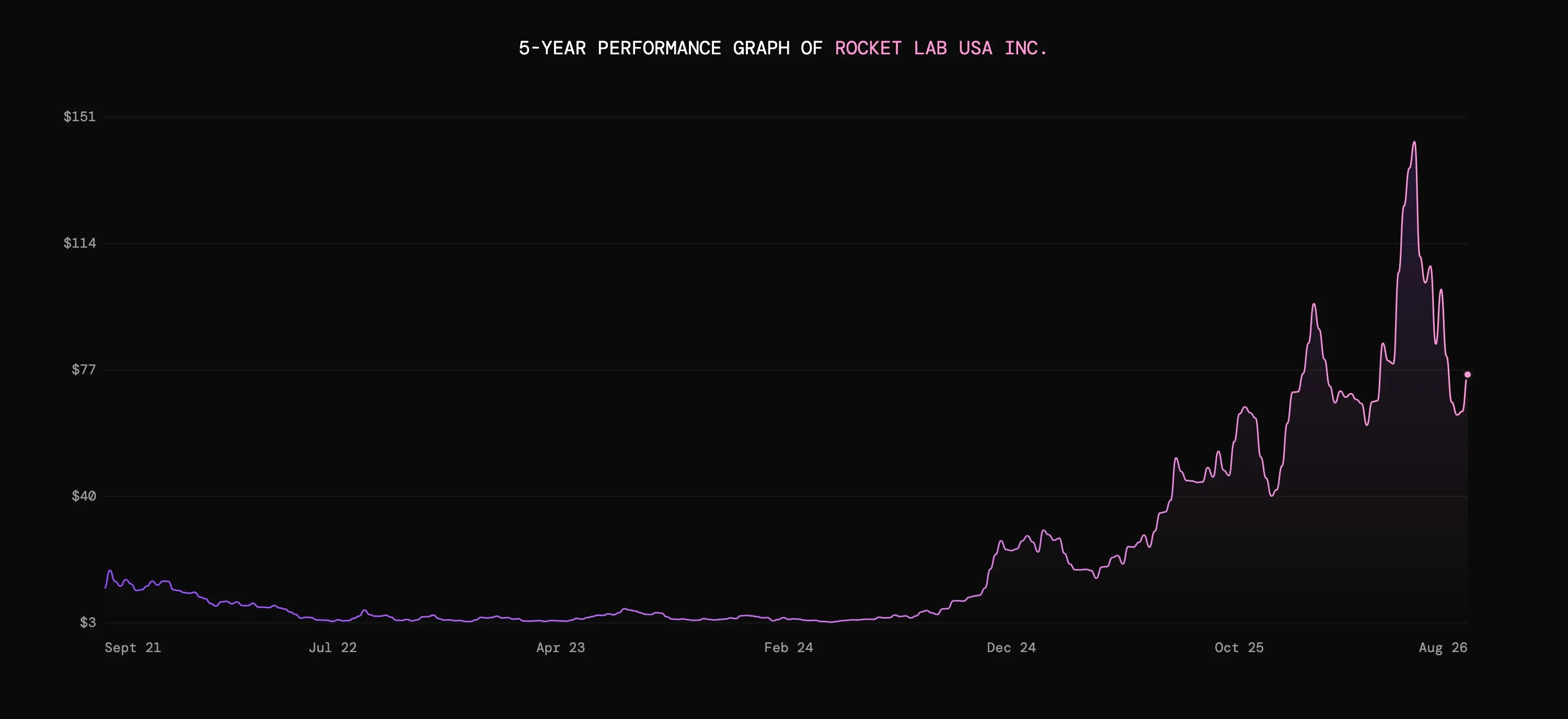
Rocket Lab is one of several key players in the emerging space sector. It offers launch services, helping to plan and execute missions through takeoff and beyond, and also builds spacecraft and satellite parts.
So far this year, the business has completed 13 missions for partners including the US Space Force, the European Space Agency, and Japan’s Aerospace Exploration Agency (JAXA). Looking ahead to 2027, the company is set to partner with NASA on at least three different launches and two missions. When it comes to space, it doesn’t get much bigger than that.
Back in Q1, the company produced record quarterly revenue of $200.3m, up by 63.5% year-on-year (YoY). The business still operates at a net loss, which narrowed to $45.0m from $60.6m, with R&D and administrative spending on the rise.
But things are moving forward at pace. Rocketing even.
Its order backlog was higher than ever, having reached more than $2.2bn. In the intervening period, Rocket Lab announced its largest launch agreement yet, a $266m multi-launch contract with US Space Force. Hard figures and commentary on orders will lend credence to longer-term revenue momentum.
Gross margin reached record levels in the period too, coming in at 38.2%. However, this is expected to decline to between 33% and 35% in Q2. Rocket Lab attributed this to lower high-margin launch activity than in the prior two quarters, and greater input from two programmes with the US Space Force’s Space Development Agency, which it described as bringing “a lot of scale” in spite of their margin impact.
There can be considerable quarter-to-quarter variability in Rocket Lab’s numbers, which gives the company some flexibility with its headline figures. What may end up being more in focus is tangible progress in key projects.
Its Neutron reusable rocket craft is perhaps the key example of this. In May, Rocket Lab said the craft was on track for a debut this calendar year. Last time out, the business had inked contracts for five new Neutron launches.
The rocket still has a fair few hurdles to pass before its maiden voyage. Flight mechanisms and vehicle integration need to be tested. Engine qualification must ensure what it’s packing under the hood ticks every box. Regulators need to approve it for takeoff from Rocket Lab’s Complex 3 launchpad at Wallops Island, Virginia.
Investors will want to see tangible progress, and further signs of customer interest in Neutron launches. But don’t forget Electron, the current core of Rocket Lab’s launch business. Watch for launch targets and demand here too as, while Neutron is the future, Rocket Lab needs Electron firing on all cylinders to keep things moving spacewards.
AST - Constellation construction
.webp)
Earnings release: Monday 10th August, after market close
Revenue estimate: $34.98m
EPS estimate: -$0.28
AST, also known as AST Spacemobile, is building a mobile network in space. This planned galactic network will serve regular smartphone users and extend 4G and 5G coverage to areas that terrestrial mobile networks simply cannot reach.
For the time being, this remains under construction. But major telecom operators like Vodafone, Orange, and Deutsche Telekom have partnered with the business to integrate its offering into their existing networks.
Revenue was not enormous in Q1. The company reported just $14.7m, well behind expectations, but the business said it still anticipated between $150m and $200m across the full year. Q1 may have been a blip, but AST really needs to deliver something revenue-wise in Q2, even if it is just signs of a serious ramp-up in H2, to stop expectations going up in smoke.
Profitability remains some way off, with AST racking up a $191.0m net loss in Q1. But this is not the priority right now, as the business is pouring resources into building and launching the satellites that will make up its network. Once this is complete, AST will hope revenue is ready to ramp.
As with Rocket Lab, headline numbers might not be the main attraction here. Instead, the key is probably a progress update on the company’s satellite deployment programme, which targets 45 of its machines in orbit by the end of the year.
BlueBird satellites 11, 12, and 13 launched in the first week of August. The company said BlueBirds 14, 15, and 16 are currently “preparing” for their turn to fly. To get the remaining constellation up above the clouds before NYE, things are going to need to accelerate a bit, so any commentary on changes to deadlines or delays in production and preparation could be key.
Of course, getting kit into space doesn’t matter if networks don’t work or things are in the wrong place. BlueBird 7 settled into an incorrect orbit following its April launch and had to be de-orbited, so investors will want to know subsequent launches have been more successful, and that network functionality isn’t compromised.
AST’s central objective is slowly taking shape. Satellites are launching. Partners are coming on board. But risks are numerous and operational potholes abound. Come Monday, the most important thing is that investors have confidence that AST’s ambitious plans are progressing without fresh hiccups.
CoreWeave - Pipeline
Earnings release: Tuesday 11th August, after market close
Revenue estimate: $2.56bn
EPS estimate: -$1.22
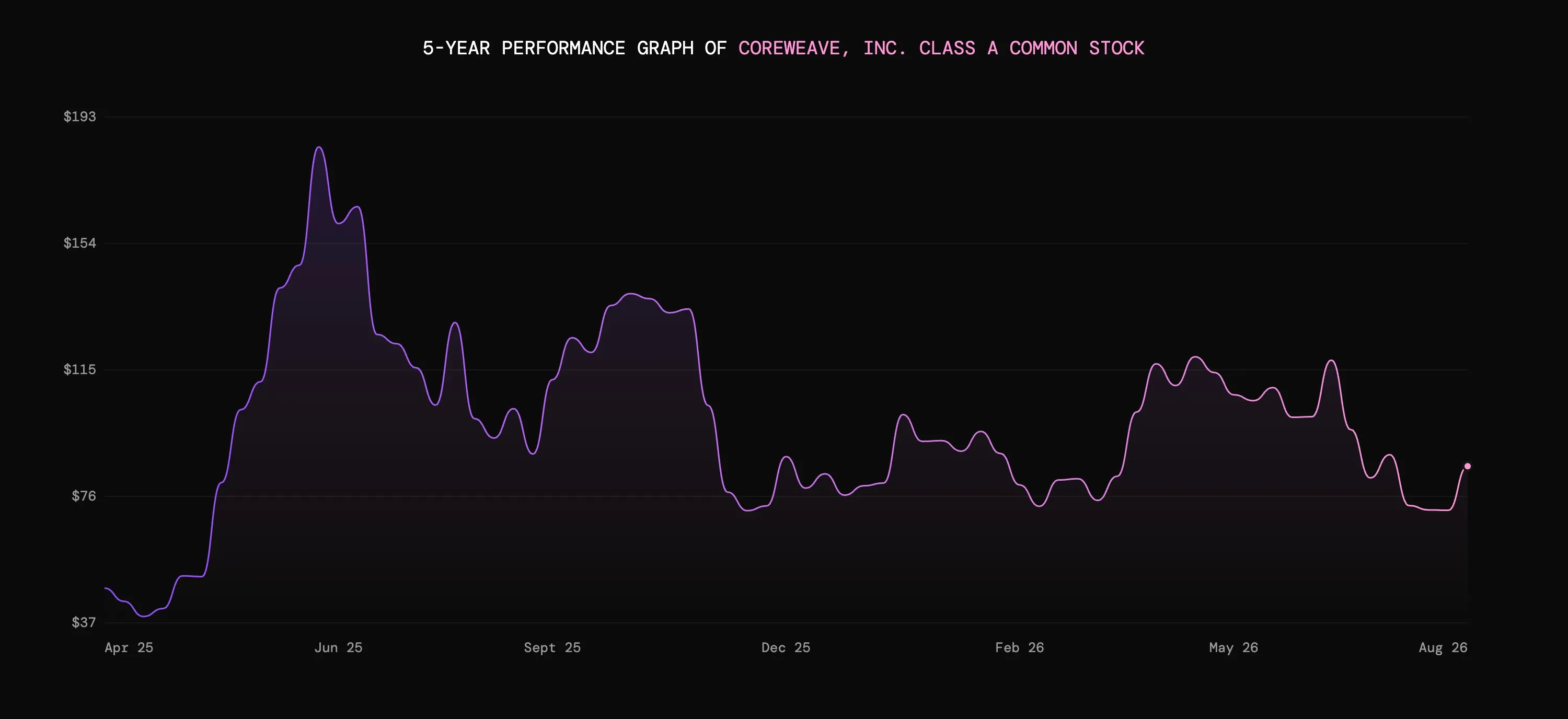
CoreWeave is one of many companies to have capitalised on the AI infrastructure boom. But it’s not a chipmaker. Instead, the business builds and operates data centres designed for AI workloads, renting out this infrastructure to tech firms who are hungry for computing power.
Revenue in Q1 was $2.1bn, more than double the $982m it delivered in the same period 12 months prior. That just looks like the start, as the company reported a gargantuan revenue backlog of $99.4bn, helped by customer wins from industry heavyweights like Meta and Anthropic.
The company has guided to revenue of between $2.45bn and $2.60bn in Q2, and this, along with any changes to FY guidance, will be treated as the strongest reads on whether demand is heating up, cooling down, or simmering on at the same level.
There might be revenue up the wazoo, but there’s more to business than sales. CoreWeave’s operating loss widened from $27m to $144m as massive jumps in technology and infrastructure spending and sales costs drove a 120.2% YoY increase in operating expenses to $2.2bn.
Broader costs are eye-watering too. FY capital expenditure has been flagged at $31bn to $35bn as CoreWeave pushes to scale the business rapidly. It surpassed 1 GW of active power in Q1, and is now contracted to deliver over 3.5 GW. Most of this is supposed to be online and firing before the end of next year. Any threat to that timeline could be very damaging, as it might start to make CoreWeave’s chunky ledger of orders look fragile.
It’s CoreWeave’s massive spending, along with its high reliance on a small number of key customers, that may have kept its share price relatively subdued. The business is further down the AI supply chain than the chipmakers who have been making high-margin hay from the explosion in AI enthusiasm.
But there’s no doubt appetite for CoreWeave’s offering exists. It’s just a matter of whether the company can build out its infrastructure fast enough to satisfy demand without being overwhelmed by spending requirements.
Cisco - Doodads
.webp)
Earnings release: Wednesday 12th August, after market close
Revenue estimate: $16.82bn
EPS estimate: $1.17
If you have ever been on a long conference call, you have probably spent some time staring at the Cisco logo. The business makes physical hardware, like routers, desk phones, and conference systems, as well as digital tools like Webex and cybersecurity products.
It’s also, courtesy of its networking expertise, another company at the heart of the AI infrastructure buildout. Key AI components and tech from Cisco include specifically designed switches and routers, as well as Cisco’s Silicon One networking chips
It’s fair to say the company makes an awful lot of technical doodads.
And hyperscalers are interested in these doodads, having booked in $5.3bn-worth of AI infrastructure orders across the first three quarters of Cisco’s financial year, prompting the company to raise FY guidance for hyperscaler orders to $9bn.
This has helped add to the company’s sales momentum, with Q3 revenue having hit a record $15.8bn, up 12% YoY. In Q4, Cisco has its sights on even more, having guided to between $16.7bn and $16.9bn of revenue. Hitting this mark, and demonstrating further that it benefits from the AI buildout, will be key objectives in the eyes of investors.
Cisco doesn’t face the same massive spending requirements as CoreWeave to take advantage of this opportunity. This should allow it to maintain higher margins throughout, and operating margin was at 34.2% in Q3. Instead, factors like tariff impact, product mix, or higher component costs are likely to be the main threats to profitability.
Of course, hardware is not the full story. Cisco has a line in software, and these revenues crept 1% higher to $5.7bn in Q3. While this was minor growth, the business has been actively attempting to evolve away from perpetual licenses and toward subscription-based contracts, such as with its Splunk security platform.
The thinking is that these subscription deals provide the business with reliable recurring revenues and reduce reliance on sporadic hardware cycles. Total subscription revenue accounted for nearly half of all revenues in Q3, coming in at $7.8bn. Further growth, and commentary on subscription efforts, is another narrative worth watching.
Cisco might be an old hand in the networking biz, but if it can ensure AI spending is flowing through its switches, silicon, and software, it could keep generating conversation.
Cerebras Systems - Breakneck
-.webp)
Earnings release: Wednesday 12th August, after market close
Revenue estimate: $194.2m
EPS estimate: -$0.17
Cerebras makes processors. But these chips are not your common-or-garden processor, being king-size and specifically designed to cater to AI workloads. The company both sells systems built around its giant chip technology and offers rental access to them through its cloud platform.
Growth looks substantial, with Q1 revenue up by 94% YoY as it climbed to $193.4m.
But margins will be under the microscope. The company’s core gross margin looks set to decline from 47% in Q1 to between 36–38% in Q2, according to Cerebras guidance. Part of the reason for the decline is that the company is renting its own systems back to itself from an existing customer to cope with its current contracted backlog.
Imagine a landlord paying to sublet a house from their own tenant. Unusual, it’s fair to say.
The company has said it will aim to ramp back towards its target margin of over 60% as it moves away from renting hardware to satisfy demand, but there is no firm timeline on this and the situation isn’t a good look.
The surge in demand comes as Cerebras has scored major deals with OpenAI, AMD, CrowdStrike, and Amazon’s AWS. Further wins would be impressive, but again the company must prove it is building the data centre capacity and manufacturing capabilities to properly deliver on contracts in a cost-effective manner.
Firm commentary on deployment timelines, capacity upgrades, and forward progress will encourage investors that Cerebras’s growth isn’t spiralling out of control.
The Cerebras IPO back in May saw the company enter public markets with a good deal of excitement and a hefty valuation. Its share price hasn’t exactly gone from strength to strength in the intervening months, remaining well below early highs.
Will Cerebras’s Q2 earnings convince investors that the company’s breakneck growth does not have to come at the expense of profitability?
Applied Materials - Fine margins
.webp)
Earnings release: Thursday 13th August, after market close
Revenue estimate: $9.00bn
EPS estimate: $3.39
Bringing our whistle-stop tour of AI hardware players to a close is Applied Materials. But this business doesn’t make chips, compute, or networking equipment. Instead, it makes equipment needed for precision etching and editing of tiny components, making it a key supplier for the semiconductor factories churning out AI chips.
So, when major foundries like TSMC, Samsung, and SK hynix spend billions to upgrade factories, Applied Materials may be a beneficiary.
In its prior earnings, which covered Q2, an 11% YoY increase in revenue to $7.91bn amounted to a record.
Margin has strengthened too, with gross margin rising by 80 bps to 49.9% to reach the best level achieved by Applied Materials in over 25 years. The business has set expectations for further profitability improvement too, having guided to 50.1% in Q3 and noted that R&D spending is anticipated to grow at a slower rate than revenue.
There are some sticky spots though. Applied Materials says it anticipates flat or near-flat full-year growth from its China business, which represented 27% of total revenue in Q2. Export restrictions are a huge barrier here, and Applied Materials has been burned before by failing to adhere to rules.
In February, the business confirmed it had been slapped with a hefty $252.5m fine to settle US Commerce Department allegations that some shipments to China via a South Korean subsidiary breached export rules.
China is one of the industry’s largest markets, and a major contributor to Applied Materials’s revenue. Commentary on demand here, or further complications arising from exports, could make or break the company’s earnings update.
Applied Materials has already proven it can make money from the AI infrastructure boom. The question now is how much more juice is in the opportunity, how profitably the company can take advantage, and whether geopolitical headaches might spoil the party.
Capital at risk. The value of your investments can go down as well as up and you may get back less than you invest.
Fluctuations in foreign exchange rates may affect investments denominated in currencies other than GBP and the amount you receive back.
Past performance is not a reliable indicator of future returns.
Freetrade does not give investment advice and you are responsible for making your own investment decisions. If you are unsure about what is right for you, you should seek professional advice.
.webp)
.webp)
.webp)

.avif)

.avif)
-min.avif)