The US earnings season steps up a gear this week, as major tech and defence companies Alphabet, Tesla, Intel, and Lockheed Martin open their books.
But these businesses face diverse challenges. Alphabet needs to show that its enormous infrastructure spending is strengthening Search and Cloud, while investors will hope renewed momentum in Tesla’s automotive business will help it fund ambitions in autonomy and robotics.
Meanwhile, Intel and Texas Instruments will offer different perspectives on the semiconductor cycle, and Lockheed Martin and RTX should reveal how effectively aerospace and defence manufacturers are coping with surging military spending.
Alphabet
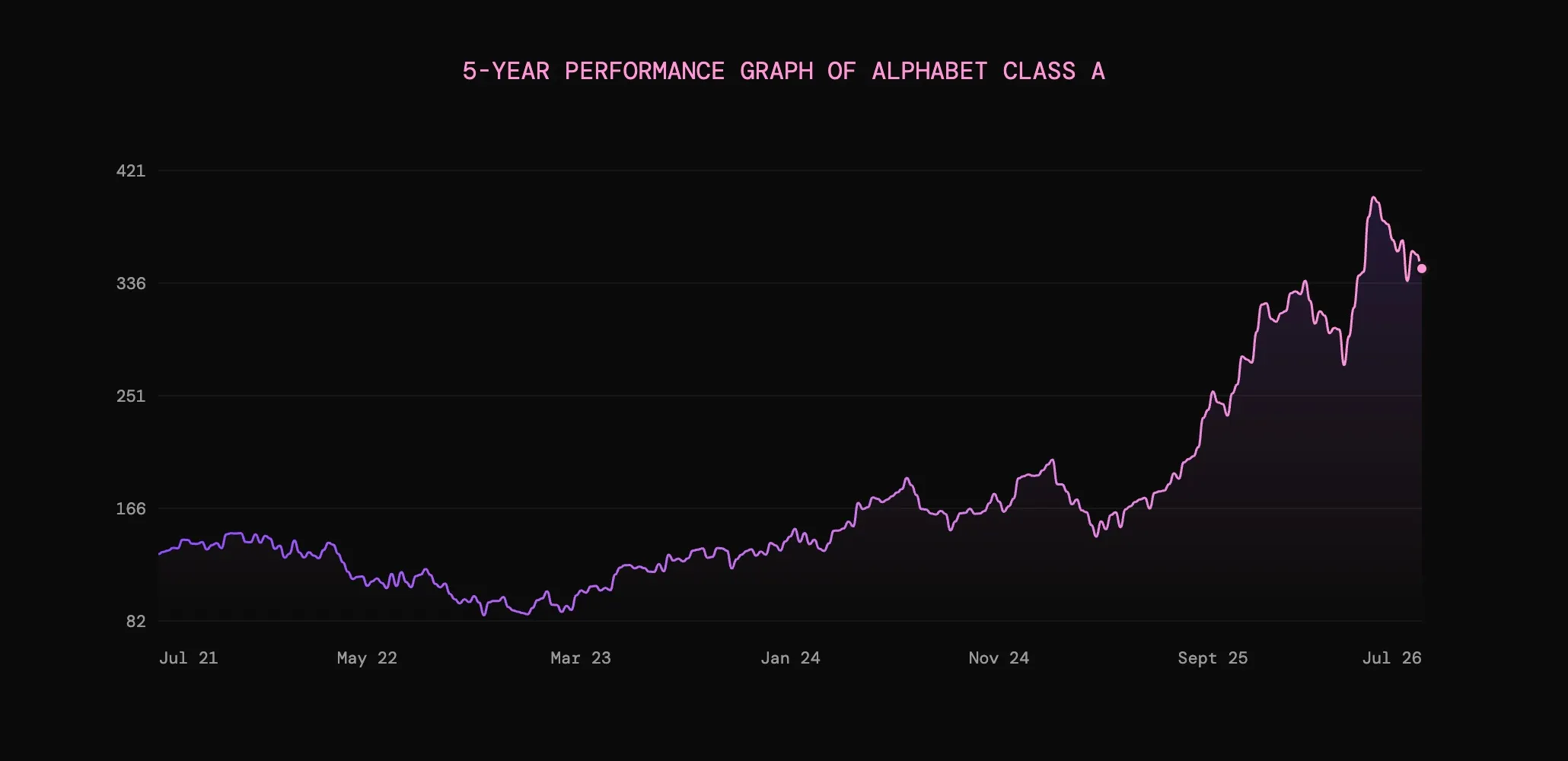
First up is probably the biggest deal this week, as Google parent company Alphabet releases its Q2 FY2026 earnings after the market close on Wednesday.
Wall Street analysts’ consensus expectations are for Q2 revenue of $116.9bn and earnings per share (EPS) of $2.89, according to Refinitiv.
Google’s Search revenue remains the main thing to watch here, having climbed by 19% year-on-year (YoY) to $60.4bn. Search comprised 55% of total revenue in Q1, and contributed significantly to the 22% rise in total revenue to $109.9bn.
For investors, the question is whether Search can keep delivering growth in the age of AI. The company is reinventing the search engine with functionality like AI Overviews and AI Mode, but monetising these enhanced queries looks tricky.
They require more computing power, and therefore carry higher costs. AI tools also provide users with different answers to conventional searches, making ad deployment and engagement a challenge.
Of course, Alphabet isn’t just about Google Search.
First, there’s diversification within its ad business through YouTube. A strong performance from the video-sharing platform would be a source of reassurance for investors, though it faces stiff competition for advertising budgets from TikTok, Meta, and streaming platforms.
Then, there’s Google Cloud. This segment, which mixes IT infrastructure, machine learning tools, data analytics, and storage, was Alphabet’s standout growth engine in Q1, as revenue rose by 63% to just over $20bn. Meanwhile, the segment’s order backlog nearly doubled quarter-on-quarter to more than $460bn.
This is all being driven by the surging demand for AI infrastructure and services, which brings us on to the company’s spending. Alphabet has guided for total 2026 capital expenditure of between $180bn and $190bn. Any increase may test the patience of shareholders if revenue, margins, and cash flow fail to keep pace.
AI is utterly central to Alphabet’s earnings, and investors will want to see that the tech is strengthening the core Search business, fuelling further growth in Cloud revenues, and not pushing infrastructure bills too high.
Tesla
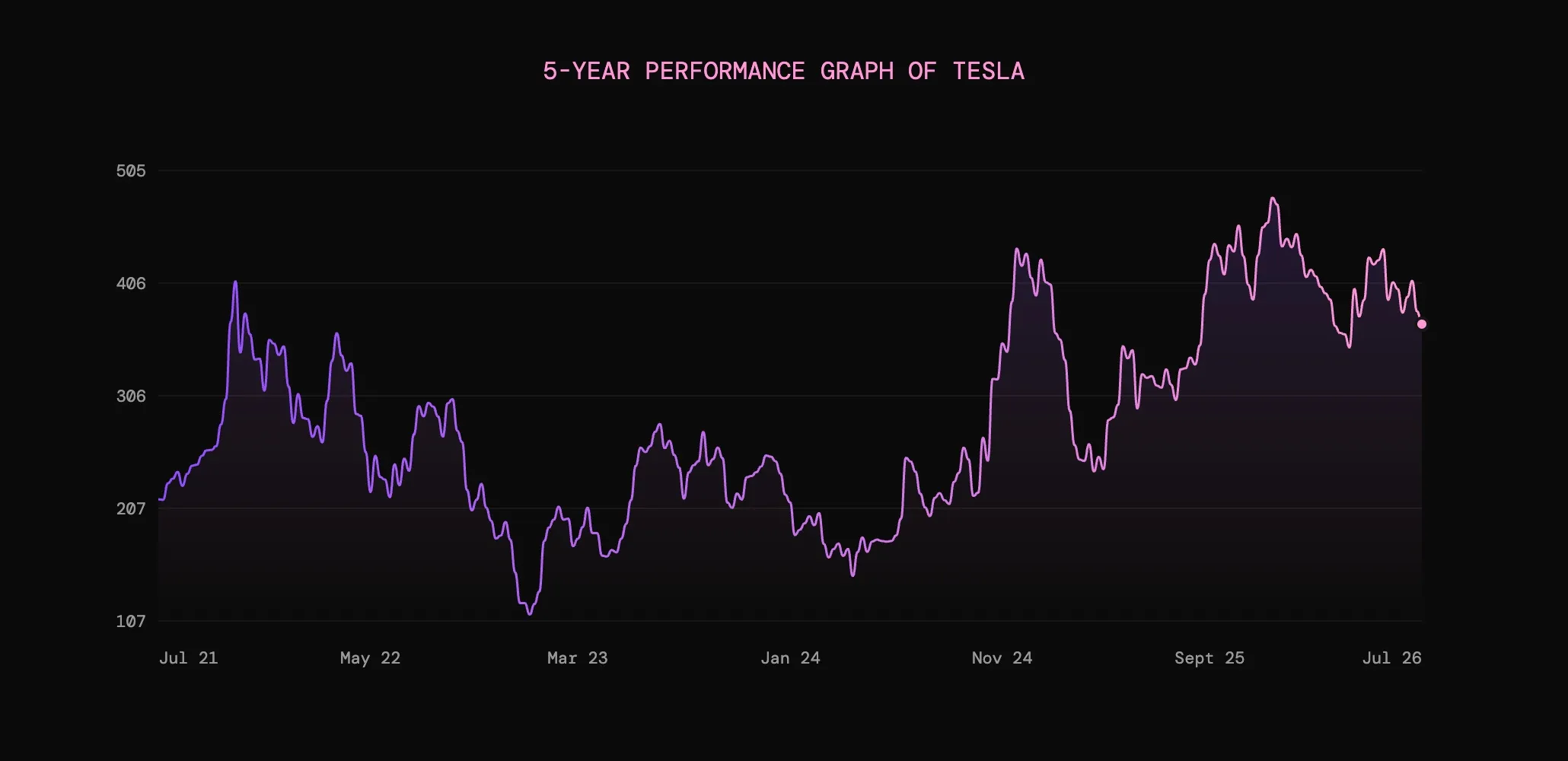
Tesla is set to release its Q2 FY2026 earnings on Wednesday after the US market close.
According to Refinitiv data, Wall Street analysts expect revenue of $25.7bn and EPS of $0.50.
Just a few months ago, it felt like Tesla was losing interest in cars.
Robotics, automation, and AI were the order of the day. But a delivery rebound looks like an opportunity for the business to generate cash needed for its more esoteric long-term goals.
The company releases quarterly vehicle delivery stats ahead of earnings, so we already know the core car business generated real momentum in the period, with Q2 deliveries up by 25% YoY to 480,126. Higher fuel prices may also have strengthened the financial case for switching to an EV.
But Tesla faces a fight to capitalise on this demand fully. Nowhere is the scrap more intense than in Europe, which has become a major EV battleground.
China’s BYD, which has no meaningful presence in the US passenger-car market, has seen new registrations in the first five months of 2026 grow by 158.9%. For UK motorists, it is becoming an increasingly familiar sight, with BYD now the nation’s top-selling EV brand.
Tesla’s resurgence in Europe follows a poor 2025, when consumer backlash and an ageing product range weighed on new registrations. But the business faces a very different market to the one it used to dominate, with European competitors also innovating and launching more of their own affordable EVs.
This competition matters because it will ultimately impact just how much profit Tesla can extract from a delivery rebound.
In Q1, total revenue climbed by 16% to $22.4bn, driven by a 16% uplift in automotive revenue to $16.2bn. Total gross profit climbed by 50% to $4.7bn.
However, operating margin fell by 150 basis points QoQ to 4.2%.
So while high sales volumes should provide a tailwind for automotive revenue, lower-priced variants, promotions, and incentives could impact Tesla’s ability to convert stronger sales into higher profits.
With Tesla seeking to prioritise affordability following new standard trim vehicle variants late last year, further margin deterioration is possible.
Energy storage remains a key part of the business, too. Tesla also deployed 13.5 GWh of energy-storage products in Q2, which could provide another important source of revenue and profit.
Tesla’s automotive business remains dominant, and EVs seem to be having a moment. Will it have generated enough profit to support the expansion into autonomy, AI, and robotics that it has mooted as its future?
Texas Instruments
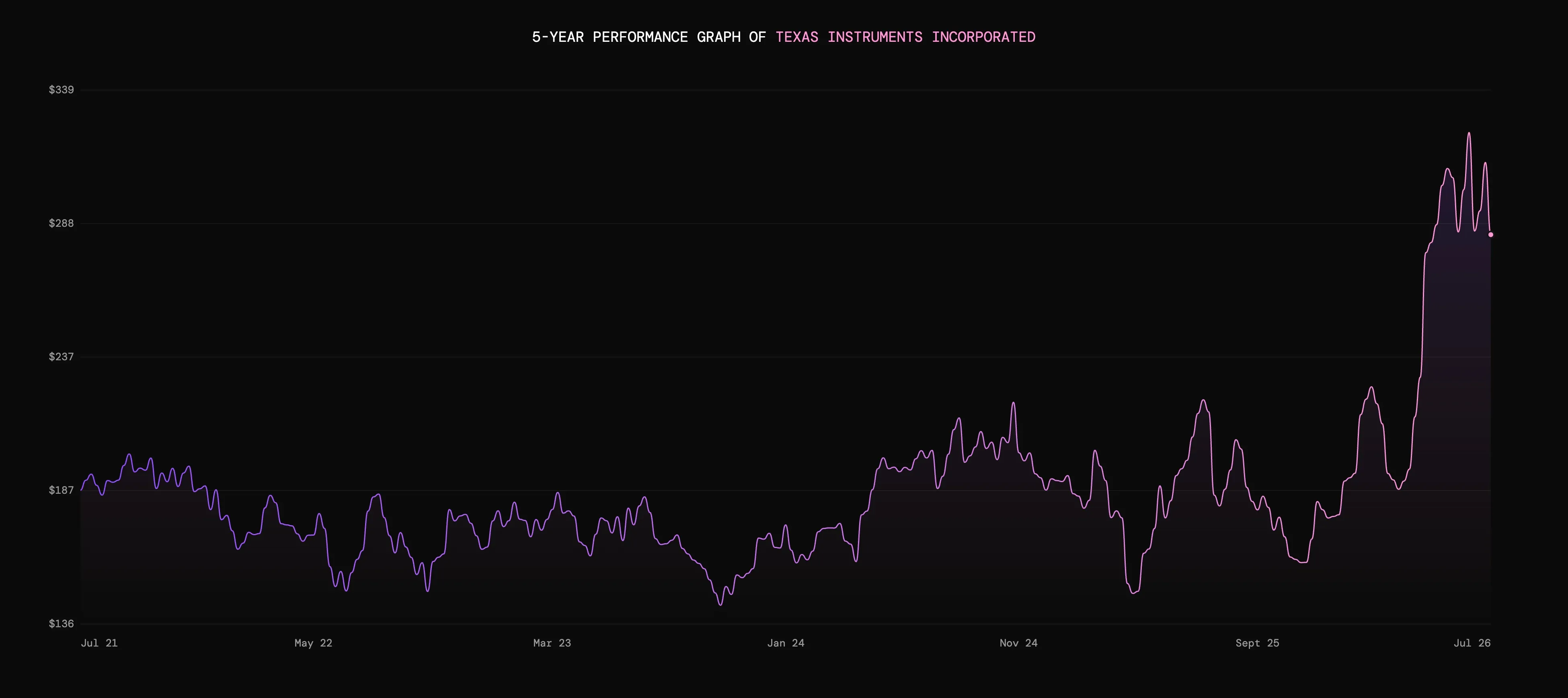
Semiconductor and calculator specialist Texas Instruments (TI) reports its Q2 FY2026 earnings on Wednesday after the market close.
Consensus estimates from Refinitiv are for revenue of $5.3bn and EPS of $1.93.
Back in Q1, a 31% YoY uplift in net income to $1.5bn was spurred by 19% revenue growth to $4.8bn. TI’s core Analog segment is the key driver of its current wave of growth, with revenues up 22% to $3.9bn in Q1.
As the name suggests, this business segment deals in analogue semiconductors, which translate real-world signals into electrical responses. These stimuli might be light, heat, pressure, or something else.
Having spent heavily to expand US production, higher volumes that improve factory utilisation and unit economics are crucial for TI.
So, what does demand look like?
As ever, industrial demand looks central to the company’s fortunes this time around. It’s TI’s largest end market, and over 30% growth last time out was an encouraging sign.
This might be the core of the business, but there is an emerging growth engine to monitor too.
TI might deal in semiconductors, but these are not the kind of high-powered chips specially designed to train and run AI models. However, its chip sales still benefit from the emerging data centre construction trend we are seeing, due to power management and signal-processing capabilities.
Data centre revenue increased by 90% YoY in Q1, and any commentary offered by TI as to whether this pace is in any way sustainable will be of great interest to investors.
Data centres might be looking like a springboard, but automotive demand was a little more sobering as it remained flat sequentially.
Even so, overall demand showed strong momentum last time out. However, if volumes prove to have flagged in Q2, then TI’s underused capacity could weigh on margins.
Lockheed Martin
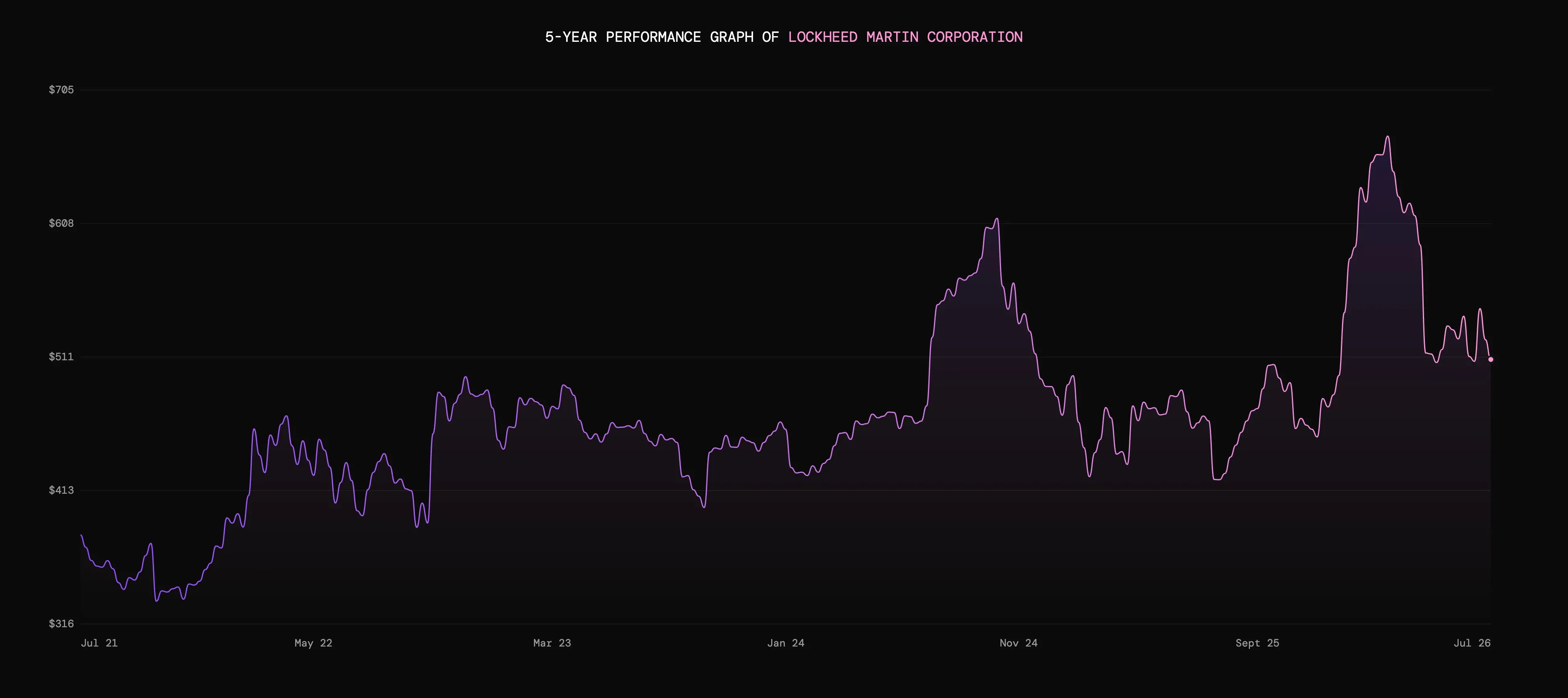
Aerospace and defence giant Lockheed Martin will report its Q2 FY2026 earnings on Thursday morning, before the market opens.
Consensus expectations are for Q2 revenue to hit $19.3bn and EPS to come in at $7.11, according to Refinitiv.
Global defence spending has risen for the 11th consecutive year. Regional conflict in the Middle East, Europe’s concerns about an expansionist Russia, and pressure for NATO members to strengthen their military capabilities have fueled massive armament drives around the world.
In particular, the opportunity looks particularly strong around munitions stockpiling. Modern-world combatants like to strike from distance, making air and missile defence a key priority as military spending kicks into gear.
Perhaps it’s not surprising then that Missiles and Fire Control sales rose 8% YoY in Q1. The US government has since awarded Lockheed a seven-year contract worth up to $35bn to quadruple THAAD-interceptor production. To you and me, these are ground-based anti-ballistic missiles, designed to destroy incoming projectiles.
The success of this segment helped to push revenue a smidge higher in Q1, as sales rose by $58m to $18.0bn. However, operating profits dipped amid trouble in the skies.
Lockheed is perhaps best known for its fighter jets, which include the F-35 and F-16. This Aeronautics segment is its largest, and is absolutely key to overall performance.
F-35 delivery rates may have hit record highs in 2025, but a Q1 slowdown pointed to a more subdued year. Revenue dipped by 1% to $7.0bn, and segmental operating profit fell by 14% amid revisions to the profit it expects to earn over contract lifespans. Problems included production and development delays in Lockheed’s F-16 programme.
In its Q1 earnings call, the business said these operations were “back on track”, but investors will be keen to see material evidence that surging defence spending is translating to profits rather than delays.
RTX Corp
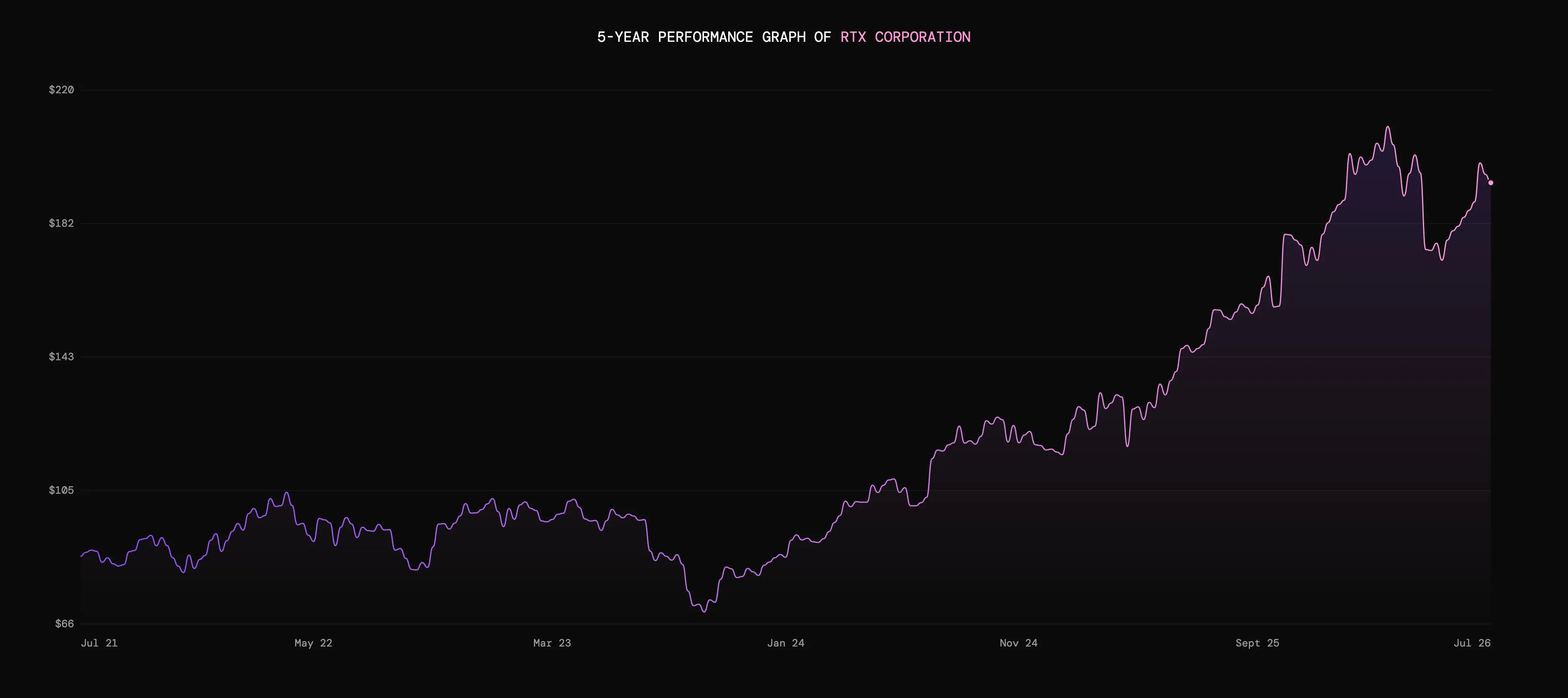
Another defence outfit releases earnings on Thursday morning too, with RTX set to report its Q2 FY2026 results.
Consensus estimates see Q2 revenue coming in at $22.9bn, and EPS at $1.66.
Back in Q1, total sales grew 9% YoY to $22.1bn, while net income leapt by 34% to $2.1bn. The business increased adjusted sales and EPS guidance for the full year due to particular strength in its defence business, where it has a $109bn backlog.
RTX, formerly known as Raytheon Technologies, is distinct from other defence rivals as a considerable chunk of its portfolio serves the commercial-aviation market. The business isn’t just concerned with making things go boom.
It looks like a good time for RTX to have this diversification. Air travel is booming, flight activity is trending higher, and airlines are keeping fleets in action for longer. This makes upgrades, spare parts, and maintenance essential.
So, while the business is also poised to benefit from the very same surging global defence spending as Lockheed, it has another driver in growing demand for commercial aircraft maintenance.
Indeed, RTX’s commercial backlog of $162bn exceeded that of its defence business at the end of Q1. This kind of forward visibility is positive, but there is pressure to execute and successfully convert this swollen order book into profit.
There are other very real obstacles to negotiate.
RTX’s Pratt & Whitney business, which is primarily concerned with engine supply and maintenance, has been managing a manufacturing defect in its geared-turbofan engines. These have grounded planes, created maintenance bottlenecks, and even led to compensation payments to airline customers.
This issue has been costly, but is reportedly easing. Investors may want more clarity on whether any further financial drag will cause RTX’s earnings to lose altitude.
Intel
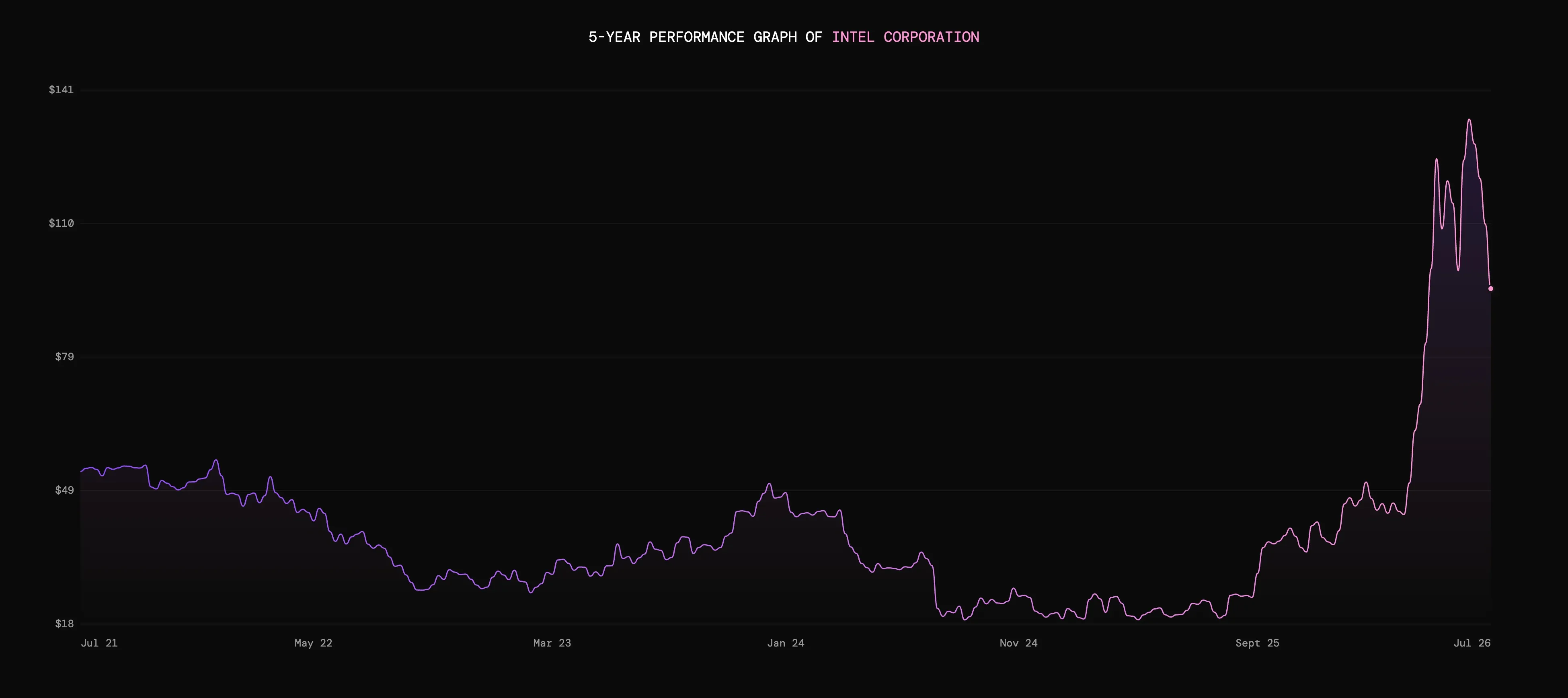
US computing hardware giant Intel is the last earnings in focus this week, and is set to report its FY2026 Q2 results after the market close on Thursday.
Mean estimates for Q2 revenue are $14.4bn, while EPS is seen at $0.21.
Intel’s story is shaped at the moment by how much the business can capitalise on massive AI infrastructure spending.
While some competitors operate primarily as chip designers, like Nvidia, or chip foundries, like TSMC, Intel is attempting to straddle both disciplines.
On the one hand, demand for server processors supporting AI infrastructure helped Data Center and AI revenue rise by 22% YoY in Q1.
Speaking on the company’s Q1 earnings call, CFO David Zinsner said AI-driven businesses represented 60% of revenue and grew 40% YoY. He added: “Q1 revenue would have been meaningfully higher, but demand continues to outpace our growing supply”.
This brings us to the foundry business, which is still proving its viability.
Revenue increased by 16% YoY to $5.4bn in Q1, but it recorded an operating loss of $2.4bn. In addition, almost all revenue comes from Intel’s own products, with just $174m generated from external sources. To impress, the foundry segment needs more external customer wins and to move towards profitability.
This is all the more important given the billions Intel has spent on upgrading and expanding its factory network. Non-GAAP gross margin is guided at 39% for Q2, below the 41% seen in Q1.
Investors need to see that capacity increases aren’t just about producing higher volumes, but about fulfilling rising demand in a way that will benefit profitability.
Capital at risk. The value of your investments can go down as well as up and you may get back less than you invest.
Fluctuations in foreign exchange rates may affect investments denominated in currencies other than GBP and the amount you receive back.
Past performance is not a reliable indicator of future returns.
Freetrade does not give investment advice and you are responsible for making your own investment decisions. If you are unsure about what is right for you, you should seek professional advice.
.webp)
.webp)
.webp)

.avif)
%2520(1).avif)
.webp)