After a week of headline-grabbing, Nvidia has a chance to clear its head a little as it reports its latest earnings update.
Investors will be on the hunt for some reassurance the AI chip giant can keep delivering without co-founder Jensen Huang at the helm, though emerging reports of a possible comeback only complicate matters.
Meanwhile, US retail heavyweights Target and Walmart are having their say too, with the former looking to prove its recovery continues apace and the latter broadening its customer base.
Note: All estimates are based on data provided by Refinitiv.
Nvidia - Life after Jensen
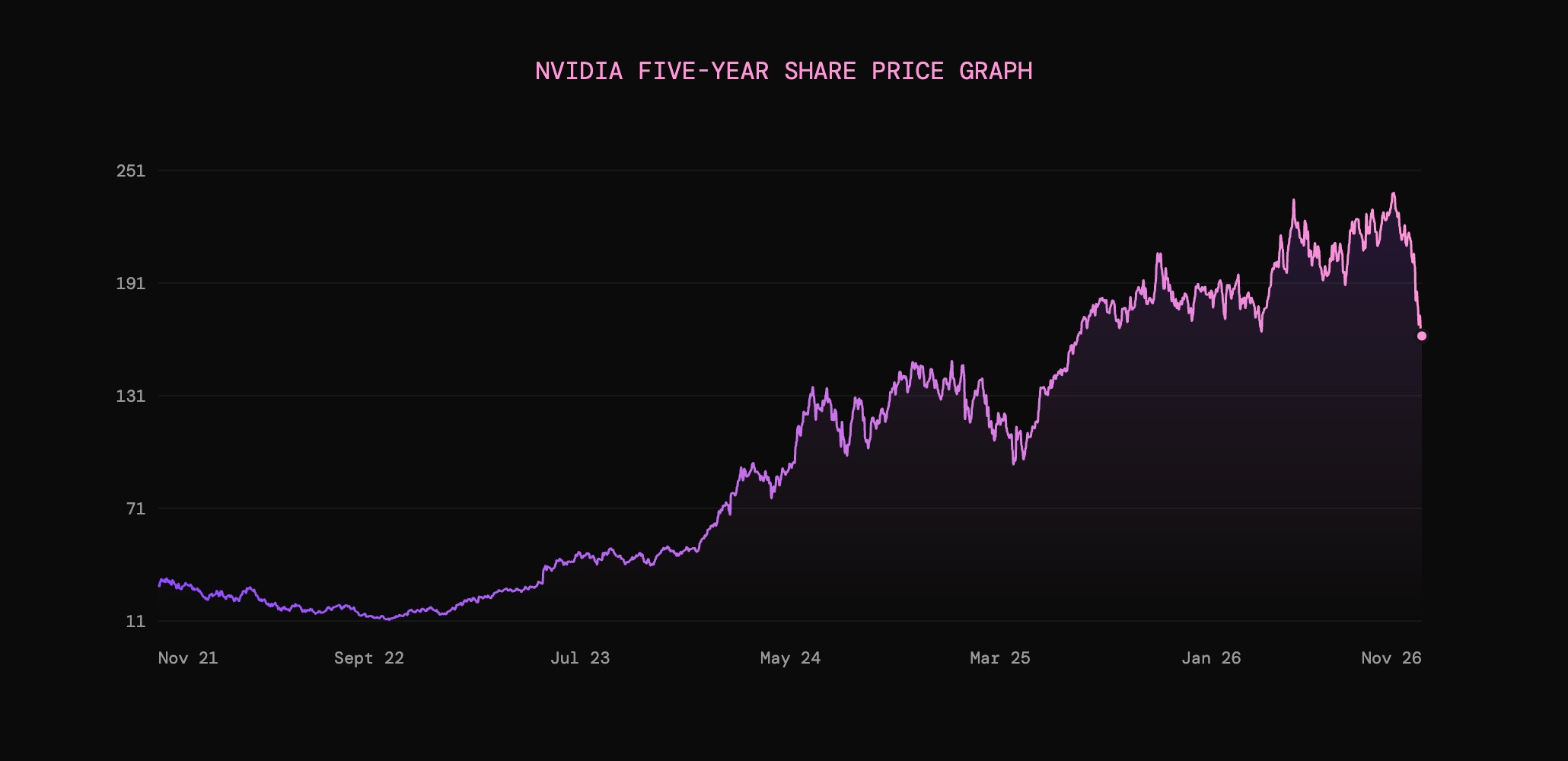
Earnings release: Tuesday 17 November, after market close
Revenue estimate: $109.08bn
EPS estimate: $2.47
Chip giant Nvidia is bobbing around in some stormy seas right now. Last week was a long one for the company, as founder and CEO Jensen Huang wobbled and then tumbled amid a very public scandal melding infidelity and alleged espionage.
The salacious saga has seen the share price haemorrhage, sliding 12.7% last week.
The AI trade already looked a bit fragile as investors mulled overspending concerns. Revelations about Huang and his subsequent exit have turned these jitters into panic in some quarters. He may just have been one man, but given his more than three decades at the helm of Nvidia’s very flat management structure and his role as a spokesperson for the company and wider industry, his absence will be keenly felt.
Then there’s that spying problem. Nvidia has launched an independent investigation into whether its secrets have been compromised.
There’s a twist in the tail, too. Is Jensen as gone as he seems? According to the Financial Times, Huang is already plotting a comeback amid confusion about who will take his place permanently after interim boss Colette Kress, while emerging industry support for his position appears to be intensifying.
This mess means Nvidia’s earnings release, already a key date in the earnings calendar, is a must-see event this week.
In Jensen’s absence, it seems patently unlikely the business will be able to fully assuage leadership concerns. The numbers are simply going to have to do a lot of talking.
Last quarter, Nvidia saw revenue more than double in size year-on-year (YoY) to $96.2bn, as its data centre division’s contribution climbed by 117% to $89bn.
The company’s guidance points to third-quarter revenue of $108bn, plus or minus 2%, without assuming any data centre compute revenue from China.
Some pressure on margins is anticipated. Nvidia forecast an adjusted gross margin of 74% for Q3, down from 75% last quarter. Higher memory costs are to blame, and management has already warned margins could fall to 71% in Q4 before recovering to between 72% and 73% in the next financial year. Be on the lookout for any change to this guidance, and what it implies for Nvidia’s ability to maintain its high margins.
Investors should also keep an ear to the ground for progress reports on Nvidia’s Vera Rubin tech. Nvidia has said the platform is expected to account for around 20% of Q3 data centre revenue and, as it’s seen as the driver behind the company’s next wave of growth, meeting this will be crucial in reassuring investors that the company’s best days lie ahead.
Ultimately, strong results may speak to the resilience of the Nvidia built under Huang. But additional commentary and the outlook are what must convince investors that the company can continue to flourish.
Target - Revamp
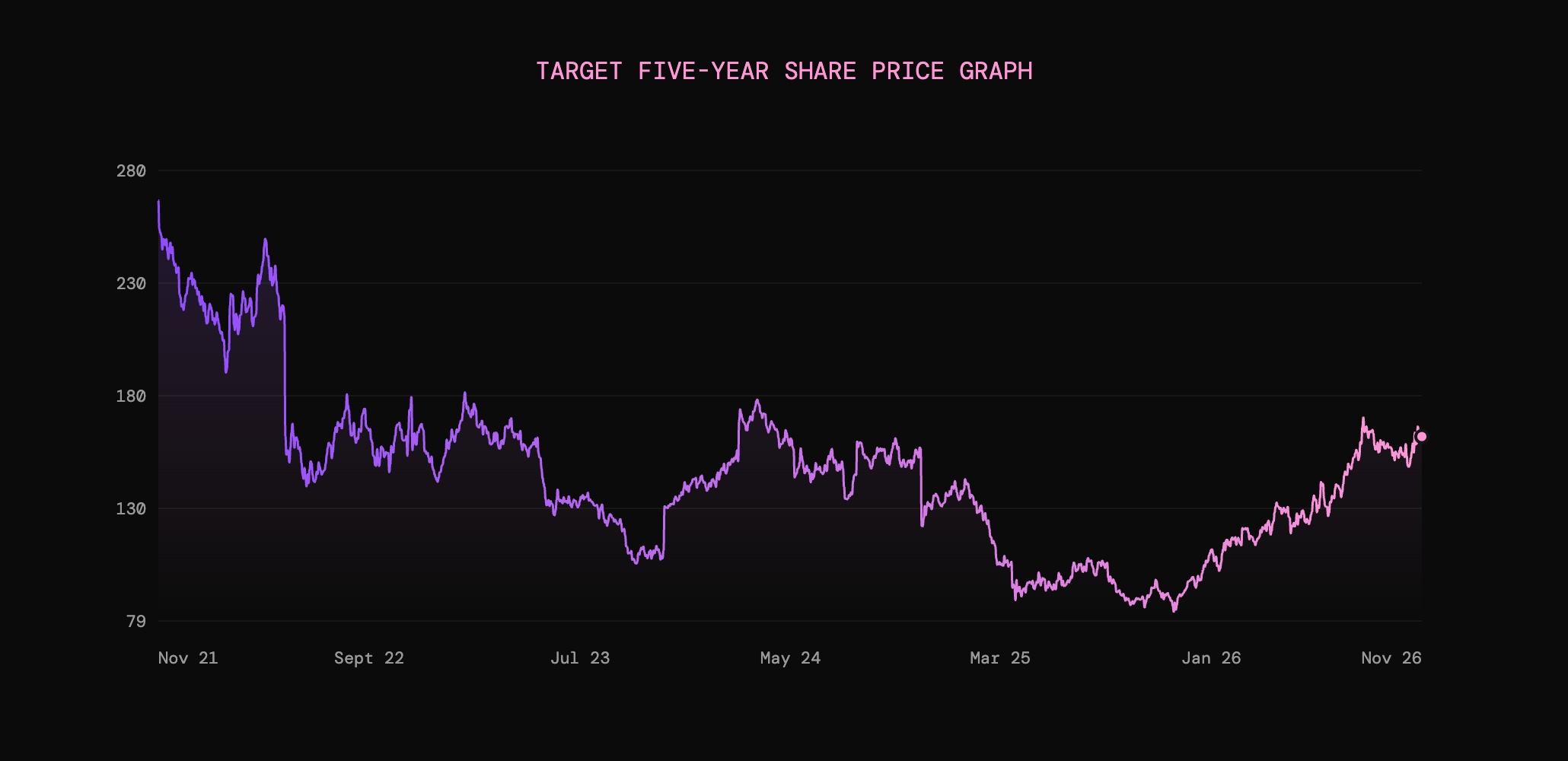
Earnings release: Wednesday 18 November, before market open
Revenue estimate: $26.55bn
EPS estimate: $2.06
Target is not suffering from the same boardroom drama as Nvidia, and instead the retailer’s focus is on simpler issues like keeping customers pouring through its doors to spur on its recovery.
Last quarter, Target saw sales rise by 5.3% YoY to $26.5bn. This might have been a slight slowdown from the growth seen in Q1, when it achieved 6.7% YoY growth, but it continued what is starting to look like a sales turnaround.
Last year was tricky for the business, with comparable sales sliding by 2.6% across the FY amid lower footfall.
That’s why perhaps the most encouraging element of the company’s Q2 results was comparable sales rising by 3.8%, which was driven by a 3.6% rise in customer transactions. That means the overall sales increase isn’t simply driven by bigger checkout receipts and inflation, but instead helped by customers taking more trips to stores or shopping more online.
This is crucial to Target’s strategy of turning stores into a “destination” for families, rather than just a place to shop. In Q2, the business finished its greatest volume of in-store transitions in any quarter over the past decade as it seeks to lure them in.
Now, this isn’t to say online business doesn’t play a part. Digital comparable sales climbed by 8.7% in Q2 as same-day delivery sales grew by more than 25%. But this channel still plays second fiddle to in-store sales, accounting for just 19.6% of total merchandise sales in the period.
Alongside sales, profitability has improved. August saw Target raise its FY EPS outlook to between $9.90 and $10.90. But there’s an asterisk next to this figure, as it includes the tariff refunds that inflated last quarter’s EPS by $1.65 to $4.11. EPS is set to be more modest in Q3, but it will be a good sign if the business’s confidence survived the autumn.
To attract customers back into stores, Target has become trigger happy with discounting, stating in Q2 it had slashed prices on more than 10,000 items over the past year and had more planned for the coming months. If Q3 can demonstrate continued sales growth while keeping profitability resilient, investors may feel reassured this bounceback is no flash in the pan.
Walmart - All your base
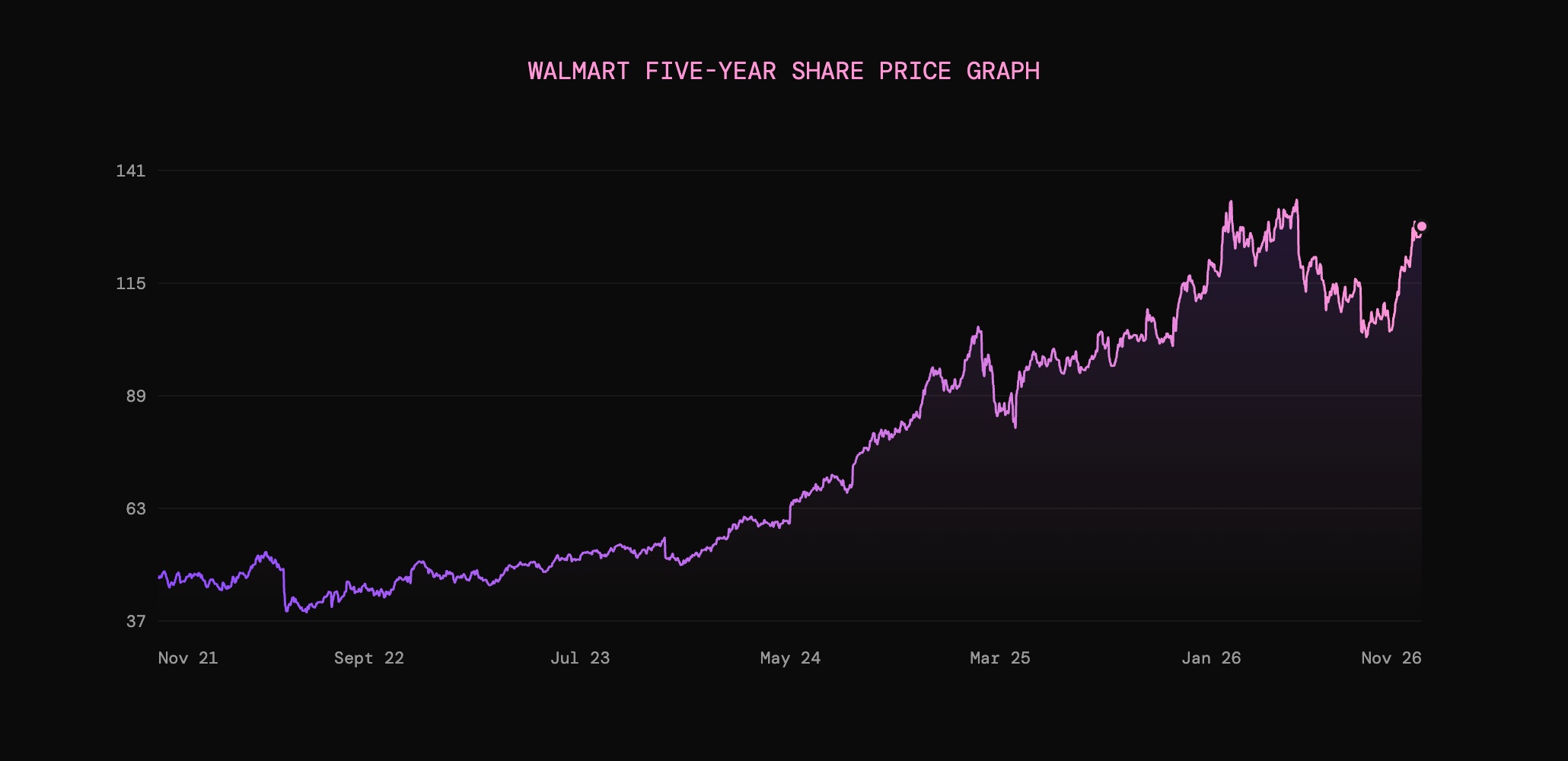
Earnings release: Thursday 19 November, before market open
Revenue estimate: $187.27bn
EPS estimate: $0.64
Following in the footsteps of Target is fellow mega-retailer Walmart, the planet’s second-largest company by revenue, which faces a slightly different challenge to Target’s turnaround. Let’s get into it.
Last quarter saw Walmart’s revenue climb by 5.9% YoY to $187.9bn as US comparable sales, excluding fuel, increased 2.6%. The number of transactions in the quarter rose by 1.5%, while average spending per transaction was also on the up as it grew by 1.1%.
Adjusted operating profit was up 17.4% YoY at constant currency. However, as with Target, the caveat that tariff refunds flattered Q2 profits is needed. The business is using the proceeds to fund lower prices and customer experience improvements. In Q3, operating profit is expected to rise by a more modest 2% to 4% on the same basis.
While things are moving in the right direction, sales figures still represent a slowdown from Q1’s 4.1% comparable sales growth. Wrestling growth back on track in Q3 could get investors feeling good about Walmart’s momentum ahead of the all-important Thanksgiving and Festive periods.
Beyond this, Walmart’s shifting customer demography and broadening base is definitely worth a look. The business has built itself into the behemoth we see today by offering customers low prices, allowing it to win big with a high volume of low-margin sales.
While its customer base might have historically tended toward less well-off shoppers, the business is blazing a notable trail with higher-income households. The company attributed growth here to the presence of “more elevated brands” in its inventory, noting that its products now appeal to a broader cohort of customers.
Winning these shoppers expands Walmart’s base beyond the traditional, and may help to insulate the business from belt-tightening under the cost of living crisis.
The convenience of Walmart’s offering may play a part in this broadened appeal. US store-fulfilled delivery sales grew around 43% during Q2, and Walmart seems to be sustaining the speed of its offering even as sales rapidly expand, with roughly 37% of deliveries from stores taking under three hours.
Online sales growth means more likely sign-ups to Walmart’s paid membership plan, which includes free delivery, and a bigger online audience, which turns Walmart into an ever more attractive option for advertisers. In Q2, global advertising and membership fee revenue grew 38% and 17% respectively.
These are the cherry on top. Why? It’s all in the margin.
These revenues are higher margin, and may help Walmart to keep in-store prices low. That gives the company a way of growing profits without hitting core customers right in the shopping basket, keeping them coming back through a mixture of convenience and cost-effectiveness as it maintains its identity.
The Christmas outlook will inevitably be in focus, but beyond that Q3 feels like a test. Can the business continue to win well-heeled customers and online business, and convert them into sustainable growth? An expanding customer base might be the key to Walmart’s next steps, but can Walmart deliver it?
Capital at risk. The value of your investments can go down as well as up and you may get back less than you invest.
Fluctuations in foreign exchange rates may affect investments denominated in currencies other than GBP and the amount you receive back.
Past performance is not a reliable indicator of future returns.
Freetrade does not give investment advice and you are responsible for making your own investment decisions. If you are unsure about what is right for you, you should seek professional advice.