With Alphabet, Microsoft, and Amazon set to report this week, investors are looking for proof that the megabucks being spent on AI are starting to pay off.
It’s fair to say that commentators, including yours truly, have already got decent mileage out of doling out increasingly tired phrases like “AI returns are under the microscope”. Given the recent lull for the AI trade, they face examination by a commensurately larger and more sophisticated instrument, a scanning electron microscope perhaps.
Megacaps Alphabet, Microsoft, and Amazon offer us a key read on monetisation at this critical juncture. Can their quarterly reports offer something to bring back the good-time feeling, or will they deepen investors’ concerns?
Note: All estimates are based on data provided by Refinitiv.
Alphabet - Hey, big spender!
Earnings release: Wednesday 28 October, after market close
Revenue estimate: $128.2bn
EPS estimate: $3.02
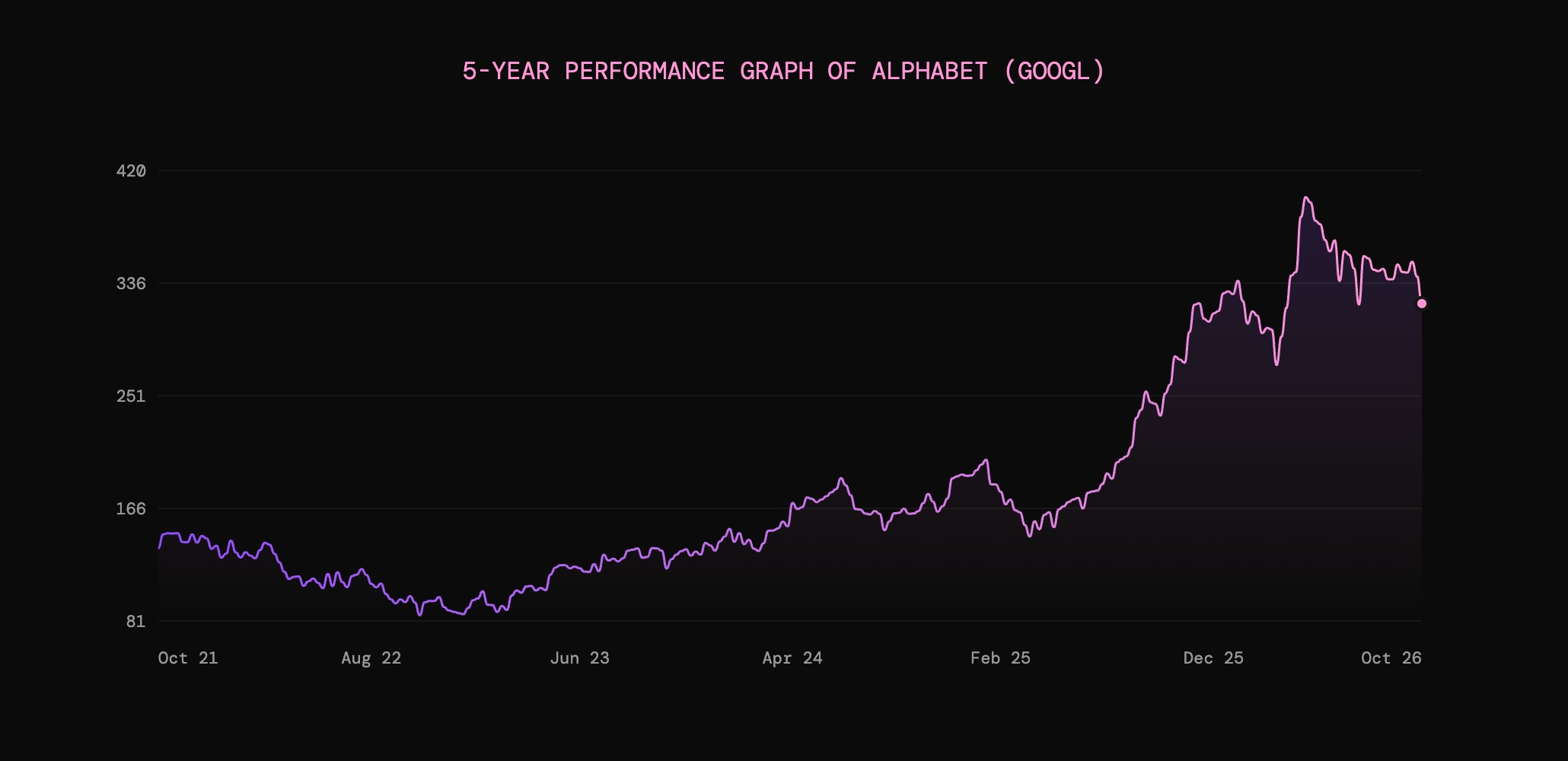
Our first big hitter is Google owner Alphabet. Year-on-year (YoY) consolidated revenue growth hit 24% in Q2, with net income leaping by almost 300%. And yet, in spite of these numbers, the share price tripped and stumbled in response.
The first reason to hold our horses is that unrealised gains on equities made up the bulk of that massive net income jump. The underlying picture was still solid though, with a more modest 30% increase in operating income.
However, AI spending was the headline, with the company having raised 2026 capex guidance to between $195bn and $205bn. For investors, the quandary is just how worth it the company’s spiralling AI spending is going to be.
Fast-forward to the present day, and Alphabet switched things up by falling over itself before earnings. In step with much of the wider market, Alphabet shares tumbled by around 6% last week after Meta’s update left a sour taste in the mouth for AI investors.
So, will we see a rerun of capex concerns, and how could Alphabet alleviate worries? It’s not like there’s a simple way of measuring AI ROI at Alphabet with a single figure. The tech’s tendrils are burrowed deep into each of the company’s different business units. Standouts are Cloud and Search.
Search is Alphabet’s motherlode, bringing in $63.3bn in Q2 - equivalent to 52.8% of total revenue. The business says AI features like AI Overviews and AI Mode are driving query growth, while Gemini has boosted ad performance by improving relevance. These innovations must keep proving popular for investors to stay on board.
In short, Alphabet needs to ensure we keep “Googling it” in the age of the LLM.
Meanwhile, Cloud is the company’s dynamite growth engine. Last time out, Cloud revenue was up by 82% to $24.8bn.
This is a pretty broad category, encompassing cloud infrastructure, enterprise software and services, hardware, and more.
One part of the story worth highlighting is the company’s tensor processing units (TPUs), newfangled chips designed to power demanding AI workloads. While the majority of revenue from existing agreements looks set to be recognised in FY2027, watch out for further detail on demand and potential contribution to growth.
After all, Alphabet appears to be dead proud of this infrastructure and some are touting it as a potential disruptor to the chipmakers that have made so much hay in the AI boom.
Alphabet’s high spending is infusing all facets of its business with AI functionality or compatibility, and the challenge remains in simply demonstrating to investors that this is worth it.
Microsoft - Severance
Earnings release: Wednesday 28 October, after market close
Revenue estimate: $90.7bn
EPS estimate: $4.72
Now, we’re checking in on another tech grandee, and you might spot a familiar issue.
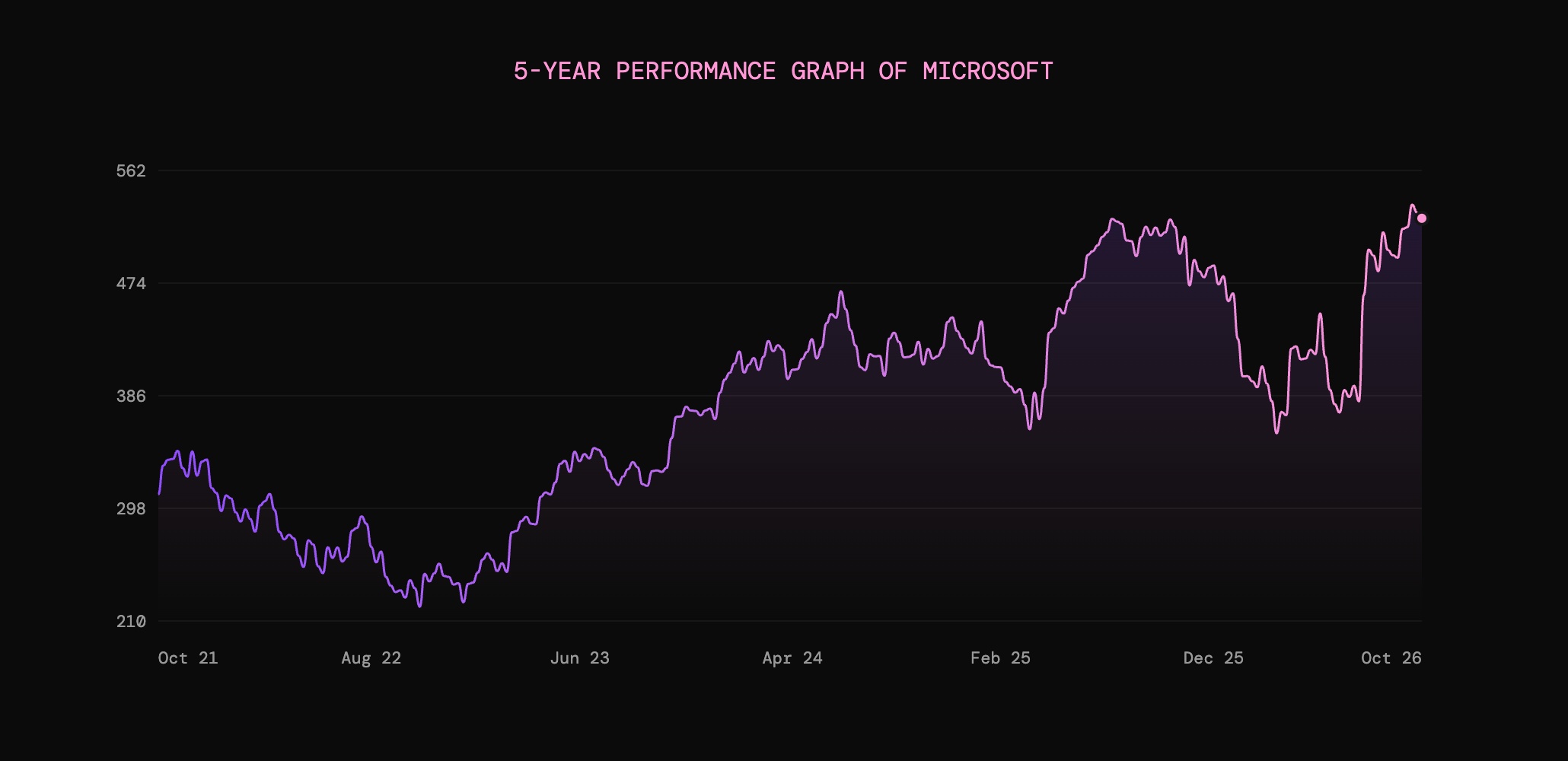
Azure is currently the main gauge of how well Microsoft is monetising AI. Back in fiscal Q4, revenue from Azure and other cloud services rose 43% YoY, powering Intelligent Cloud revenue 32% higher to $39.3bn.
CFO Amy Hood said customer demand exceeds supply and has prepped us for Azure growth of 45% in constant currency in the coming quarter, so expect investors to be laser-focused on that number.
Then, there’s Microsoft’s Copilot AI assistant. Like Alphabet, Microsoft has the advantage of being able to integrate its AI offering into existing products and services like Word, Excel, Outlook, and Teams. This product range works as a pre-built distribution network for Copilot, and helped it reach 30 million paid seats by the end of FY2026.
But is momentum from Azure and Copilot sustainable and, more importantly, profitable? Microsoft seems quite happy to pour money into data centres and computing capacity to meet AI demand, with capital spending up 69% to $41bn last quarter. This kind of infrastructure doesn't come cheap when everyone wants a slice.
Consequently, cost of revenue rose 21% in FY2026, outpacing revenue growth and partly reflecting AI infrastructure investment, while gross margin came under pressure.
Seemingly in response, the business is cutting costs elsewhere. This week brought news of a buyout offer tendered to some 60,000 eligible staff, which amounts to more than a quarter of its total workforce.
Of course, it’s unlikely that anywhere close to that number will take Microsoft up on the offer. But such an extensive programme exemplifies the business’s keenness to compress costs where it can, especially given a similar voluntary retirement programme was launched in April.
Is this priming for the company to unveil plans for another fat wedge of spending on AI? Will fiscal Q1 earnings show more pressure on margins? Come Wednesday, we shall see.
Amazon - Support system
Earnings release: Thursday 29 October, after market close
Revenue estimate: $202.2bn
EPS estimate: $1.96
Amazon rounds off our whistlestop tour of the big AI players reporting this week.
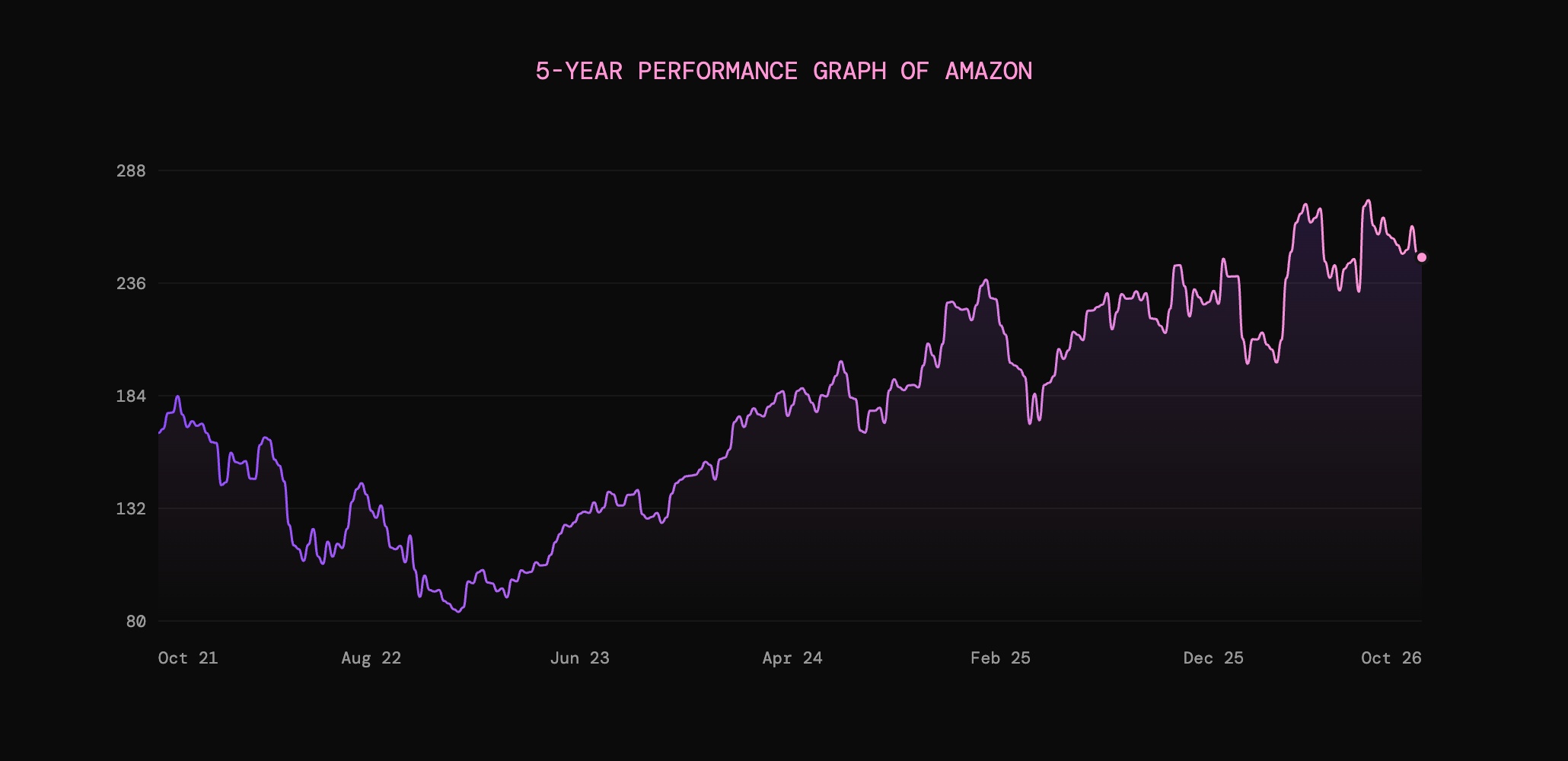
Amazon’s exposure to the AI game is primarily through Amazon Web Services (AWS), the company’s massive cloud computing business. It saw YoY revenue growth of 36.7% in Q2 and boasted that this was the fastest growth in 18 quarters.
Alongside that growth comes a pretty chunky bill. Amazon raised its FY2026 capital expenditure outlook to around $220bn last time out, with data centres, chips, and other AI infrastructure swallowing up enormous sums. As with its tech brethren, this number will be under major scrutiny when earnings drop.
But it’s worth factoring in that Amazon has a pretty sizeable lever that the likes of Microsoft and Alphabet lack.
We’re talking retail here.
This is dwarfed in terms of operating income, with AWS having generated $16.6bn in Q2, compared with $9.1bn for North America and $1.7bn internationally. However, it is still the company’s big earner in revenue terms.
The gigantic e-commerce arm offers significantly lower single-digit margins, and sales are so high that even modest efficiency improvements could make an enormous difference.
The complexity of operating a global distribution network seems ripe for the kind of efficiency AI and automation supposedly promise. Its rapidly growing advertising business, which saw revenue leap by 26% in Q2 to $19.8bn, is another place where AI could pay off.
We don’t have anything with which to directly quantify these kinds of improvements thus far, but Amazon has touted expanding robotics and streamlining shipping.
There are signs of improvement. Cost of sales and fulfilment expenses climbed by 18.5% and 14.1% respectively last quarter, but were outstripped by the 20% increase in total revenue. If Amazon can continue keeping a lid on these expenses, it may significantly improve profitability of its retail support system.
The point is, if Amazon can squeeze more profit out of its e-commerce operations and maintain its impressive AWS momentum, investors may find aggressive AI spending more palatable.
Capital at risk. The value of your investments can go down as well as up and you may get back less than you invest.
Fluctuations in foreign exchange rates may affect investments denominated in currencies other than GBP and the amount you receive back.
Past performance is not a reliable indicator of future returns.
Freetrade does not give investment advice and you are responsible for making your own investment decisions. If you are unsure about what is right for you, you should seek professional advice.