
Big Tech earnings take centre stage this week, with Microsoft, Meta, Apple, and Amazon all preparing to update investors.
AI spending will dominate much of the discussion, but there are plenty of other subtleties that differentiate how Silicon Valley’s major players line up this earnings season. Read on to find out more about the key numbers and narratives investors should monitor.
Note: All estimates are based on data provided by Refinitiv.
Visa - Spending power
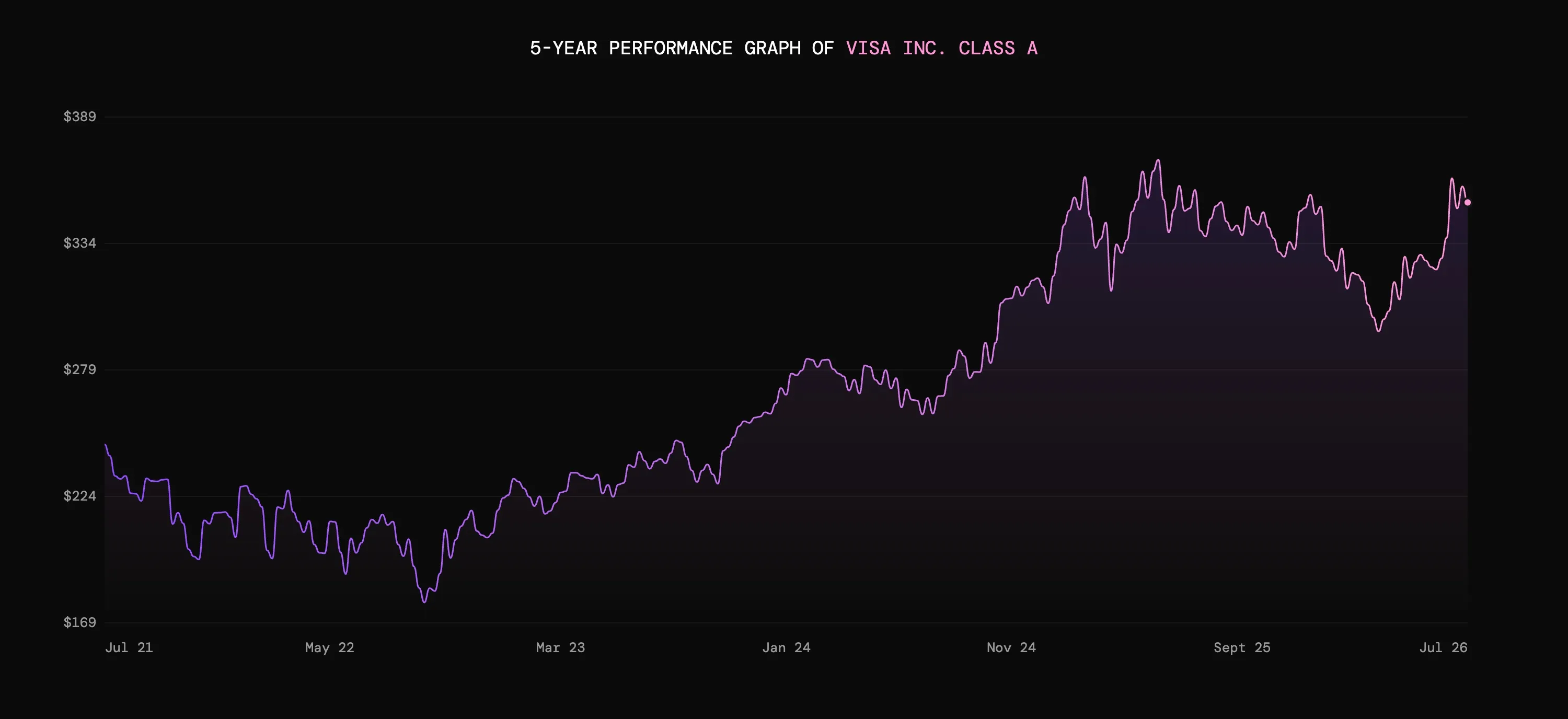
Earnings release: Tuesday 28th July, after market close
Revenue estimate: $11.4bn
EPS estimate: $3.23
Some earnings updates tell us more than simply how one company is faring right now. Visa is a great example of this, as it offers real insight into where consumers’ heads are at.
Looking at the global payments giant’s upcoming Q3 FY2026 earnings, let’s start with the business itself.
Back in Q2, payments volume increased by 9% year on year (YoY) in constant currency. Total cross-border volume rose by 12%, or 11% excluding transactions within Europe. This was good news for Visa, which saw a 17% YoY jump in net revenue to $11.2bn.
There are a few standout factors that may influence the company’s Q3 performance.
First is that client incentives may temper results this time around. These payments or rebates Visa gives to its partners are deducted from gross revenue, and so may squeeze net-revenue growth even if payment volumes remain healthy.
Visa has already warned that client incentives will rise more rapidly in Q3 because of contract timing and tougher comparisons.
On the other hand, the World Cup provides a potential tailwind, although the tournament began late in Visa’s third quarter and only the impact of its opening stages will feature in these results.
Visa has already noted that cross-border transactions in World Cup host cities increased by nearly 20% YoY during the tournament period. The benefits of this spending spurred by tournament excitement and travel may have some impact this time round, but are likely to be stronger in the company’s Q4 earnings.
Now, let’s zoom out a bit and consider what we might learn about overall consumer behaviour.
On the surface, payments volume will show how much consumers are spending, processed transactions show how often they are spending, and cross-border volume offers a read on travel and discretionary demand.
Beyond these figures, management commentary offers colour on the nature of spending, including ecommerce vs in-store spending, and whether habits are resilient across all income groups.
Will Visa’s earnings indicate that consumers have continued to tap, swipe and spend, or will we see evidence of a slowdown at the tills?
Microsoft - The Azure engine
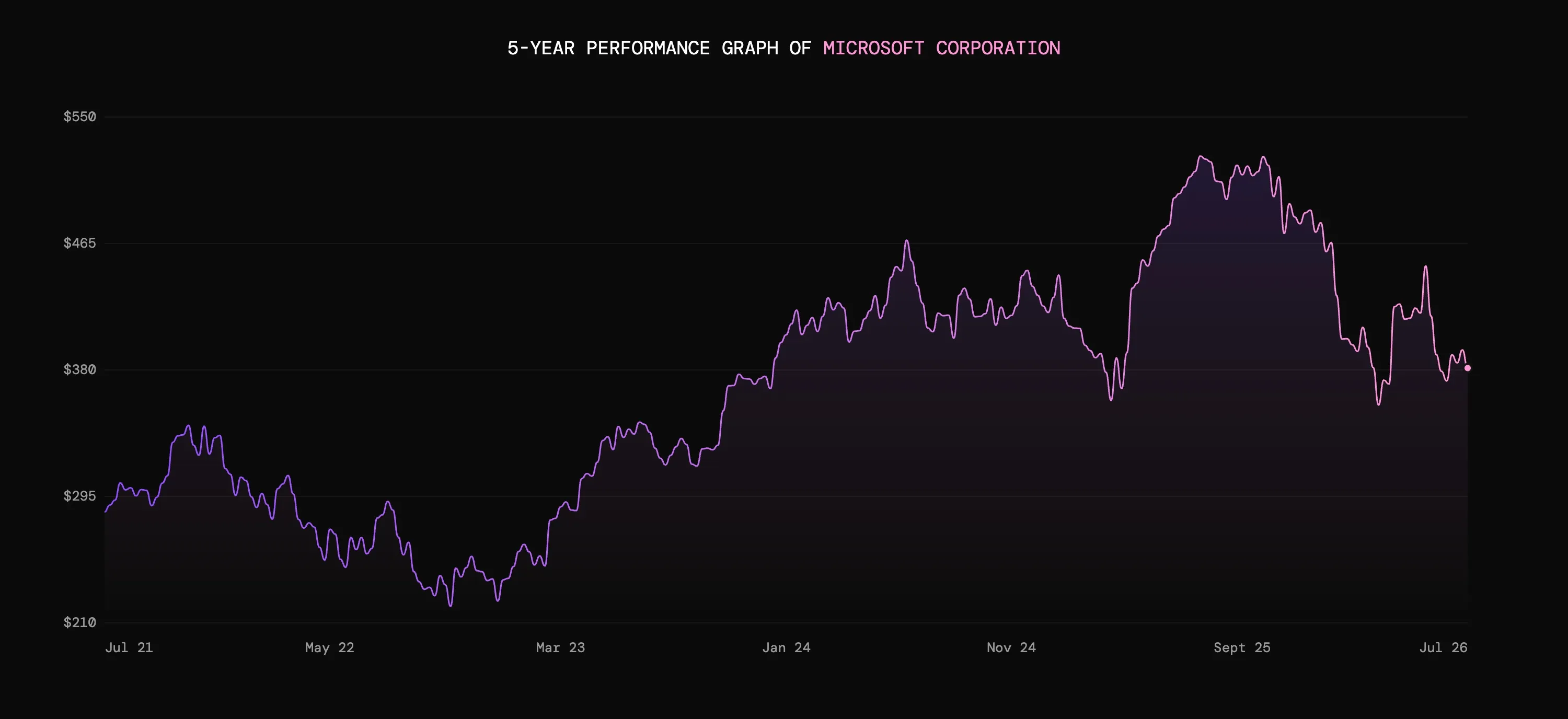
Earnings release: Wednesday 29th July, after market close
Revenue estimate: $87.6bn
EPS estimate: $4.24
For consumers, Microsoft might be a familiar name through avenues like its operating systems and daily-use 365 software, or console gaming through the Xbox brand.
But powering the business forward over recent periods is the Intelligent Cloud segment, driven in particular by Azure. This business-facing cloud platform provides computing power, storage, and other software services to enterprise customers of all sizes, including 95% of the Fortune 500.
Back in Q3, Azure and other cloud services revenue leapt by 40% YoY, powering an 18% jump in overall revenue to $82.9bn. Microsoft has flagged further “modest acceleration” for Azure revenues in the second half of the calendar year, though the limits to the business’s capacity are an obstacle.
Keen to keep its growth engine purring, Microsoft has been scrambling to bring additional compute and storage online at pace. But this raises spending questions. For context, Microsoft has said it expects capital expenditure to exceed $40bn in Q4 and reach roughly $190bn across calendar 2026.
Expect laser focus on this. After all, Alphabet’s massive surge in AI-led capital expenditure last week seemed to alarm some investors.
So, as a Silicon Valley giant, Microsoft’s AI spending was always going to garner major attention. However, the business having specifically flagged capacity issues as a constraint means it will be under particular scrutiny. The worry is that if the business overcompensates in its response to current shortages, new capacity could be excessive if demand eventually cools.
And, as ever, there’s the balancing act of demonstrating that investment is delivering quality revenues.
While not specifically an AI segment, Azure offers a read of AI success. Copilot, Microsoft’s AI digital assistant, is another. Customer wins and monetisation commentary are what investors are looking for here.
All this is needed to justify spending that is weighing on margins and cash generation.
For example, last quarter, Microsoft said its company gross margin drop to 68% was primarily due to “continued investment in AI infrastructure and growing AI product usage”.
Away from AI, Microsoft’s stubborn More Personal Computing segment is also worth monitoring. This contains the problematic Xbox business, where content and services revenue fell by 5% in Q3.
This isn’t game over for Xbox, but Microsoft clearly wants a rethink and reorganisation after its Game Pass strategy failed to deliver. Since the end of Q3, Microsoft has announced job cuts and a new strategy at Xbox. Investors will be on the lookout for nuggets of information in general commentary or FY2027 guidance.
In short, Microsoft’s AI machine is producing strong growth, but the enormous demand is making it hard to keep spending on the leash. Microsoft must show it can use Azure and Copilot to convert demand into sustainable and profitable growth.
Meta - Leaning on ads
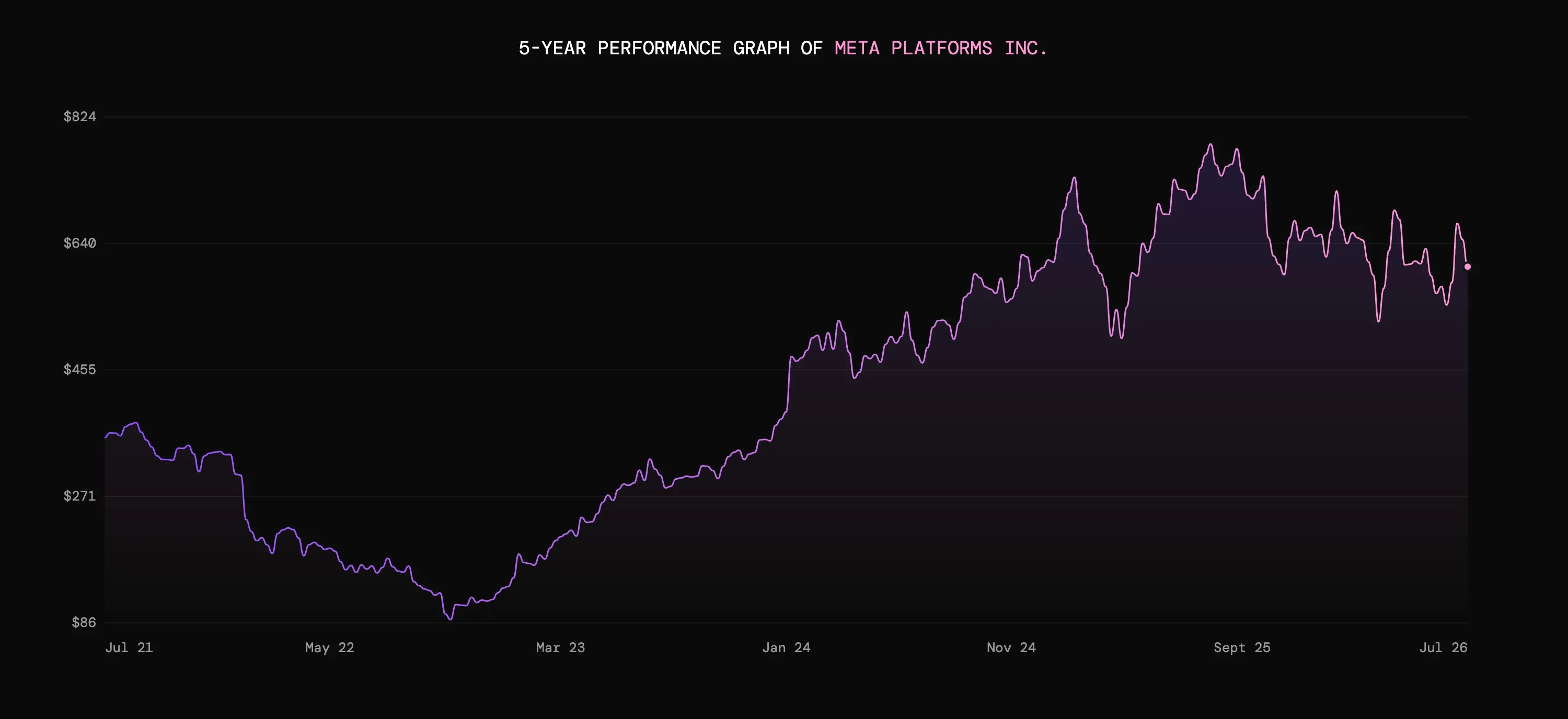
Earnings release: Wednesday 29th July, after market close
Revenue estimate: $60.2bn
EPS estimate: $7.22
Meta’s social media and communications stable includes Facebook, Instagram, Messenger, and WhatsApp. These platforms might make nominal revenues from other means, but advertising is the main show in town.
That means the key metrics for measuring Meta’s financial performance include ad impressions and average price per ad. Last time out, the former was up by 19% YoY and the latter by 12%.
This meant revenue from the Family of Apps grew by 33.4% to $55.9bn, in turn powering overall revenue 33.1% higher to $56.3bn.
So, Meta has been making more money, as more people see ads on its platforms and it has been able to sell that space for higher prices.
The issue is that costs are growing faster than revenue, rising by around 35% YoY. Meta cites infrastructure spending, along with employee compensation, as the driving force behind this cost growth.
The business says AI implementation is helping to improve its user engagement, ad targeting, and conversion rates, but investors will want to see results considering the pace of rising costs and hiked capex guidance from last time out.
It’s worth noting that, despite rising costs, Meta’s operating margin remained a healthy 41% so there is still considerable wiggle room.
As you may have noticed, ads might be the core of Meta’s business for the moment. However, it has its sights set on more ambitious plays. Its immersive metaverse experiment might have failed with the company pulling the plug on Horizon Worlds back in March, but its Reality Labs segment continues to plug away in search of the “next big thing”.
Virtual reality headsets and AI-enabled glasses are the main projects at present, but it is a long way from financial sustainability.
The numbers just are not there right now. Reality Labs revenue was just $402m in Q1, down 2.4% compared to the same period 12 months prior.
The upshot of this is that signs of fragility in Meta’s social advertising business would be a major concern. Its other, more ambitious projects may look exciting, but they are not yet anywhere near mature enough to shoulder any significant revenue burden. So, can ad strength keep Meta’s SciFi dreams alive?
Qualcomm - Handset recovery?
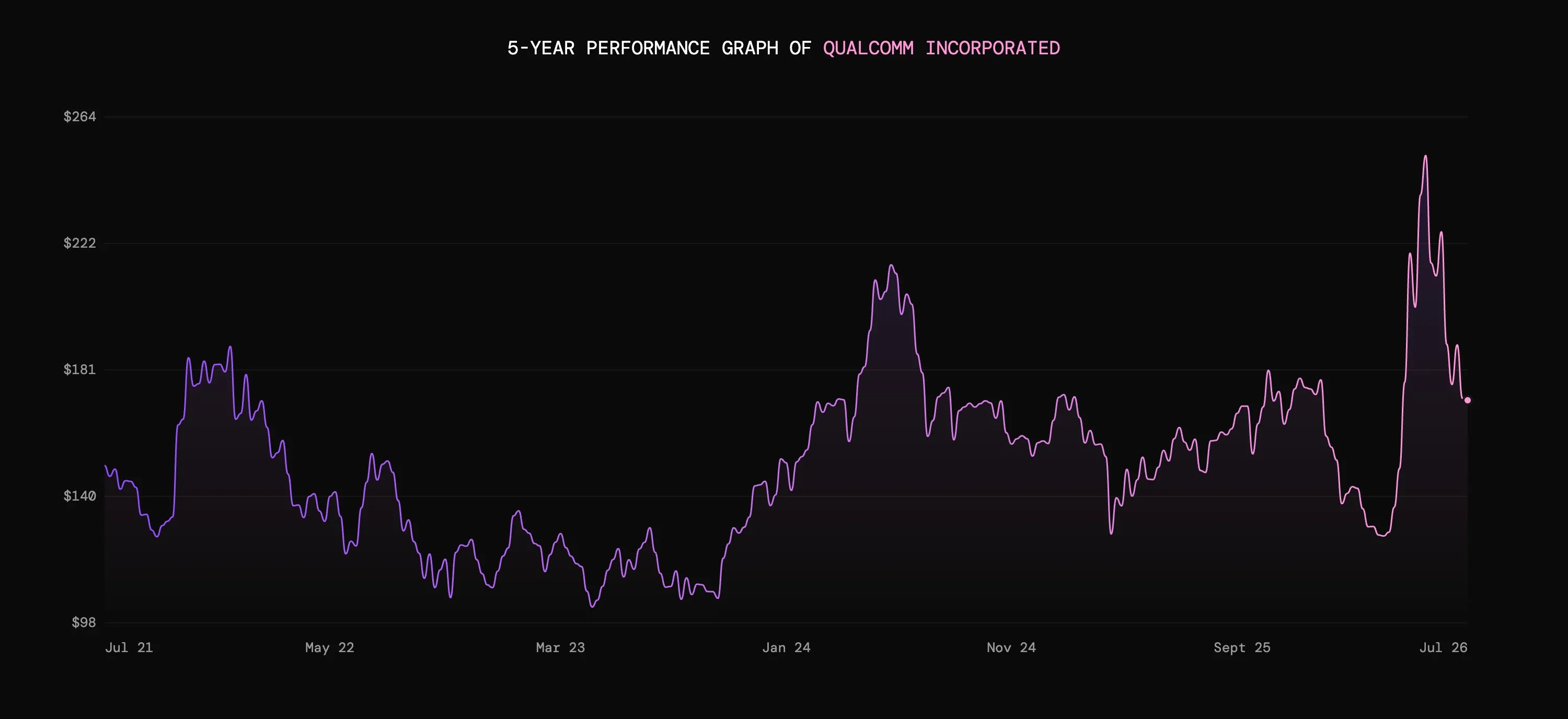
Earnings release: Wednesday 29th July, after market close
Revenue estimate: $9.7bn
EPS estimate: $2.23
Qualcomm might not be as well-known as some of the major tech players previewed this week, but the semiconductor and wireless tech firm offers a read on the chip boom.
Its most notable products are perhaps the Snapdragon chips and modems used in smartphones, and it also earns royalties via licensing the use of its cellular technology. Increasingly, the business is also expanding into automotive, connected devices, and data-centre chips.
In spite of this expansion, smartphones remain the main event and should be our first port of call. There has been recent weakness in this segment, with handset revenue down 13% YoY in Q2 as the business grappled with weak demand and high memory costs.
This helped to pull overall Q2 revenues down by 3% to $10.6bn.
Fortunately, ongoing diversification mitigated some of the smartphone weakness as the automotive segment enjoyed impressive 38% revenue growth, while Internet of Things revenue climbed by 9%. Continued momentum would reduce Qualcomm’s dependence on the smartphone market, which continues to face memory challenges.
Finally, investors will want updates on Qualcomm’s entry into the data centre market. Last time out, Qualcomm said initial shipments from a custom-chip agreement with a major cloud customer were expected later this year. In a June update, it added that it is targeting data centre revenue in excess of $15bn by FY2029.
The opportunity might be considerable, but it’s still largely prospective and thus more of a sweetener. The current main challenge for Qualcomm still looks like showing that its core handset business can provide stability while more junior segments gather momentum.
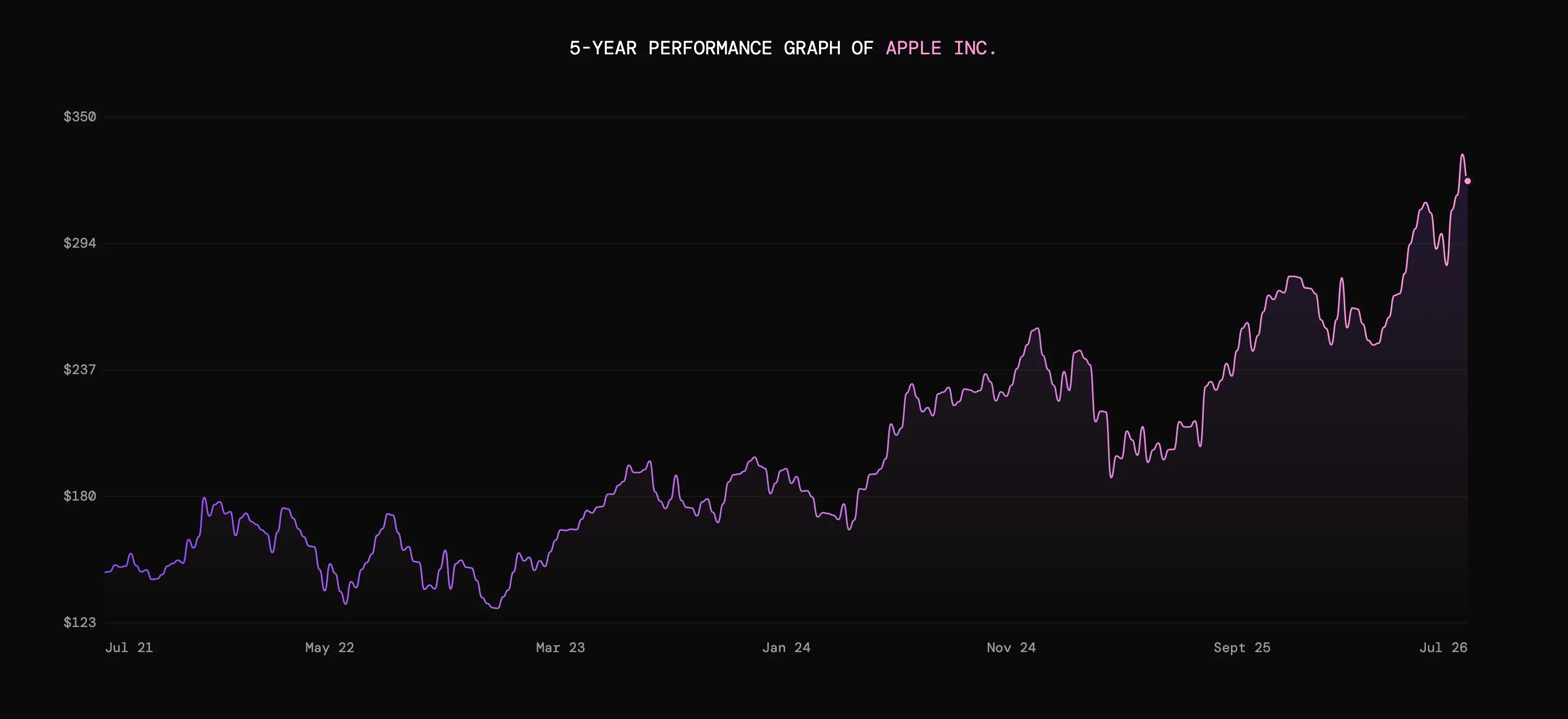
Apple - Memory costs to bite?
Earnings release: Thursday 30th July, after market close
Revenue estimate: $108.6bn
EPS estimate: $1.89
Apple is heavily reliant on product sales, which accounted for 72.1% of total sales in Q2. There’s momentum here, with Apple scoring a 16.7% YoY product sales increase last time out.
The company said it had seen “extraordinary” demand for the iPhone 17 series, the latest iteration of its all-important flagship smartphone. There was particular strength in Greater China, a real boon for Apple considering the competition it has faced from domestic smartphone makers like Huawei.
The sustainability of this strong momentum is a key question for investors.
There is a downside to note, too. The product category faces margin pressure as the cost of iPhone construction is set to rise in Q3 due to “significantly higher memory costs”. During the company’s last earnings call, outgoing CEO Tim Cook explained:
“They are also partly offset by the benefit of carry-in inventory. And while we do not give color beyond June, I can tell you that beyond the June quarter, we believe memory costs will drive an increasing impact on our business, and we will continue to evaluate this. As we have said before, we will look at a range of options.”
In the face of the memory chip shortage, Apple has hiked some hardware prices. Its results will offer a read on how this has impacted customer demand.
So, with hardware under the cosh, where can Apple turn for some positivity?
Last time out, the services sales also put in a solid shift, up by 16.3% to $31.0bn. It might offer lower total revenue, but this category has an outsize impact on profitability due to its margin strength. Services gross margin was approximately 76.7% last time out, while product gross margin was approximately 38.7%.
With the aforementioned memory squeeze, this strength is all the more important to keeping Apple on an even keel.
It’s also more likely to be recurring, offering a steadier foundation than the cyclical nature of product sales. Perhaps the main threat here is pressure from UK and EU regulators toward the dominance of the App Store, an especially profitable part of the ecosystem.
Finally, there’s AI, and the question of whether Apple is going to do more than dip its toes in the new tech.
Apple hasn’t leapt on board the AI craze with the gusto of many of its big-tech contemporaries. This means spending has been muted, but delivery on the consumer AI products and integrations Apple has opted to pursue has underwhelmed. For example, the long-awaited Siri AI overhaul has been unveiled, but not yet smoothly launched for consumers.
Apple’s hardware business looked red hot last time out, but Q3 is a test of whether the business can maintain momentum and whether mounting costs will erode margins.
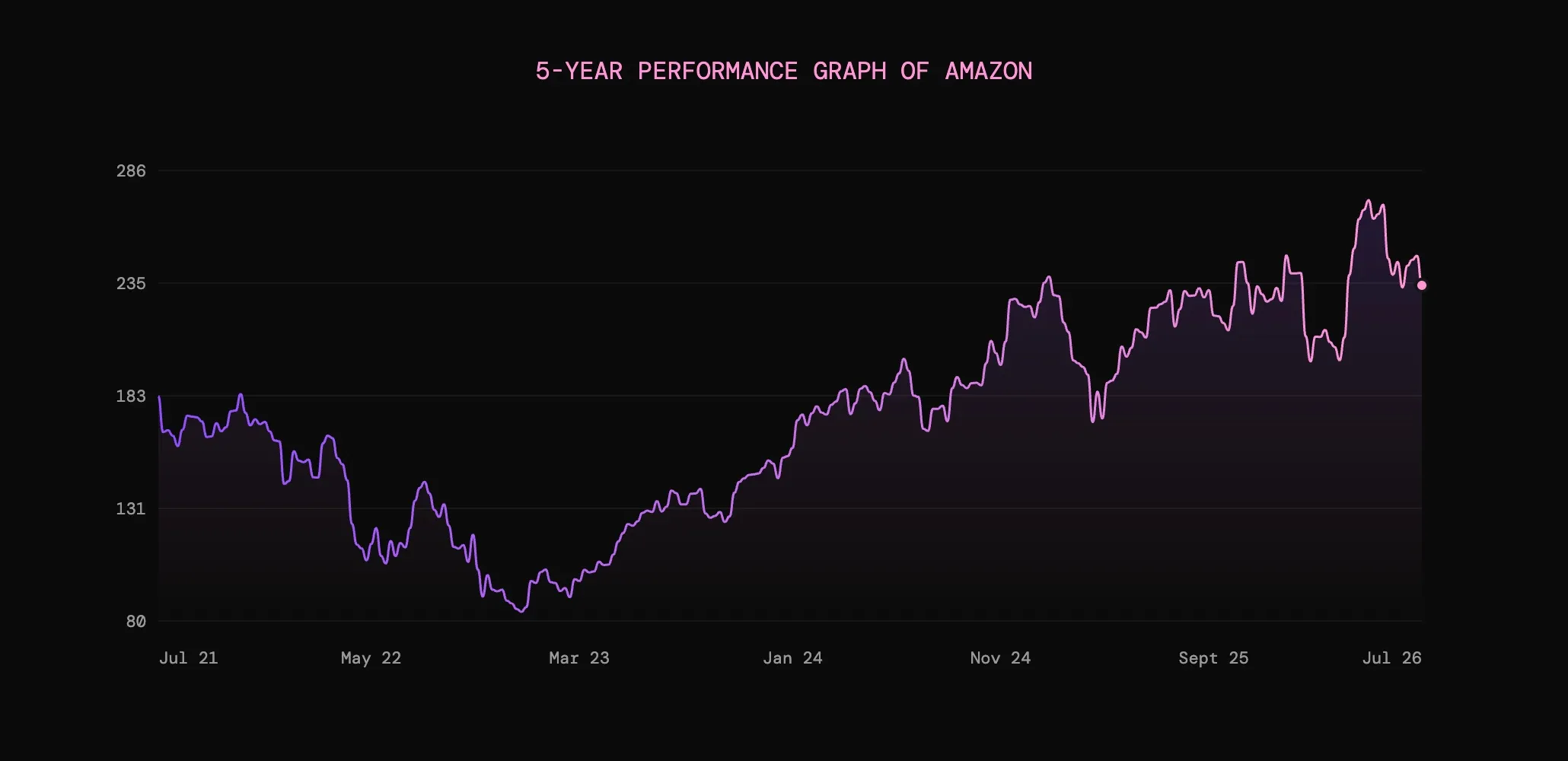
Amazon - AWSome Earnings?
Earnings release: Thursday 30th July, after market close
Revenue estimate: $196.4bn
EPS estimate: $1.82
Amazon has come a long way from its online bookshop roots. Along the way, it diversified its online marketplace into the hugely varied platform we know today, where you can pick up an air fryer, paddling pool, or cat food just as easily as you could the complete works of Dickens.
Perhaps the clearest sign of Amazon’s evolution is that services have become its largest sales category. Net services sales were $110.2bn in Q1, up by 20.2% YoY, while product revenue rose by 11.5% to $71.3bn.
And it’s within the services category that the hugely important Amazon Web Services (AWS) business dwells. This business, which rents computing power, storage, and AI infrastructure to customers, saw revenue leap by 28% to $37.6bn in Q1.
That’s eye-catching, for sure, but it’s not simply this growth that makes AWS so important.
There’s also AWS’s operating margin, which sat at 37.7% in Q1. For context, this compared with an operating margin of around 8% in Amazon’s North America segment, and 3.5% in its International segment.
Never mind a growth engine, AWS looks like the company’s profit engine as it generated close to three-fifths of the company’s operating income from barely a fifth of group sales.
Amazon will hope that AWS’s performance will justify its massive infrastructure spending, which the company has indicated could approach $200bn across 2026 as it splashes out on data centres, networking, and chip capacity.
This is the other factor that makes AWS so important: it offers a clear read on the payoff from AI investment.
Of course, there are other things to keep your eyes peeled for too. Retail might be a lower margin aspect of the business, but profitability is still improving amid faster delivery, better warehouse utilisation, and tighter cost controls.
But perhaps the more exciting part of Amazon’s retail platform is its advertising revenue. Ad services revenue was up by 24% YoY in Q1, rising to $17.2bn. Amazon is particularly attractive to advertisers, as it offers an ad audience of high-intent shoppers.
Amazon can also benefit from both the advertising spend and the resulting transaction, particularly when the sale takes place through its marketplace.
Amazon has no shortage of growth opportunities, with AWS appearing to lead the way. Along with advertising gains and improving retail margins, can this help the business keep pace with accelerating investment?
Capital at risk. The value of your investments can go down as well as up and you may get back less than you invest.
Fluctuations in foreign exchange rates may affect investments denominated in currencies other than GBP and the amount you receive back.
Past performance is not a reliable indicator of future returns.
Freetrade does not give investment advice and you are responsible for making your own investment decisions. If you are unsure about what is right for you, you should seek professional advice.
.webp)
.webp)
.webp)


.avif)

.avif)