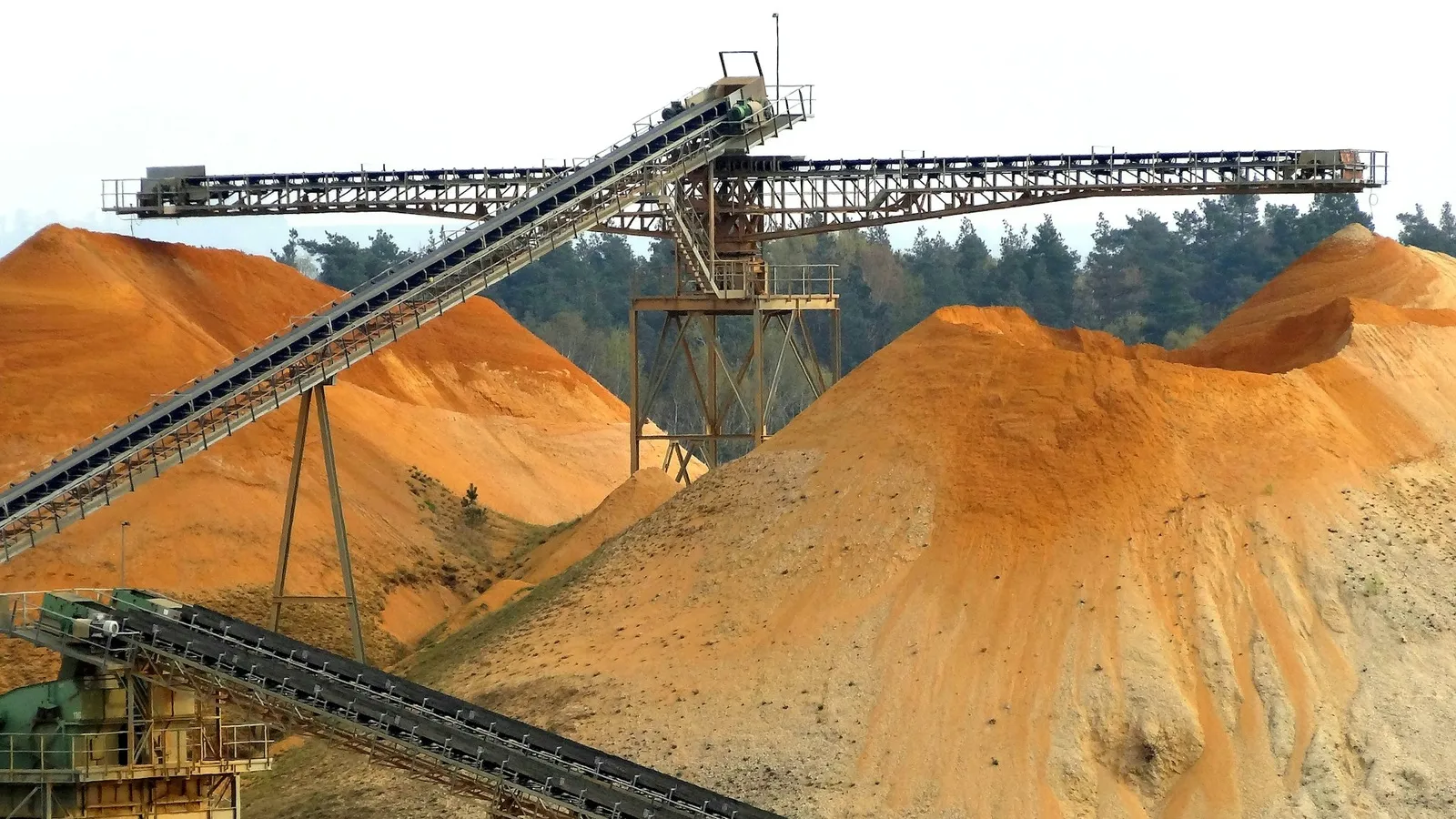
Copper is having a bit of a moment. Prices have reached unprecedented highs over recent weeks, standing out even as prices of other industrial metals remain elevated.
But what’s driving prices to such heights, how is this impacting individual mining companies, and what will come next?
Red gold: The price of copper
Gold grabbed all the headlines earlier this year. Silver jogged alongside it, advancing to similar highs. Meanwhile, oil has spent much of 2026 hogging the limelight as Hormuz stays hot.
But, lurking in the commodity background, copper prices have crept up to record levels without comparable fanfare.
At the time of writing (18 August), copper is trading around $6.56/lb, which is roughly $14,460 per tonne. This is 47% higher than the same point 12 months ago, even as the metal has retreated slightly from all-time record highs.
That record?
Well, the Comex benchmark reached $6.714/lb, or approximately $14,802 per tonne, on 12 August, surpassing a prior record set just 7 days earlier.
.webp)
Why are prices so high?
There’s a cocktail of structural and policy factors pumping copper prices to these record levels. Let’s take a whistlestop tour.
AI data centres
Aside from being the de facto investment topic of the moment, the AI hardware buildout is also a veritable bonanza for copper demand.
Nearly 850 data centre projects are currently under construction worldwide, according to Oxford Economics. The driver here is eye-watering spending from tech hyperscalers, with Moody’s estimating that six major US operators could splash out almost $785bn on capital investment in 2026 as the big boys of tech seek to build the massive amounts of computing power needed to run increasingly sophisticated AI models.
These warehouses of computing power need power cables, heat exchangers, grid connectivity, and more copper-containing electronic doohickies than you can shake a stick at.
And AI data centres have a particularly large appetite for copper, with S&P Global stating they require around 39 tonnes of copper per megawatt of installed capacity, compared with roughly 32 to 36 tonnes for other data centres.
But the story extends to factors beyond the AI hardware narrative.
Electrification
Another source of demand is the wider process of electrification, as tech increasingly infiltrates every facet of our lives and the planet seeks to replace primitive fossil fuels with cleaner renewable energy.
Electrical applications account for approximately 75% of copper use worldwide1, as its high conductivity and relative abundance make it the most practical choice when searching for a way to get electricity from A to B and beyond.
Think of the ongoing buildout of increasingly large and complex electrical grids that need to affix to renewable energy sources and provide more power. Consider the manufacture of growing numbers of electric vehicles. Ponder how everyday items like refrigerators and thermostats increasingly come with a touchscreen and a shedload of sensors.
These are the wider powers behind demand for the red metal.
Tariffs
The man in the White House famously loves his tariffs, and copper has not managed to escape his notice. In July 2025 President Trump claimed copper imports “threaten to impair US national security”.
Semi-finished copper products are currently subject to 50% tariffs, while raw refined copper is exempt for the time being. However, a 15% tariff has been recommended by the Commerce Department from 1 January 2027.
The understandable result has been US buyers stockpiling to shore up supply before importing becomes even more expensive, leading to even greater demand.
Miner details
Of course, the exceptional copper prices seen in 2026 provide a very supportive backdrop for copper miners. The economics appear simple: higher prices for copper mean they can sell their product for more.
As long as they manage to keep sales moving, that likely means more revenue, which may in turn translate to more cash flow and earnings. Simple, right?
Certainly, it’s already altering the makeup and focus of major mining companies.
For example, BHP this week reported copper generated more than half of underlying EBITDA for the first time as the business called the metal “the engine” behind its growth and boasted of a potential 40% increase in copper production over the next 10 years2.
But it's a stretch too far to say high copper prices are tantamount to a lottery win for miners.
Mining is an unpredictable business, and a company’s metaphorical pickaxe can easily get bent out of shape by operational problems like accidents, equipment failures, industrial action, and adverse weather.
For more on this, let’s check in on London’s biggest copper mining pure play.
Digging in: Antofagasta
Last week, Chile-focused copper mining giant Antofagasta recorded an 18% year-on-year (YoY) jump in H1 revenue and an over 60% increase in earnings per share3.
Make no mistake, this was fuelled by a 36% increase in realised copper prices during the period. From a top-line perspective, the massive price increase was enough to completely paper over lower sales volumes and a 9% YoY production decline at Antofagasta, as extreme weather disrupted operations.
This gives a mixed picture to investors, but concerns about production delays and lowered guidance may be ameliorated by the chunky interim dividend being offered, which is over 80% higher than last year’s.
So, on the surface Antofagasta’s H1 results look strong, with considerable earnings growth and a hefty dividend. But they also show that, for Antofagasta, getting a good price for its copper is not the problem. It’s producing enough of the stuff that is the major headache.
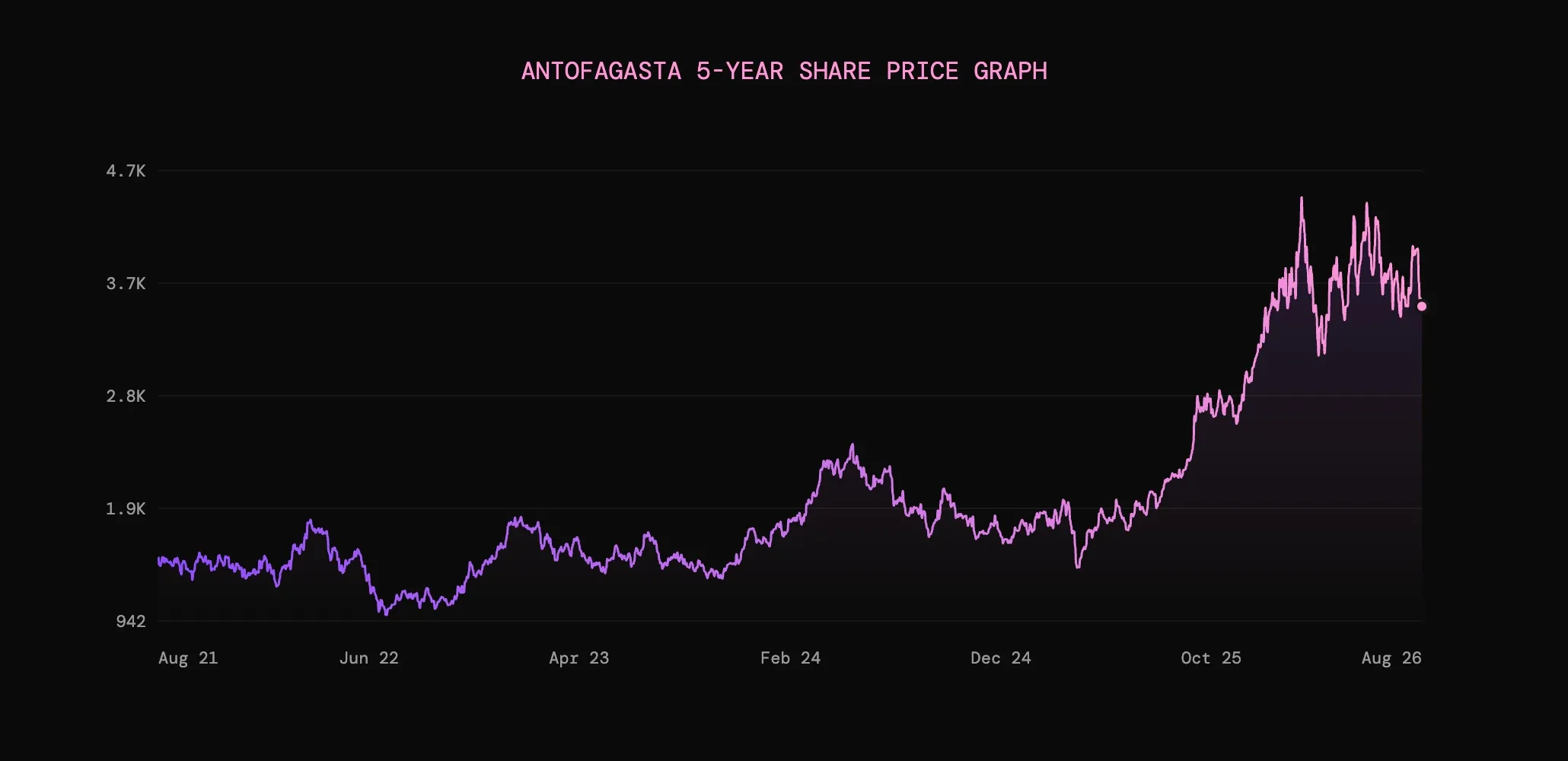
Elevated copper prices might have helped Antofagasta’s share price to surge over the past year, but the earnings aftermath saw the miner’s share price beat a small retreat.
The supply pain
Antofagasta won’t be the only miner struggling to produce enough copper to satisfy current demand. Indeed, that’s part of the reason prices are so high.
Copper mines don’t last forever. Over time, the easily accessible and high-grade deposits at a site get depleted to the point that attempting to extract more is no longer worth the cost or the strain. Mining companies might scale back operations at languishing mines, or completely withdraw to focus on other newer projects which they expect will offer more attractive economics.
This means copper producers don’t have a huge bank of additional supply they can turn to when prices rise. There’s no copper tap to turn on. Beyond investing in operational improvements to ensure existing mines, to put it crudely, mine harder, there’s not a huge amount they can do to react.
For example, new mines cannot be brought online at short notice.
It’s incredibly expensive and time consuming to bring new copper mines to production. Successful mining is not a matter of just blowing up some rocks and collecting the metallic bounty.
Instead, it's an arduous process that starts with teams of geologists conducting drilling surveys and digital mapping projects to discover significant metal deposits. This alone can take years, and then there’s the not insignificant challenge of gaining permits, financing, and workforces to advance projects. In most cases, that doesn't just mean building a mine. To function, mines also need infrastructure, like roads, ports, living quarters, and more.
To state the obvious, this means there is considerable risk to go along with the massive expenditure of time and money required.
Sometimes major companies might aim to skip some of this fun by simply acquiring a small explorer with a promising discovery, but these are not exactly ten-a-penny.
Given these circumstances, it seems miners are unlikely to be able to bring the kind of enormous leaps in production online that will allow the industry to produce a sharp supply turnaround.
What’s more, some people have run the numbers, too. In its Global Critical Minerals Outlook 2026, the International Energy Agency (IEA) said it sees a 25% potential copper supply gap emerging by 2035 based on announced projects4.
In addition, it stated that demand projections for copper had expanded more than any other critical mineral, “driven by its central role in electricity networks and next-generation technologies”.
Bears and bulls
So, the obvious question is: What on earth will happen next?
Of course, the underwhelming truth is that we don’t know. But what we can do is look at what could happen and précis the bull and bear cases for investing in copper.
The bull case:
What if demand simply does not let up? Gargantuan sums are being spent on assembling the vast quantities of compute needed for the AI revolution that Silicon Valley is so excited about.
Then there’s electrification, which shows little sign of pumping the brakes.
For example, data from the EU shows EV sales accelerating in 2026, with fully electric vehicles comprising over a fifth (20.6%) of new registrations in April, up from an average of 17.4% across all of 20255.
With Hormuz-led spikes in oil prices making petrol more expensive at the pump, EVs look like a pretty attractive proposition right now and may enjoy further adoption momentum.
Expanding supply is challenging, and if the IEA’s projected supply gap comes to fruition, or even underestimates the extent of the shortfall, prices could be set to advance further into unknown territory.
The bear case:
For the bear case, the starting point is that prices are at record highs based on expectations of demand growth that may turn out to be overly optimistic.
Let’s dig into some of the more fragile drivers of demand. AI is the headline grabber, the reason to get excited, but also possibly one of the more vulnerable factors at play.
We’ve already seen investors wobble in their confidence in the AI hardware buildout’s sustainability. If those wobbles return, or even evolve into a full-blown bubble-pop, we could see copper prices losing their lustre.
There’s also the TACO - or ‘Trump Always Chickens Out’ - factor.
There’s no escaping the fact that the President’s apparent ultimatums are sometimes not that ultimate after all. Threats are readily bandied about for leverage, and we’ve likely all become familiar with 11th-hour reversals from the Oval Office.
If January tariffs are already baked into the price of copper, any change of heart from Washington come the New Year may see prices start to unwind as the stockpiles US importers have built up become surpluses.
Indeed, the Trump administration has already done this once before. A sharp pullback in copper prices came in July 2025 when the White House unexpectedly exempted raw and refined copper from import levies.
Lightning couldn’t strike twice, could it?
Capital at risk. The value of your investments can go down as well as up and you may get back less than you invest.
Freetrade does not give investment advice and you are responsible for making your own investment decisions. If you are unsure about what is right for you, you should seek professional advice. Always do your own research.
Fluctuations in foreign exchange rates may affect investments denominated in currencies other than GBP and the amount you receive back.
.webp)
.webp)
.webp)

.avif)