
This week’s earnings are a varied collection of corporate heavyweights steps up to the earnings plate this week.
We’ve got our share of high tech advancement, with Palantir and AMD offering a read on the AI boom, while Uber may update investors on autonomous vehicle deployment. Eli Lilly and McDonald’s are curious counterparties, with the former making hay from surging popularity of weight-loss treatments as the latter tries to recapture mass-market enthusiasm for the humble hamburger. And finally, we’ll explore whether Disney’s streaming powerhouse might be overshadowed by other pressures.
Keep reading to get yourself prepped for this week’s earnings.
Note: All estimates are based on data provided by Refinitiv.
Palantir - Great expectations
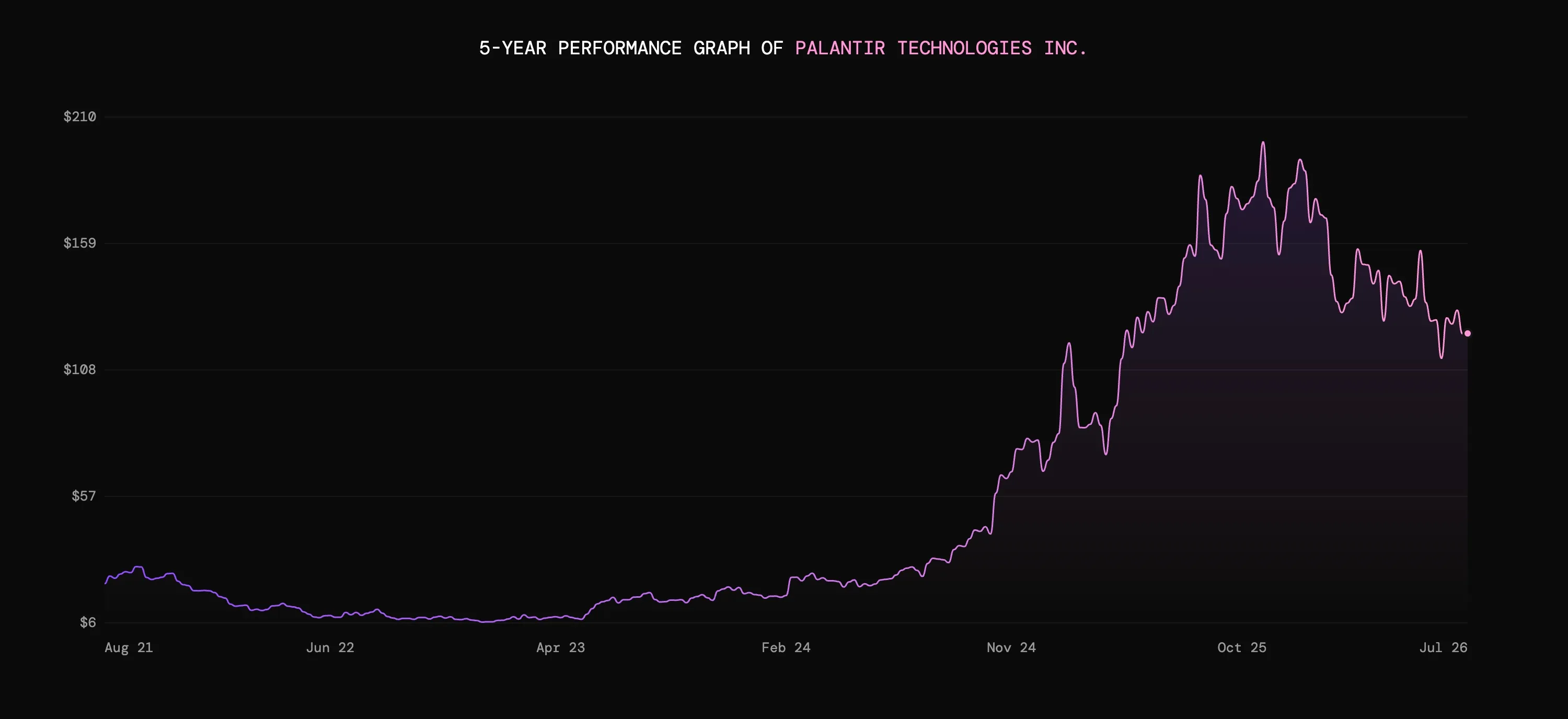
Earnings release: Monday 3rd August, after market close
Revenue estimate: $1.80bn
EPS estimate: $0.35
Palantir is all about data. Analysing data. Integrating data. Interpreting data.
In this age of digitisation, companies across a wide range of sectors find themselves straining to manage massive databases, or under pressure to optimise work by using tools that can identify opportunities amid reams and reams of datapoints. Palantir aims to offer the apparatus to achieve these goals.
That means a diverse customer base, including major companies like Morgan Stanley and BP, as well as government departments like the UK’s Ministry of Defence and NHS England.
Back in Q1, overall revenue climbed by 85% year-on-year (YoY) to $1.63bn, driven by 133% growth in US commercial revenue. US government revenue was no slouch either, rising by 84%.
Margin strength was also eye-catching. Adjusted operating margin came in at 60%, up from 44% in Q1 2025, as the business boasted of cutting sales headcount even as revenue soared. Palantir also ended the quarter with $4.45bn of remaining performance obligations.
This may all sound positive, but Palantir also faces some hefty challenges.
The first is that, while the business may have been expanding like a self-styled “juggernaut”, that creates pressure to maintain extraordinary levels of growth. Palantir has guided for Q2 revenue between $1.797bn and $1.801bn, which would represent another substantial YoY increase. But some analysts are already expecting slightly more, placing pressure on the company to beat its own forecast and hike guidance once again.
The second is impressing shareholders. Palantir’s share price is down by nearly 30% across the year-to-date (YTD), in spite of the strong top-line growth. The business may need to truly excel to justify its still-demanding valuation, a massive 68 times forecast earnings at the time of writing, in the eyes of investors.
It’s not just the figures that will be in the spotlight. CEO Alex Karp’s shareholder letters are always colourful, combining quotations from figures such as Wittgenstein with forceful commentary on Palantir’s priorities and place in the world.
It might be interesting, but for investors it won’t be this rhetoric that matters.
Instead, the key questions are whether booming US commercial demand will continue and whether Palantir can sustain its remarkable margins as the business expands.
McDonald's - McValue
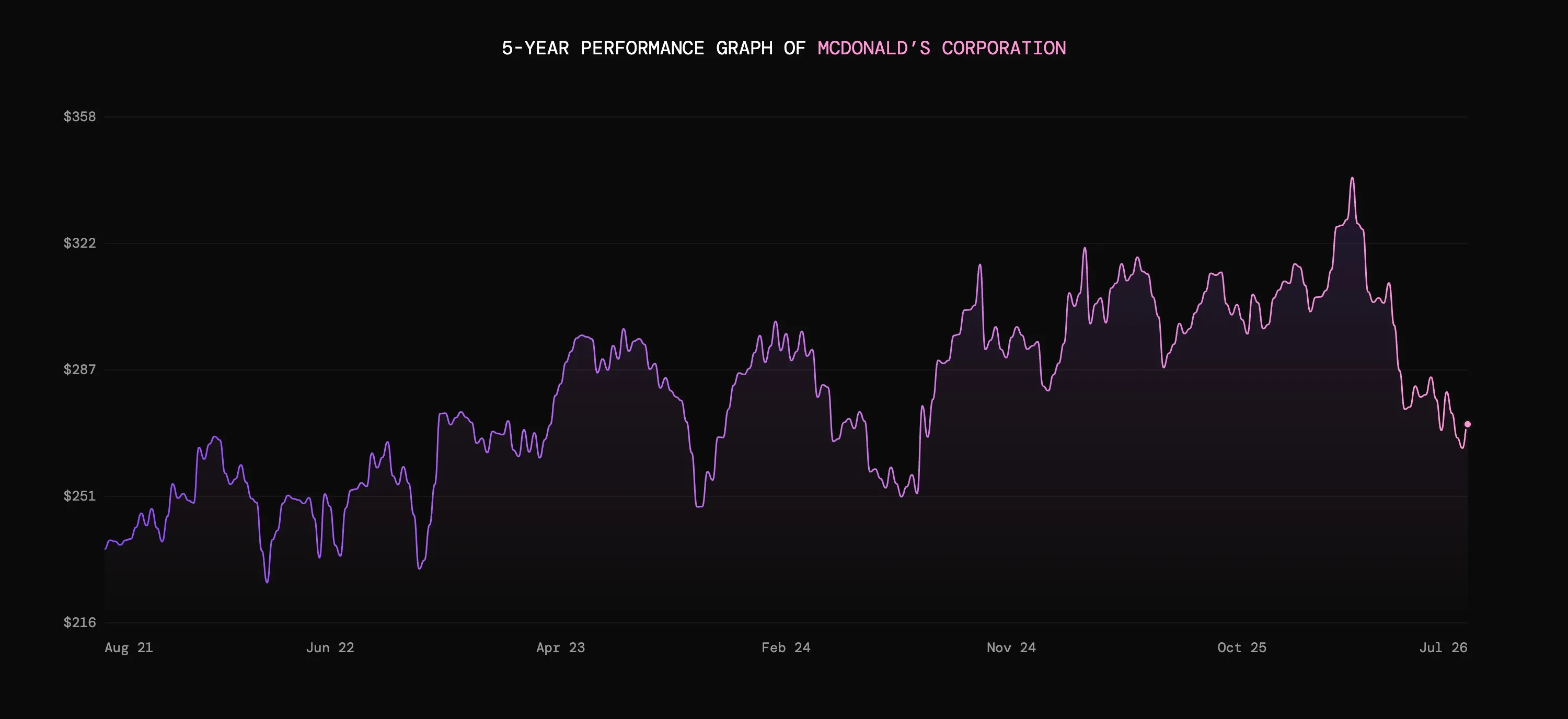
Earnings release: Tuesday 4th August, before market open
Revenue estimate: $7.13bn
EPS estimate: $3.32
As McDonald’s releases its McEarnings this week, one of the key questions is the hamburger chain’s ability to win round its core market.
For context, McDonald’s has been hard at work on trying to make the value play work, even as costs rise. The headline cost of its meals isn’t dropping, in fact it is on the rise, but the business is using tools like value bundles and app-exclusive discounts to offer low-cost food to customers.
By some measures, it appears offers are getting customers through the doors and drive-thrus. McDonald’s gained market share in nearly all of its top 10 markets in Q1, while global comparable sales rose 3.8%.
But maybe things are not quite so simple, as the company said sales growth was driven primarily by customers spending more per order, while lower-income diners remained under pressure.
You might find yourself wondering why this matters. After all, sales are still rising, so clearly growth is coming from somewhere.
But relying on higher prices, larger orders, and wealthier customers looks dangerous when McDonald’s has built its entire brand identity on mass market appeal, affordability, and repeat business. Lower-income consumers have been a core part of the chain’s identity for decades, and may offer a firmer foundation.
Past initiatives like the Dollar Menu bolstered the company’s mass market credentials. Can it come up with something similar now, or has its business model pivoted away from affordability?
Looking beyond the lower-income issue, the US segment looks like the one to watch. It is by far the largest revenue contributor, accounting for around 40% of total revenue in FY2025. US comparable sales rose by 3.9% YoY in Q1.
But the business may have a tougher time achieving revenue growth this time out, as it faces tough Q2 comparatives. The business has already warned of a slower start to the period as it came up against the impact of last year’s hugely successful Minecraft promotion.
This time, the burger chain has themed promotions around Netflix’s hugely popular Kpop Demon Hunters franchise, and investors will be anxious to see whether the tie-in helped momentum to improve through May and June.
Whenever discounting prices is the strategy, the inevitable question is what is going on with margins. Beef and labour remain elevated, and investors will want to know that these cost pressures are not combining with the push for value to take too large a bite out of profitability.
Margins have been healthy among franchisees, but margin dollars at its company-operated US restaurants fell 25% as cost inflation outweighed sales growth.
So, can the Golden Arches restore its reputation for value among hard-pressed consumers, while also maintaining fragile margins?
AMD - Second fiddle?
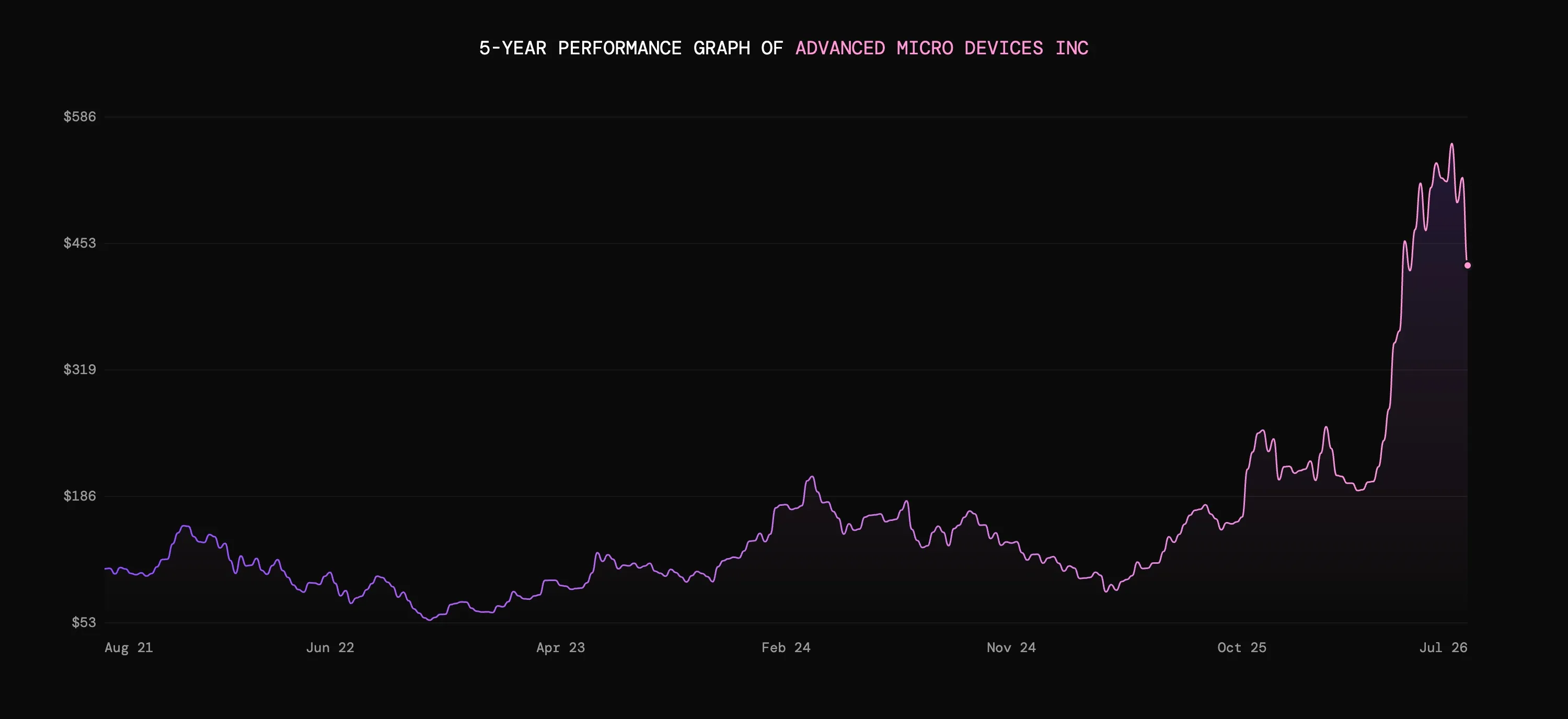
Earnings release: Tuesday 4th August, after market close
Revenue estimate: $11.28bn
EPS estimate: $1.61
AMD, or Advanced Micro Devices to give the company its full moniker, has a massive week ahead. It is one of the primary stocks to be hit by the apparently ongoing chip stock wobble. Even with the recent stickier spell, the share price is still, at the time of writing, up by over 100% across the YTD.
Of course, that may have changed by the time you read this, but it sure puts things in perspective.
So, where does the company sit within the AI buildout, and what would constitute a strong showing in its earnings update this week?
In some ways, AMD plays second fiddle to Nvidia. The duo are both fabless chip designers who are currently making hay in the AI data-centre market having built their businesses selling high-powered graphics processors for gaming rigs and consoles.
So far, so similar.
The key facet that sets their strategies apart is the scope of their product portfolios. Nvidia is laser-focused on GPUs and AI infrastructure, while AMD has a broader roster of CPUs, GPUs, embedded chips, and game console processors.
That means AMD can offer greater diversification, and also attracts customers who want to avoid total dependence on Nvidia. As such, commentary on how successfully the business is competing in the AI and data centre space will be keenly awaited.
Indeed, its data-centre segment is both AMD’s largest and its growth engine. In Q1, revenue from the segment surged 57% YoY to $5.8bn.
The company’s smaller Client and Gaming segment still saw revenue jump by 23% to $3.6bn, helping overall revenue climb 38% to $10.3bn. This time out, it may have to exceed its own guidance of $10.9bn to $11.5bn to impress.
Margins and guidance will matter too. AMD is spending heavily to strengthen its hardware, software, and systems offering. Rapid AI growth must be translating into improving profitability, and it must demonstrate firm signs of continued progress.
For example, major future deployments with Meta, Microsoft, and Anthropic have been announced, but investors will want clarity on how quickly these agreements with these heavy-hitting customers will translate into shipments and recognised revenue.
Given the current trepidation around AI, AMD might have to considerably overperform to avoid a negative near-term reaction. At the top of investors’ wish lists will be data-centre strength, resilient margins, and the kind of confident outlook that could steady the AI hardware wobble.
Disney - Streaming magic
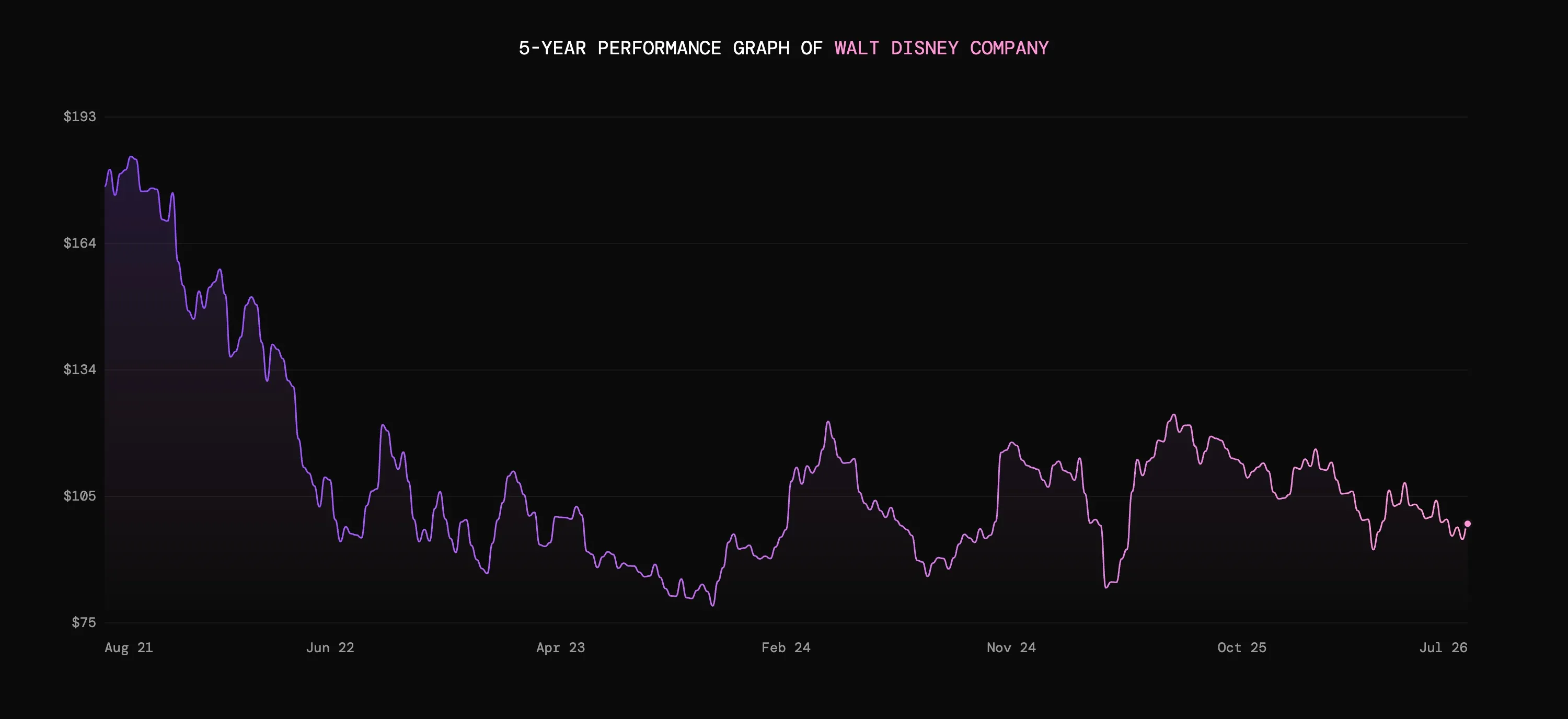
Earnings release: Wednesday 5th August, before market open
Revenue estimate: $25.40bn
EPS estimate: $1.86
Streaming is really starting to kick-on for Disney, and appears the primary driver in its Entertainment division. This Streaming Video on Demand (SVOD) segment isn’t just Disney+, but also Hulu and its Asian Disney+ Hotstar brand.
In Q2 SVOD revenue rose by 13% YoY to $5.5bn as subscription growth accelerated. This part of the business is becoming increasingly profitable, with operating income jumping by 88% to $582m and delivering a double-digit margin for the first time.
The sheer strength of the company’s IP makes it stand out in a crowded streaming marketplace. Few competitors can boast anything like the power afforded by the likes of Marvel, Pixar, The Simpsons, and Star Wars.
But while streaming appears to be strengthening, there is cause for concern elsewhere.
The Experiences division is a financial powerhouse. Q2 saw it account for 56.8% of the business’s $4.6bn in operating income, as revenue rose by 7% to a quarterly record of $9.5bn.
However, domestic park attendance dropped by 1%. Disney argued that demand remained healthy, but given the enormous cost of a holiday to Disneyland this part of the business is particularly vulnerable as economic uncertainty and tightening household budgets.
There are recent warning signs, too, as Comcast last week noted its operating environment had “softened more than we anticipated” as park attendances had started to decline at its Universal parks in June.
Investors will be alert to any further dips in attendance, especially as Disney relies on it so much for profit.
This isn’t the only issue either.
Sports operating income fell 5% in Q2 as rights and marketing costs outstripped weak 2% revenue growth. What’s worse is that Disney expects a sharper decline this quarter. Its ESPN network faces the challenge of juggling the move towards direct-to-consumer streaming while traditional pay-TV audiences and affiliate revenues decline and sports-rights costs rise.
The network might have its first ever Super Bowl broadcast scheduled for February 2027, but investors are going to need evidence that ESPN’s digital strategy can offset rising costs and mitigate the erosion of traditional TV.
Disney needs to keep producing streaming magic, but also to ensure cracks do not appear elsewhere in the kingdom.
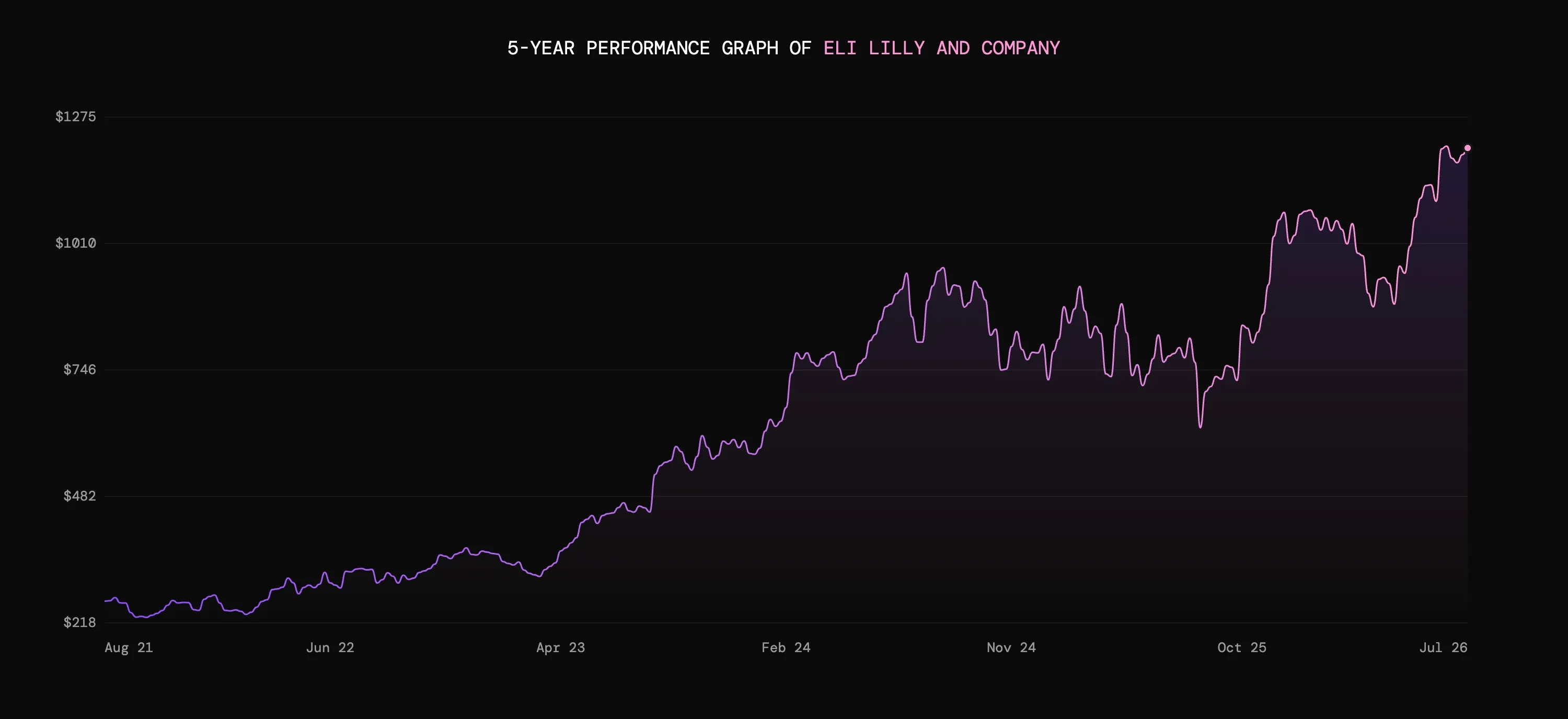
Eli Lilly - Wildcard
Earnings release: Wednesday 5th August, before market open
Revenue estimate: $20.71bn
EPS estimate: $6.01
Eli Lilly is a pharmaceutical giant, and a major name on investors’ lips right now amid major demand for weight-loss drugs Mounjaro and Zepbound. These are both GLP-1 agonists, a type of medication that reduces patient appetites by mimicking the hormones released by the gut after eating.
Both of these headline treatments produced enormous growth back in Q1. Mounjaro revenue surged 125% YoY to $8.7bn in Q1, while Zepbound sales jumped 80% to $4.2bn. This spurred total revenue 56% higher to $19.8bn, prompting the company to raise full-year sales guidance to $82bn–$85bn.
Such is the popularity of the products, that the question isn’t so much whether demand will remain but whether Eli Lilly can manufacture enough. Look for insights into capacity expansion, prescription growth, and whether lower realised prices are being offset by higher volumes.
The company’s wildcard is Foundayo.
This GLP-1 treatment was approved by the US Food and Drug Administration in April. What makes Foundayo different to Eli Lilly’s other treatments is it is a once-daily pill, rather than an injection like Mounjaro or Zepbound.
Data shows weekly prescriptions lagging behind Novo-Nordisk’s Wegovy, which was the first oral GLP-1 agonist medication to make it to market for weight management.
However, Eli Lilly will be hoping the lack of any fasting restrictions for patients using Foundayo will give the drug a long-term edge. For now, investors may want reassurance about next steps after the treatment’s slow start, particularly as other competitors are likely to enter the market.
Eli Lilly is making an extraordinary amount of money from its weight-loss treatments, but it needs something more to satisfy investors. Maintaining momentum in Mounjaro and Zepbound, while building a solid plan for Foundayo’s continued deployment, looks key.
Uber - Forward thinking
Earnings release: Wednesday 5th August, before market open
Revenue estimate: $14.24bn
EPS estimate: $0.81
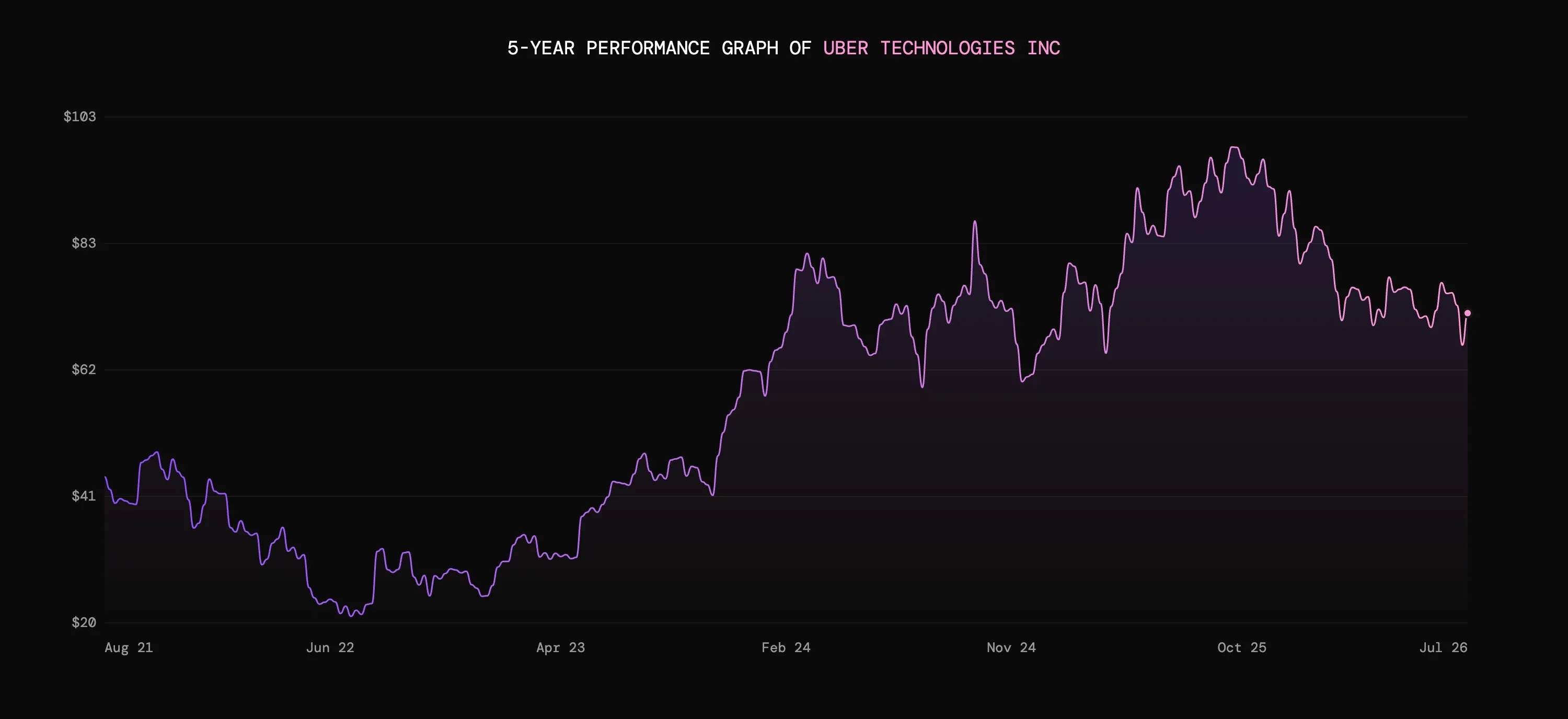
Uber, the technology company offering ride-hailing and food delivery services, rounds out our week of earnings previews.
The first thing to highlight is that Uber’s core platform began Q2 with considerable momentum. Total trips were up by 20% YoY in Q1, as monthly active platform consumers climbed 17% and trips per user edged 3% higher.
That means more people were using Uber, and the average user was taking more trips.
Gross bookings, which measures the total value of rides and orders passing through the platform, rose 25% to $53.7bn. Delivery was the standout source of revenue growth, with a 34% leap to $5.1bn, while the Mobility and Freight segments achieved 5% and 6% growth respectively.
Overall revenue climbed by 14% to $13.2bn, while non-GAAP operating income grew even faster as it surged by 42% to $1.9bn. This increasing profitability gives the company the scope to make larger and bolder strategic moves, and it is these that may be under the spotlight in Q2.
For example, there’s Uber’s proposed acquisition of Berlin-based global delivery group Delivery Hero for around $13.7bn, which could supercharge international expansion of Uber Eats. Investors will want insight as to how exactly the proposed acquisition fits into existing operations, including cost and revenue synergies.
In short, why is the scale afforded by this expensive acquisition preferable to continuing to build its already successful delivery business?
The other crucial narrative is autonomous vehicles. Uber quit building its own self-driving tech back in 2020. Now, the company’s plans for robotaxis hinge on partnerships with specialist companies in different locations. For example, in London, the business has teamed up with Wayve for a planned rollout.
The risk here is that successful developers such as Alphabet’s Waymo eventually choose to go it alone, bypassing Uber’s customer base, marketplace, and fleet-management expertise.
Uber’s core business looks like it’s firing on all cylinders, but can the company reassure investors that its more ambitious bets will put profits to good use and accelerate growth down the road?
Capital at risk. The value of your investments can go down as well as up and you may get back less than you invest.
Fluctuations in foreign exchange rates may affect investments denominated in currencies other than GBP and the amount you receive back.
Past performance is not a reliable indicator of future returns.
Freetrade does not give investment advice and you are responsible for making your own investment decisions. If you are unsure about what is right for you, you should seek professional advice.

.webp)
.webp)
.webp)